
Before checkout: A fair and accessible way to ask hotel guests for reviews
Guests should have enough time to leave a review, and say what they actually want to say. How can you invite reviews without the pressure?

It’s ten to ten. A guest has one hand on a suitcase and the other on a phone showing the driver outside.
The receptionist still has to explain a parking charge. Somewhere on the counter there’s a card inviting a review. What should the receptionist do with it? In this case, leave it there. Explain the charge, hand over the receipt and help the guest get to the car. A line on the receipt can carry the invitation home.
Read the latest edition of AccomNews HERE
That small decision gets to the heart of asking fairly. A guest should have had the experience they’re being asked to describe, and enough time and privacy to decide what to say. Operators can plan the invitation before checkout without expecting anyone to write a review at reception.
Give every departure the same opportunity
Choose a point in the departure process that every guest can reach. At a motel, that might mean printing the invitation beneath the total on every final folio. At a serviced apartment with a key safe, it might sit at the foot of the checkout confirmation. Include the early departure who never meets the morning team. Check the version sent to guests who booked through an agent, too. It’s easy to design a perfectly fair invitation that only direct bookings ever see.
Staff can use their judgement about speaking. The written invitation does the work of keeping access consistent. Once the bill is settled and the guest has their belongings, a simple farewell will do: “Thanks for staying with us. If you’d like to share how your stay went, there’s a review link on your receipt.” Then let the guest go. They needn’t explain why they’re in a hurry or take out a phone to be polite.

Keep a complaint and a review separate
Suppose a guest mentions that the shower ran cold both mornings. A useful first question is “Can I take the room number so we can get that checked?” Give the guest a contact for any follow-up you promise. Their receipt should carry exactly the same public review invitation as the one handed to the person who loved the breakfast.
Look closely at what happens after a guest taps “Tell us about your stay”. If a high score opens Google while a low score leads only to the duty manager’s inbox, the property is filtering who gets invited to speak publicly. That is review gating. Give everyone both choices from the outset. “Write a public review” and “Contact the duty manager privately” tell guests who will hear from them. Someone with a cold shower may quite reasonably want to do both.
Related AccomNews story: Zero-click marketing: How hotels win when nobody clicks
Make the invitation usable with one hand free
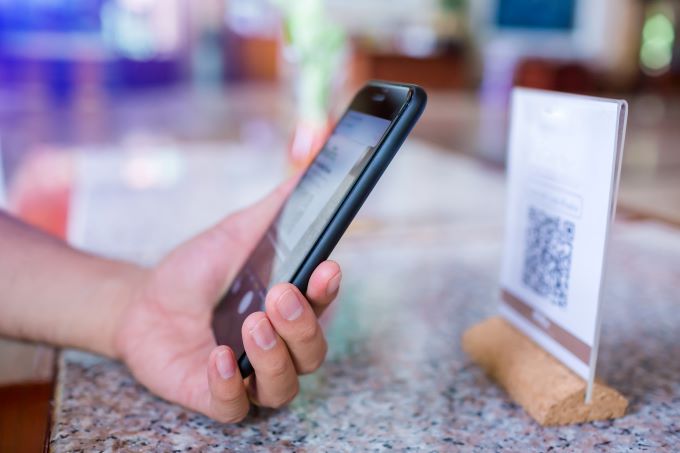
Try the reception setup with a bag in one hand. Can you reach the sign from a seated position? Can you read it with the morning sun on the counter? A guest who can hold a phone near an NFC tag may find tapping easier than lining up a camera. Another may prefer scanning a QR code because they already know how. Mark the tap point, give the code space around it and use large, high-contrast lettering that names the destination.
Offer a short, readable web address alongside both options. A guest can take it away, type it on a laptop or ask someone to read it aloud. In a digital folio, make the words “Review your stay on Tripadvisor” a clickable text link. A QR code displayed on the phone a guest is already using gives them an unnecessary puzzle.
Before the next print run, follow each route on a guest’s device or a signed-out browser. Check the property name and street address, particularly if a sister property has a similar name. Follow the Google and Tripadvisor links far enough to see where a guest can start a review or sign in. Stop before submitting. Repeat the check after a rebrand, a listing change or a new batch of cards.
Give staff a clear brief
Google allows businesses to invite genuine reviews. Its rules prohibit incentives and selectively seeking positive reviews, and caution against pressuring guests to post on the premises or asking them to mention a particular employee. Tripadvisor also prohibits incentives and filtering invitations according to how positive a guest’s experience was. Leave the breakfast voucher, prize draw and suggested star count out of the conversation. A tap opens a destination. The guest decides whether to publish and what rating their stay deserves.
At the next shift handover, ask two colleagues to play out the rushed departure and the cold-shower complaint. In each case, listen for whether the guest got the help they needed and could still find the same invitation afterwards. Those are two things a front-office team can take responsibility for, whatever the next review says.

Jamie Carmichael works with DigiPlate, helping hospitality and retail venues make voluntary customer feedback links easier to access.