
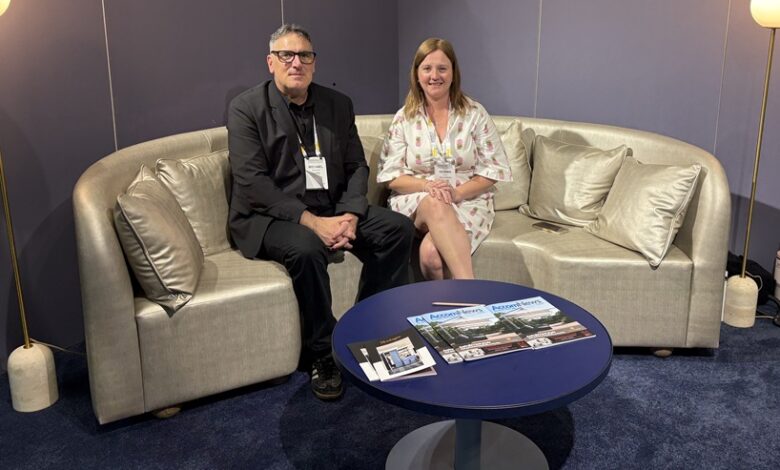
Cendyn’s Michael Bongiavanni on visibility, accuracy and the new rules of digital discovery
Cendyn's Michael Bongiavanni shares his insights on what accommodation operators need to do now to stay relevant in a changing digital world

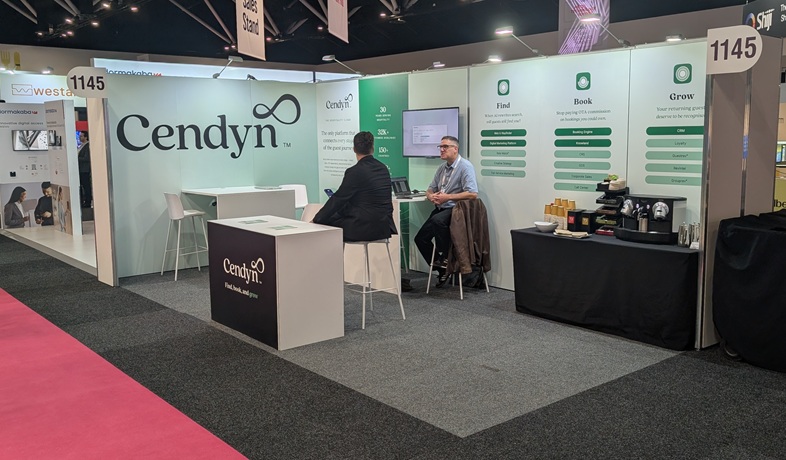
At NoVacancy, Michael Bongiavanni, Enterprise Sales Director, Cendyn, joined a panel discussion about SEO vs GEO and LLM-driven discovery.
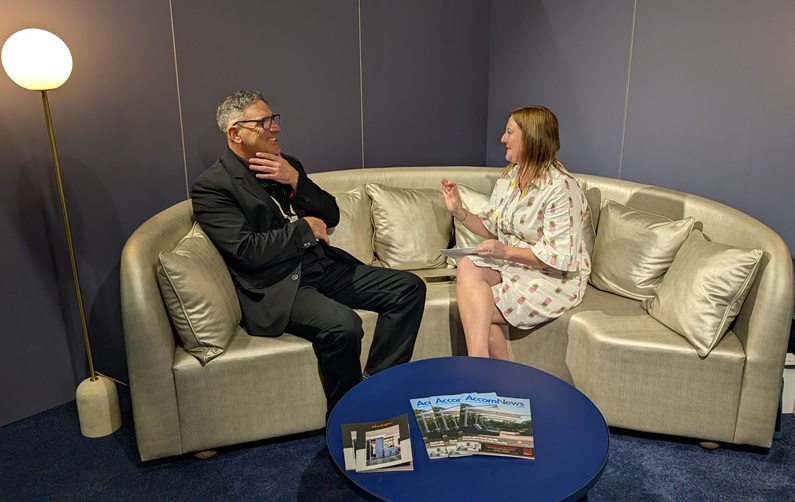
Later, he spoke to me about the changing nature of hotel search and discovery, and what accommodation operators need to do now to stay relevant.
The latest print edition of AccomNews is out now. Read it HERE
Gemma: Could you tell me, for anyone who might not be familiar with Cendyn, what does its software do, and how does it help accommodation businesses?
Michael: We’ve been around since 1996, so we have a long history in hospitality technology. The way I like to describe Cendyn is that our software suite gives hoteliers pretty much everything they need to acquire, engage and retain guests.
So, we cover everything from the hotel website and booking engine to CRM, guest engagement and revenue management. It’s really about bringing those different pieces together to help accommodation providers attract the right guests, drive more direct bookings and ultimately build stronger, more valuable guest relationships.
Gemma: AI is becoming ubiquitous in so many areas of our lives, including hotel research and bookings. What specific problem are hotels facing as travellers start using AI tools to research, compare, and choose where to stay?
Michael: I think it’s twofold. First, a lot of operators simply don’t know what they can or should be doing, so they’re almost paralysed by it.
Secondly, they don’t necessarily know whether they’re being talked about by AI in the first place. And if they are, who’s talking about them, what’s being said, and, importantly, is that information accurate?
So, the first step is really understanding your visibility: are you being talked about, and what is being said about you? Once you understand that, you can start to leverage it and identify the quick, practical things you can do to influence that conversation in the right direction.
Gemma: For hotel operators, then, their property needs to do more than have a Google ranking, or a good-looking hotel website. This must make visibility harder?
Michael: Google reviews are still really important. We can see the citations that AI is using, and we know it’s referencing review sites, so it’s not just about your Google ranking or having a great-looking website anymore.
It’s about understanding where your content is, what information is out there about your property, and whether it’s consistent across those different channels. If you’re sending mixed messages about your property, you’re potentially part of the problem.
And it’s also important to actually read your reviews and understand the sentiment behind them. You might market your property as a family-friendly hotel with beautiful views of the beach, and you could have a four- or five-star rating. But if your reviews are consistently talking about it as a great party hotel, that tells you something very different.
It’s not just about the star rating. The content and the sentiment matter. What you want to be as a hotel, and what your guests are actually saying you are, can be two very different things.
Gemma: How does Cendyn see this shift changing the way hotels need to think about their digital presence and direct booking strategy?
Michael: There’s a statistic that I’m fairly confident in, and I think the industry is increasingly confident in as well: before AI, around 68 percent of Google searches resulted in no click. When AI is involved, that number is closer to 80 to 83 percent.
What we’re seeing with our own clients is that organic traffic is coming down, but direct traffic is converting at a higher rate. The inference is that guests are doing more of their research through AI, and then coming back to the hotel website when they’re ready to book.
So, I think the way hotels need to think about their digital presence is changing. It’s not just about ranking on Google anymore; it’s about understanding how your property is being represented across AI and making sure you’re visible and accurately represented when guests are doing that research.
As part of the Cendyn portfolio, we offer a content management system (website platform) and we’ve built an AI monitoring and assessment tool into it. It’s called Wayfinder. So, when you produce content, we can look at what the major LLMs are doing with that content: are they picking it up, are they referencing it, and what are they actually saying about your property? Those insights are becoming increasingly valuable for operators, because you can’t manage what you can’t see.
Gemma: How does Cendyn’s new AI-native platform help hotels identify the problem, understand how AI sees them, and take action?
Michael: Whether operators like it or not, and whether they’re aware of it or not, guests are already getting answers about their properties from AI. Wayfinder helps hotels understand what AI is saying about them and, importantly, where there may be gaps.
There are two parts to it. First, it looks at the facts about your property. Things like: is it a non-smoking hotel? Is it a block from the beach? Are those basic facts being represented accurately across the internet? If they’re not, Wayfinder can highlight where the gaps or inconsistencies are, so the operator knows where to take action.
The second part is understanding what you want to be known for. If you look at the title of a hotel website, it usually tells you how that hotel wants to position itself : “Boutique hotel, Sydney, Western Suburbs,” for example. Those are essentially the keywords and attributes the hotel is saying, “This is who we are.”
Related AccomNews article: No Vacancy 2026: Familiar faces, insightful conversations
We take those terms and look across the major LLMs to see whether the property is actually appearing for those searches, what AI is saying about it, and whether the competitive set is appearing instead.
From there, Wayfinder can identify the gaps and give the operator practical things they can consider doing to make the property more relevant and better represented in those AI-driven searches. Ultimately, it’s about closing the gap between who you say you are, what the internet says you are, and what AI is telling your potential guests.
Gemma: What do you predict will be the next big leap forward for AI in accommodation businesses?
Michael: I think Wayfinder, which sits at the foundation of Cendyn’s content management system, has huge potential. We see it as connective tissue across our technology, helping bring together the different data and insights that a hotel needs to understand what’s happening with AI.
Because ultimately, if I’m a hotelier, I need to understand what AI is saying about my property today, but I also need to know that I’m set up to take advantage of whatever comes next. The technology is moving so quickly that you can’t wait for the next big development and then try to catch up.
I think the operators who start understanding AI now, and build that capability into how they manage their digital presence, are going to be in a much stronger position when the next big opportunity comes along.