When accessibility becomes part of the culture
How do you take inclusion beyond a good intention and make it part of your culture, and the way every guest experiences your business?
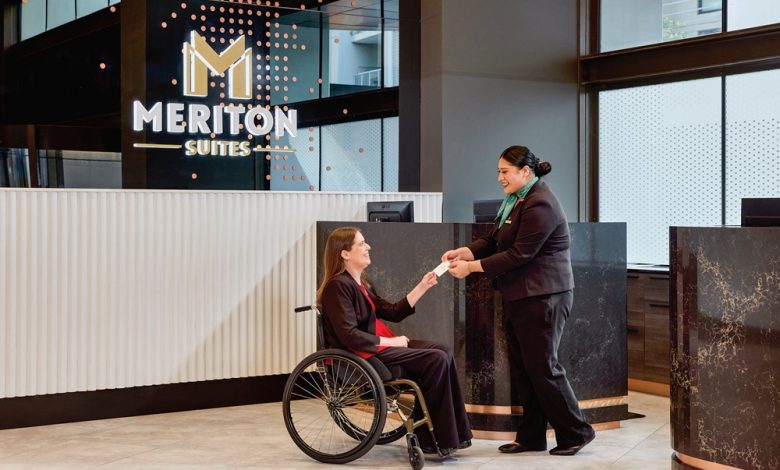
Accessibility becomes far more powerful when it is embraced across the whole business. Meriton Suites is showing how that can translate from frontline service to leadership strategy and the guest room itself.
Rather than concentrating solely on the physical attributes of its accessible suites, Meriton Suites has been working across three interconnected areas: building the confidence of its hotel teams, developing accessibility understanding at leadership level, and progressively accrediting its properties.
The latest print edition of AccomNews is out now. Read it HERE
It is accessibility from the frontline to the boardroom, and ultimately through to the guest room.
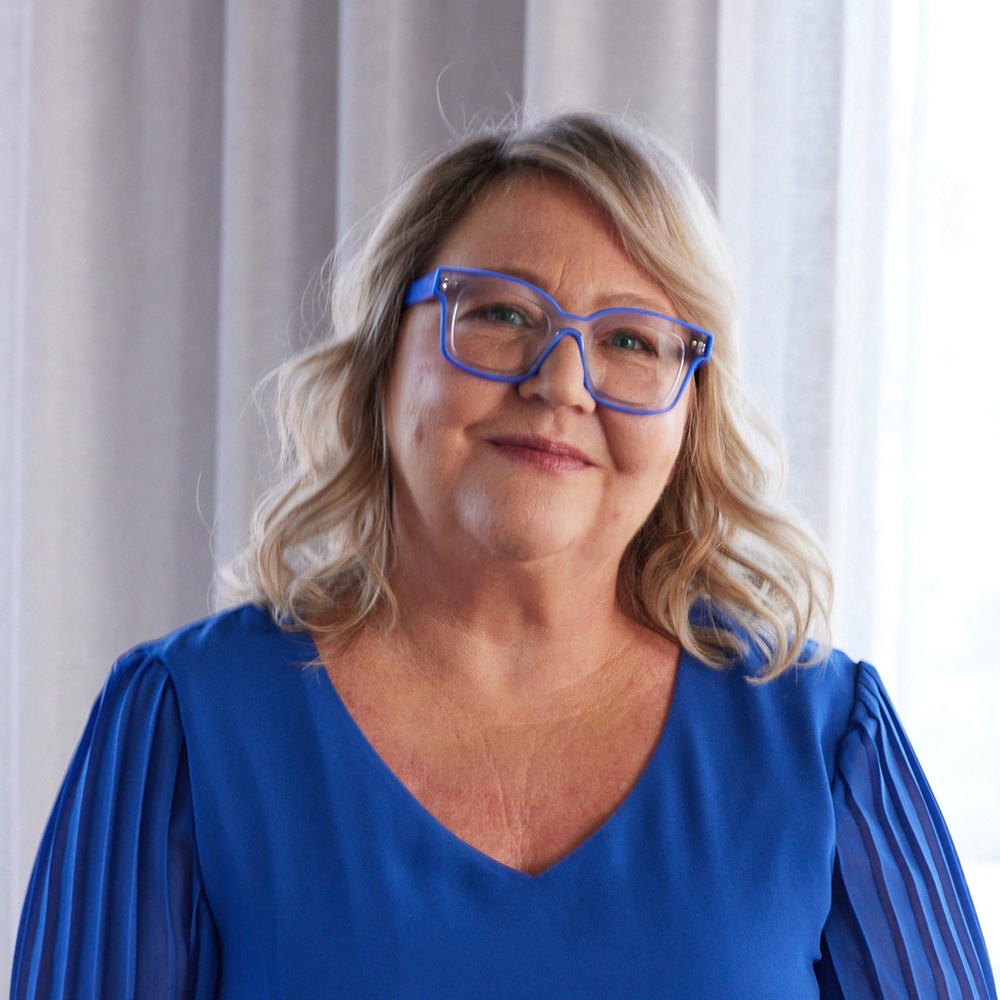
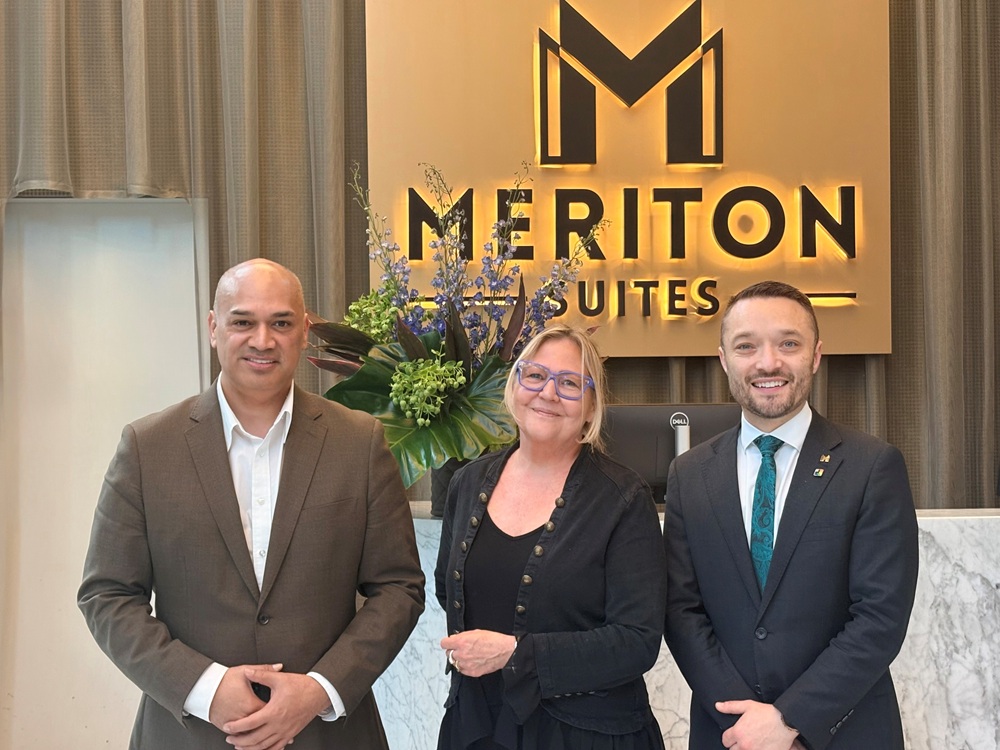
For Pamela McCabe, National Revenue Manager at Meriton Suites, accessibility is also deeply personal. Her father lived with disability, giving her firsthand insight into what accessibility means not only for the person with disability, but for the whole family.
Pamela says: “When staying at a hotel, something as simple as feeling welcomed, being able to move through the space comfortably and knowing that your needs have been considered can make an enormous difference. It allows the whole family to relax and enjoy their stay, rather than having to worry about whether the environment will work for them.”
That, to me, is the heart of accessible hospitality.
Starting with the people
Meriton Suites introduced Accessible Accommodation’s Online Accessibility Inclusion Training across all 23 hotels, reaching frontline, food and beverage, housekeeping, sales and marketing teams. The foundational training covers the everyday realities of hospitality: different disability types, inclusive language, common mistakes, travel challenges, and practical guest scenarios.
The results were outstanding.
Eighty-eight percent said they felt more confident communicating with guests with disability, while 90 percent said they were more aware of how to create an inclusive guest experience. Ninety percent said they felt proud to work for a company investing in inclusion training.
The team member comments were even more powerful.
One Meriton Suites leader reflected: “Helped me understand invisible disability, which I have been overlooking unknowingly for years.”
Another team member spoke very candidly about recognising previous mistakes: “I realised mistakes I have made in the past and how to fix them, look at a guest with a hearing disability during a conversation, or sit at eye level with a guest in a wheelchair.”
And another said simply: “Now I know there are many different types of disabilities, and I’m more confident answering every call.”
I found those comments incredibly moving because they showed such an honest shift in thinking. People were recognising what they hadn’t understood before, reflecting on their own behaviour and already thinking about what they would do differently next time.
They weren’t simply completing training. They were seeing accessibility differently. And that is where meaningful inclusion begins. Not with fear of saying or doing the wrong thing, but with enough understanding to feel confident doing something better.
That, to me, is how cultural change starts.
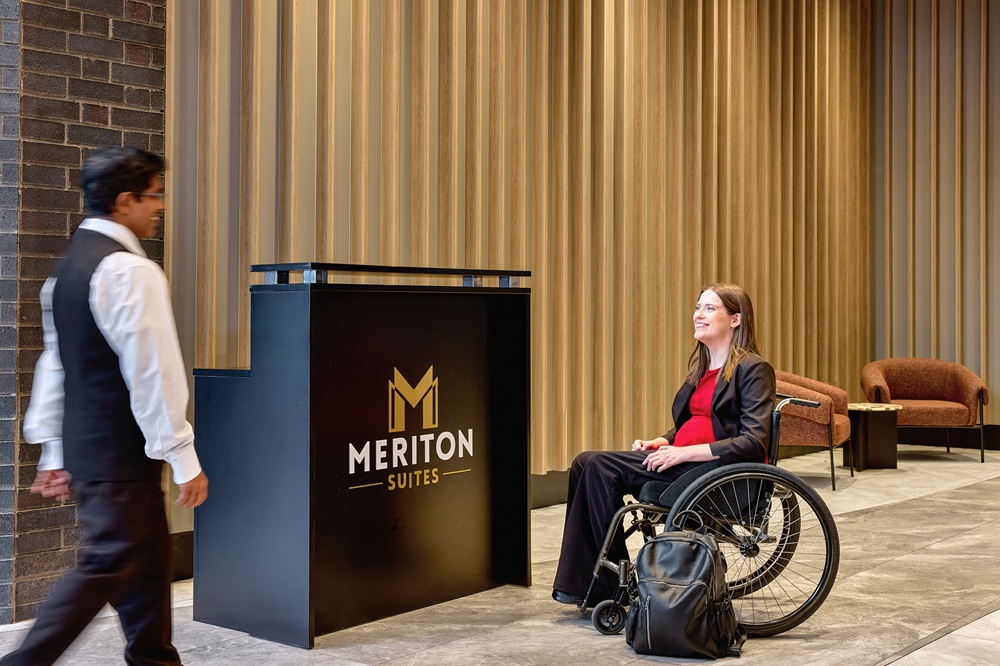
Matthew Thomas, Group General Manager at Meriton Suites, says strengthening that confidence was one of the reasons the company chose to undertake Accessible Accommodation’s training and accreditation.
“It was important that our team members had the right knowledge, understanding and confidence to support guests with different accessibility needs and provide a welcoming and consistent experience across our hotels.”
He says the training has encouraged team members to look at the guest experience through a different lens and identify “small but meaningful ways” they can better support guests throughout their stay.
That word “small” is worth remembering. In our industry, accessibility can sometimes feel overwhelming.
Twenty-three hotels. Hundreds of team members. Different buildings. Different suite configurations. Different roles. Different guest needs. Where on earth do you begin?
Starting small helps shift accessibility from a big, abstract challenge into practical actions teams can actually own.
From frontline confidence to leadership strategy
Meriton Suites then took accessibility another step, with its executive leaders completing separate Accessible Accommodation executive training.
This is not simply the frontline course repeated for managers. The conversation changes at leadership level. For frontline team members, we are often talking about communication, confidence, practical scenarios and the individual guest interaction.
For leaders, we widen the lens. The conversation moves into the business case for accessible tourism, supply and demand, product investment and ROI, revenue planning, direct bookings and customer targeting. We also look at how businesses can move beyond minimum building compliance and set short, medium and long-term accessibility goals with a practical action plan.
This is where accessibility shifts from a compliance issue to part of commercial strategy, guest experience, and long-term business planning.
Laurence Luxford, Meriton Suites’ National Learning & Development Manager, says the national approach has helped make accessibility “part of our everyday approach to guest service, rather than simply a one-off training exercise”.
For multi-site hotel groups, that consistency is critical. If inclusion is part of your brand identity, guests should experience it consistently, regardless of which property they book.
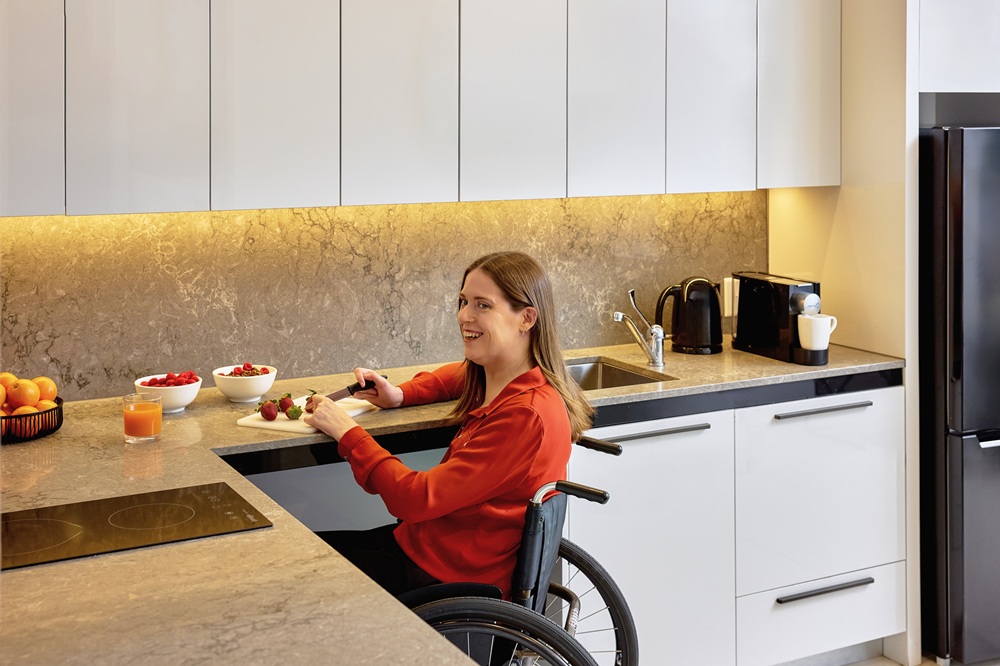
Training the people and understanding the property
Supporting this broader approach is Accessible Accommodation’s Accessible Tourism Accreditation Program (ATAP), with Meriton Suites hotels progressively undertaking accreditation.
What excites me about their approach is not simply the accreditation seal. It is the combination. Training helps teams understand the person. Accreditation helps the hotel and guest understand the property.
Independent accessibility verification provides guests with practical information about areas including mobility, wheelchair access, vision, hearing, sensory and neurodiverse needs, supported by detailed property information, rather than asking travellers to accept a vague description such as “accessible suite” on trust.
For the guest, that means less guesswork before they arrive.
For the hotel, it creates a clearer understanding of what it can confidently offer.
For travellers with access needs, trust comes from both the people welcoming them and the property’s accessibility features. A wonderfully trained receptionist cannot make an unsuitable bathroom configuration work. Conversely, a technically accessible suite does not guarantee a welcoming experience if nobody answering the phone understands the questions a guest wants to ask.
Pamela says ATAP gives Meriton Suites practical guidance to better understand and support guests with disability, as well as a framework for continual improvement.
And her personal experience brings us back to why this matters. One accessible suite may be booked, but travelling alongside that guest may be partners, children, parents, carers, grandparents or friends. The multiplier effect of accessibility.
What can our industry take from this? Meriton Suites is a large national operator, but the lesson is not limited to large hotel groups.
No single element creates an inclusive stay. It is the accessible suite, the clarity of the information, the confidence of the team, the leadership behind them and the way the guest is welcomed that shape the overall experience.
The opportunity is to connect those pieces. Because behind their survey results and their 23 hotels is something much more human. It is Pamela remembering what travel was like for her father and her family. It is a team member realising that not every disability is obvious, and that some guests may have needed support they hadn’t previously recognised. It is another team member feeling more confident answering a guest’s call. And it is a family arriving at the hotel and, perhaps for once, not having to wonder whether everything is going to work. That is at the core of why I started Accessible Accommodation.
So, the question for our industry is this: How do you take inclusion beyond a good intention and make it part of your culture, your decisions and the way every guest experiences your business?