
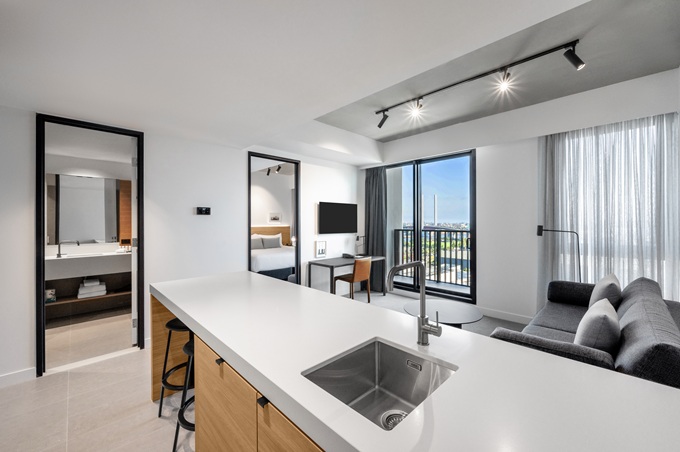
Nesuto Docklands Apartment Hotel: Intelligent design in action
Intelligent energy management by ASSA ABLOY has provided centralised control over heating, cooling, lighting and other in-room functions

At Nesuto Docklands Apartment Hotel in Melbourne, the in-room thermostats and door locks are the only guest-facing hints at the intelligent energy management system running day and night in the background to save energy, time and money.
Matthew Abrahams, Development Manager for Nesuto, said the ASSA ABLOY system provided centralised control over heating, cooling, lighting and other in-room power functions across all guestrooms.
Read the latest edition of AccomNews HERE
“It allows us to set defined temperature ranges and lighting parameters based on room status, such as whether a room is occupied or vacant.
“The system also automatically manages how long heating and cooling remain active after a guest leaves the room, helping to minimise unnecessary energy use while maintaining guest comfort.
“Similar controls apply to lighting, ensuring efficient operation without impacting the guest experience.”
The parts guests see, the locks and thermostats, were carefully chosen for form and function, said ASSA ABLOY Managing Director Michael Benikos.
“The lock chosen was the Signature RFID model, which is capable of online network connectivity and card use, but also ready for mobile phone keys in the future. The reader is slim and easy for guests to know where to badge their card while still fitting into the hotel decor.
“The other item was the in-room thermostat. The version chosen was a slimline, sleek version but still easy to use for the guest. The display is a good size and it’s easy for the guest to work out how to use.”

However, there is far more to the system than what guests can see, Mr Benikos said. “We also integrated the system to the building management system which controls the chillers and boilers, so we could provide that system with accurate data on what the rooms are doing to optimise the chiller and boiler usage to save more money.
“As part of the setup process, we also visited previous projects with Nesuto to show how the system was installed and setup so they could use that information when setting up their system.”
That wrap-around support was important from beginning to end, Mr Benikos said. “We worked on the best settings for the site to get the highest energy savings without affecting guest comfort. We also integrated the system with the door locks to give them an online door locking system using the energy management system network.”
Related AccomNews story: Meeting modern guest expectations at check-in
As well as the levels of provided support, working with ASSA ABLOY was a considered choice to meet Nesuto’s sustainability goals, Mr Abrahams said.
“Nesuto has a strong corporate responsibility to operate in an environmentally responsible way and to be a good steward of the planet.
“The intention behind installing the energy management system was to significantly improve energy efficiency while ensuring there was no negative impact on guest comfort or experience.
“ASSA ABLOY was chosen as a partner due to their proven expertise in delivering reliable, intelligent energy solutions that align with Nesuto’s sustainability objectives. As a result, energy efficiency has become an essential and integral component of all new Nesuto developments.”
Feedback from guests has been positive, said Mr Abrahams, and the ASSA ABLOY energy management system continues to deliver.
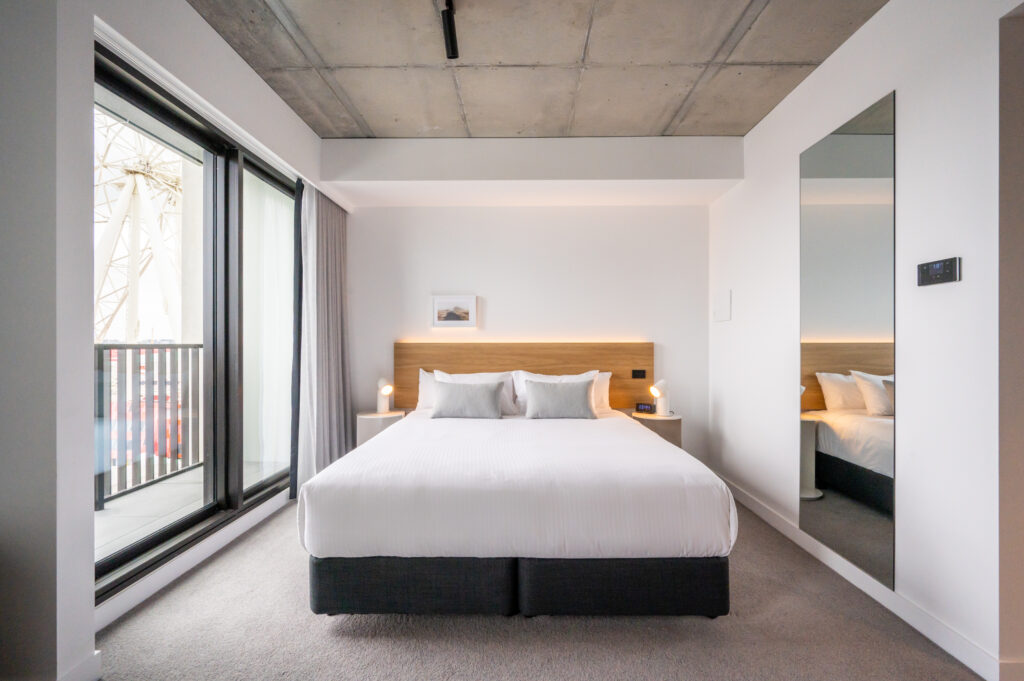
“Both staff and guests benefit from a consistently comfortable, seamless in-room environment with intuitive controls that are easy to use.
“Over the longer term, guests appreciate knowing that their stay supports more sustainable operations, while staff benefit from improved efficiency and reduced operational waste, all without any compromise to comfort or service quality.
“Guests enjoy a consistently comfortable room environment without being consciously aware of the energy management technology at work. Its real strength lies in being unobtrusive—optimising energy use without restricting guest control or comfort—so the experience feels natural while still supporting more sustainable operations.”
This article first appeared in the Autum edition of AccomNews. Click below to explore.