
Why proposed disaster funding changes matter to onsite managers
Marion Simon examines what proposed changes to the disaster recovery funding framework could mean for tourism communities

The idea for this article began when I received an email from property management software providers, Resly, asking our Queensland accommodation community to lend their voice to an important issue that could significantly impact how our industry recovers from future natural disasters.
The Australian Government is proposing a new Disaster Recovery Funding Framework, including a flat 50:50 Commonwealth state funding split, simpler activation thresholds and a new Resilient Infrastructure Scheme. Local governments have raised concerns that the changes could increase the threshold for some events and replace or discontinue existing Betterment and DRFA Efficiency programs.
This article was first published in the September edition of Resort News. OUT NOW. Read it HERE
This prompted me to undertake some research and consider how the proposed changes could affect our industry. It was, however, heart-warming to see Resly, once again, advocating for our industry by encouraging management rights operators and short-term accommodation providers to use their voice. Opportunities to stand together and be counted need to be embraced.
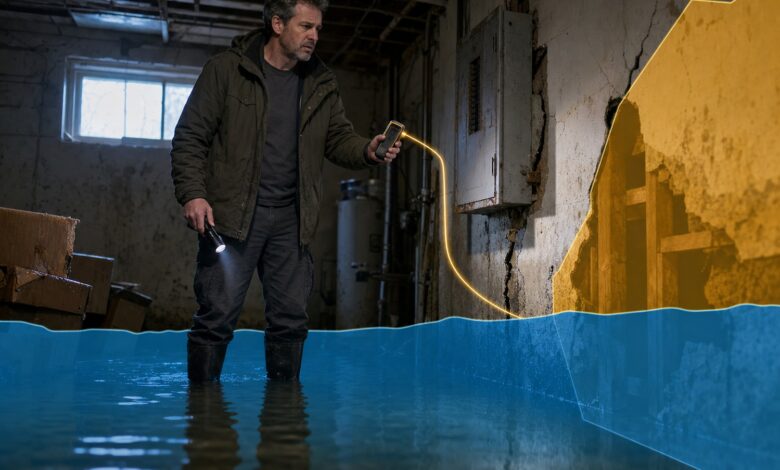
When disaster strikes, recovery does not begin when government funding is approved. It begins onsite, often in darkness, dangerous weather and extraordinary uncertainty, with people protecting buildings, supporting residents and guests, coordinating contractors and trying to preserve livelihoods.
Australia’s principal disaster-recovery funding system is currently the Disaster Recovery Funding Arrangements, known as the DRFA. Introduced in November 2018, the DRFA enables state and territory governments to activate assistance following an eligible disaster and subsequently seek reimbursement from the Commonwealth.
Depending on the category of assistance and expenditure thresholds reached, the Commonwealth may reimburse up to 75 percent of eligible costs.
The framework supports everything from immediate personal hardship assistance and emergency operations to the restoration of essential public assets and exceptional recovery packages for severely affected communities and industries.
This assistance matters enormously to tourism. Although accommodation and tourism businesses may not receive DRFA funding directly, our ability to recover depends upon the infrastructure and initiatives it supports, including roads, airports, beaches, national parks, utilities, destination marketing, business grants, event assistance and dedicated recovery coordination.
Following an independent review led by former Australian Federal Police Commissioner Andrew Colvin, the Australian Government announced a proposed replacement framework in June 2026.
The proposed Disaster Recovery Funding Framework is intended to make disaster assistance faster, simpler and more nationally consistent. Those are worthy objectives. However, several proposed changes are causing considerable concern across Queensland.
These include moving towards a flat 50:50 Commonwealth State funding arrangement, introducing simpler activation thresholds and replacing the existing approach to betterment with a new Resilient Infrastructure Scheme. The Australian Government argues that the proposed system will reduce red tape, improve consistency and provide more predictable cost sharing. The concern, however, is that equal funding percentages do not necessarily produce equitable outcomes.
Queensland is widely regarded as Australia’s most disaster-affected state and experiences approximately 60 percent of the nation’s natural disasters. A uniform funding split does not adequately recognise this disproportionate exposure or the limited financial capacity of many councils and regional communities to absorb additional recovery costs.
Local governments have raised concerns that the proposed threshold could exclude smaller-scale events from Commonwealth support, potentially leaving affected communities without adequate assistance. An event may appear relatively modest when measured against national expenditure, while still having a devastating effect on a tourism-dependent town or region.
The effects on tourism extend well beyond physical damage.
Bookings are cancelled, events are abandoned, staff cannot reach work and supply chains are interrupted. Images of destruction can damage confidence in an entire destination, including areas that remain safe and operational.
Betterment funding is equally important. Rebuilding an asset to the same vulnerable standard may restore it temporarily but rebuilding it more resiliently can prevent repeat damage and reduce future costs to businesses, communities and governments.
There is also a crucial part of disaster recovery that rarely appears in government frameworks: the role of the onsite manager.
Read: Management rights explained: A practical guide for first-time buyers
When severe weather threatens an accommodation or residential complex, onsite managers are frequently the people who prepare the property, secure common areas, communicate warnings and assist guests, residents, owners and neighbours.
During and after the event, they may coordinate building access, pumps, lifts, garages, contractors, insurers and emergency services. They document damage, arrange cleaning and remediation, respond to distressed owners and guests and begin the long process of restoring the property.
Staff and contractors may be unable to reach the building, leaving the onsite manager to carry the immediate operational responsibility. Everyone looks to the person behind the reception desk or living onsite for information, reassurance and solutions.
This work does not end when the rain stops. Recovery can continue for weeks or months, frequently outside normal working hours and beyond the duties contemplated, agreed to and paid for under existing caretaking agreements.
The result is a combination of physical exhaustion, financial pressure, mental strain and perceived personal accountability. Onsite managers may be protecting millions of dollars in property and carrying responsibility for the wellbeing of dozens or hundreds of people, while simultaneously trying to protect their own homes and businesses.
Australia’s disaster planning recognises public assets and government agencies, but it does not always recognise the human infrastructure already embedded within our buildings and tourism communities.
Before the proposed framework is finalised, governments should retain a cost-sharing system that recognises differing levels of disaster exposure. There must also be a pathway for events that cause severe economic disruption to tourism-dependent communities, even where conventional infrastructure thresholds are not reached.
Tourism and events recovery initiatives must remain eligible, and strong betterment or equivalent resilience funding must continue.
Onsite accommodation and management rights operators should also be included in local disaster planning. Consideration should also be given to recognising and appropriately compensating properly documented extraordinary recovery work, while providing operators with suitable training, business continuity assistance and mental health support.
Disaster recovery is not only about reconstructing roads and buildings. It is about restoring communities, livelihoods and confidence.
And very often, long before the official recovery machinery begins moving, an onsite manager is already there, holding the building and its people together.
Read more from Marion Simon HERE
Disclaimer: This article is provided for general information only and reflects information available at the time of publication. The proposed Disaster Recovery Funding Framework is still being developed, with government consultation underway, and its details may change before implementation. Readers should refer to official government sources for the latest information and seek professional advice where appropriate.
Want to know more about the management rights and accommodation industry?
Resort News Editor Mandy Clarke will be at NoVacancy on September 23 and 24 at ICC Sydney. She will be available for a chat at the AccomNews stand, booth 708.
Get your free pass to NoVacancy HERE