
Pulsi, one year on
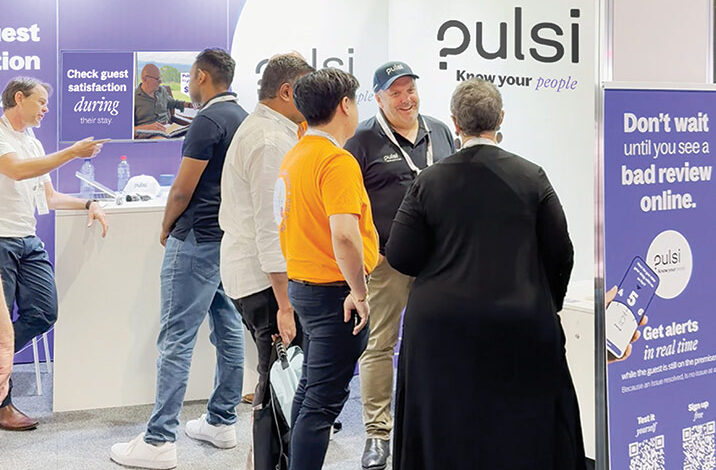
We set out to solve a problem that every accommodation operator in this country recognises: by the time you find out a guest had a bad experience, they’ve already checked out, gone home, and told the internet about it.
With Pulsi now live across hotels, resorts, holiday parks and short term property rentals around the country, what strikes us is how Pulsi is being used in ways we didn’t fully anticipate.
The problem hasn’t changed. The response time has.
The numbers that brought us into this industry haven’t moved much in twelve months, and they’re still the reason real-time feedback matters. Only around one in four guests who experience a problem during their stay will say something directly to staff. The rest simply leave, and some of them go on to leave a review instead. By then, the moment to fix anything has passed.
What’s changed is how many operators are now closing that gap before it opens. The shift we’ve seen isn’t about technology adoption; It’s about a change in expectation. Once a property experiences what it’s like to know about a problem in real time they don’t want to go back to waiting.
What should we even be asking?
If there’s one challenge we’ve seen more than any other this year, it isn’t technical, it’s knowing what to ask. Most operators understand that they should be gathering feedback, but far fewer have the time or training to write surveys that surface something useful. Too broad and guests disengage. Too narrow and you miss the issue entirely. It’s a pattern we’ve seen often enough that we’re now building a Pulse Assistant into the platform – an AI-powered tool designed to help build the right survey for the right moment. It’s coming later this year, shaped almost entirely by what operators have asked us over the past twelve months.
The other thing we’ve picked up on is that operators want to try before they buy and quite frankly, we don’t blame them. Some want to run Pulsi in a handful of rooms or a single outlet first, see what comes back, and decide from there. That’s exactly why we introduced the Starter Kit this year — see the opposite page for the details.
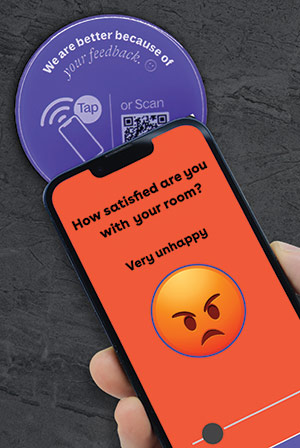 Turning feedback into revenue, not just reassurance
One of the more unexpected uses of Pulsi this year has nothing to do with fixing problems. A number of properties are now using in-stay surveys as a sales channel – a dining pulse that offers a return booking with a discount, or a check-in survey with a direct link to book the spa. For operators, it’s turned a feedback tool into all important incremental revenue.
The feedback nobody used to hear
Perhaps the most quietly powerful use of Pulsi has been the positive side of the ledger. Guests are remarkably generous with praise in the moment, they’ll happily tell you that a staff member went out of their way to help or fixed something with a smile. The problem has always been timing. By the time a guest gets home and sits down to leave a review, they’ve usually forgotten the staff member’s name and that personal praise either gets generalised or never gets written at all.
With real-time feedback, that praise can reach the staff member directly. Operators have told us this has made a genuine difference to morale and performance, not because staff are being monitored more closely, but because, for the first time, good work is being recognised in the moment it happens.
Where to from here
If the first year of Pulsi taught us anything, it’s that accommodation operators don’t need more data, they need the right data, fast enough to act on it, and increasingly, help knowing what to ask in the first place. That’s the principle we’ll keep building around heading into year two: getting feedback to the people who can do something with it, while there’s still something that can be done.
Order your starter kit at pulsi.co.
