
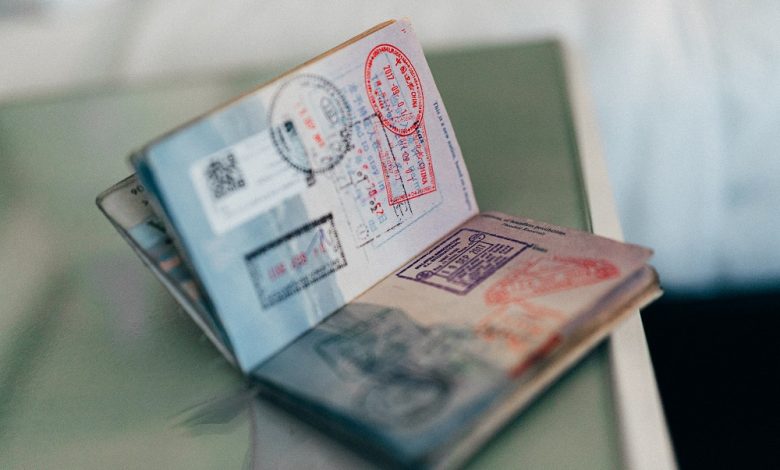

At last – fully vaccinated Australians no longer require exemptions to leave the country.
Announcing the news last week, Minister for Health, Greg Hunt said the government wanted Australians to be able to reunite with their loved ones, whether it’s for births, weddings or just to visit family.
“Vaccination is the most effective way to protect our community against COVID-19, and I’d like to thank every single Australian who has come forward and received a COVID-19 vaccine, which has helped us get to this point.”
In a joint statement with Minister Hunt, Minister for Home Affairs, Karen Andrews reiterated the Prime Minister’s comments that Australian citizens and permanent residents will be the first priority for overseas travel, with fully-vaccinated skilled workers and international students expected before the end of this year.
But those Australians not vaccinated will still need a travel exemption and be subject to passenger caps and quarantine arrangements when returning to Australia.
As a direct result of the development, the Department of Foreign Affairs’ (DFAT) Smartraveller website has now removed its global ‘Do not travel’ advisory and updated travel advice levels for 177 destinations based on the latest risk assessment.
At this stage, no destination will be set lower than Level 2 (‘Exercise a high degree of caution’).
DFAT has also issued a Global COVID-19 Health Advisory with the Department of Health to provide advice for vaccinated and unvaccinated travellers.
To date countries Australians will be allowed to visit UK, the US, Canada, Italy, Greece, Germany and South Africa without having to undergo quarantine upon arrival.
Singapore will reopen to Australians from November 8 and Thailand will only ask travellers to spend one night in hotel quarantine.
Since the government closed the international border in March 2020, Australians have been barred from leaving unless they obtain a special exemption.
New changes to the Human Biosecurity Determinations also simplify the pre-flight testing requirements to be three days (rather than 72 hours) and ensure that decisions on exemptions to testing are taken on the basis of recent medical advice.
Minister Hunt said the changes were made on medical advice around the protection provided by COVID-19 vaccination for travelling Australians.
“Australian citizens and permanent residents who want to travel overseas will need to provide proof that they are fully vaccinated with a TGA-approved or recognised vaccine, with the second dose occurring at least seven days prior to travel,” he said.
“These changes will also facilitate travel by children under 12 years of age.”
The government ruling coincides with the results of a survey canvassing 1000 Australian adults commissioned by one of Australia’s largest online financial brokers Savvy, a key finding of which shows almost two thirds of Australians (57 percent) feel positive about the upcoming opening of international borders.
As for where people would go would be influenced by their destination country’s COVID mitigation policies, 48 percent said it would “very significantly” influence choice, with 31 percent saying it would significantly influence their choice – almost four in five respondents.
The reasons for going overseas are overwhelmingly recreational – 87 percent saying they are primarily leaving for a holiday or to meet family and friends while 3 percent said they would be returning home. As for when that would happen, 23 percent said within six to twelve months and 24 percent within one to two years. Only 2 percent of respondents said they would jet off immediately.
As for where they’d like to travel the most, New Zealand and the Pacific Islands topped the survey (26 percent) followed by Asia (21 percent) and Europe (20 percent). Surprisingly, only 7 percent chose the United Kingdom, and 6 percent North America.
In light of Australians being stranded overseas due to tightened quarantine quotas or outbreaks in certain countries, 47 percent are worried about being stuck in their destination – which outweighs the worry of catching COVID-19 (31 percent).
On the ‘vaccination issue’ 64 percent of respondents said that they would feel uncomfortable boarding a flight with unvaccinated passengers.
A total of 59 percent of 55–64-year-olds reported they would feel very uncomfortable with the prospect. Only 18 percent of respondents said they would be comfortable sharing a flight with unvaccinated passengers.
A large 43 percent said that the unvaccinated should get the jab before being allowed to travel with 48 percent of Sydneysiders agreeing, 46 percent of Brisbanites while Perth and greater WA residents agreed strongly (49 percent and 52 percent respectively.)
Only a quarter said unvaccinated passengers should be allowed to travel, as long as they adhered to quarantine and travel rules with 20 percent saying they should be allowed, provided they can produce a negative COVID test prior to boarding.
On the subject of airfares and costs, 37 percent of survey respondents said they’d spend between $5,000 and $10,000 on their next international trip, with 46 percent of 18–24-year-olds agreeing. While 30 percent would spend up to $5,000, only 12 percent would spend $10,000-$15,000.
Savvy managing director, Bill Tsouvalas said there is an appetite to travel and a lot of people have had two years to save up for a trip.
“Seeing as the upper end of spending is still quite small, with only two percent saying they’d spend over $20,000, this may indicate nervousness in going on holiday for extended periods,” he said.
“But overwhelmingly, Australians are eager to travel once again. They’ve been waiting a long time.”