

Booked by emotion: Why travel marketing is turning back to the human touch
Expedia Group’s latest research: The Science of Wanderlust reveals what turns travel dreams into bookings—insights operators can bank on.

What makes someone click “book now”? Is it a dazzling drone shot of a coastline, a glossy hotel room still, or a heartfelt video that feels like a personal invitation to escape?
According to a new Expedia Group Advertising study, The Science of Wanderlust, the answer is clear: it’s emotion sparked through authentic storytelling and the right mix of human and technological touch.
Read the latest edition of AccomNews HERE
The power of moving pictures
The study’s standout finding is hard to ignore: video trumps still imagery by almost three to one when it comes to influencing travel decisions. A huge 71 percent of travellers said video inspired their bookings, compared to just 24 percent swayed by static photos. Long-form videos that allow the narrative to breathe trigger the deepest emotional connection.
For accommodation operators, this is more than an interesting stat; it’s a roadmap. Whether it’s a slow pan across a beachfront balcony at sunrise or a behind-the-scenes glimpse of your chef plating a signature dish, video has become the digital equivalent of a warm handshake and a genuine smile.
Authenticity builds trust
Travellers can spot “salesy” from a mile away. More than half of respondents said transparency is the tone that earns their trust, closely followed by clarity, confidence and authenticity. This aligns with what many independent hoteliers and moteliers already know: guests value honest communication over perfection.
That means showcasing real experiences—the laughter around a firepit, the natural imperfections of a local market, or staff sharing their favourite hidden gems. In 2025, authenticity isn’t a marketing trend; it’s the foundation of connection.
Read more from Expedia on AccomNews: Fragmented distribution is bleeding hotel profits, new Expedia research warns
Clarity counts
Even the most visually stunning campaign falls flat if it lacks structure. The study found travellers engage best with content that follows a clear story arc: an opening that draws them in, a middle that sustains interest, and a strong call to action. Quick, jarring cuts under two seconds actually reduce comprehension and emotional engagement.
In other words, less flash, more flow. Accommodation marketers should consider the pacing of their content just as carefully as their visuals.
AI can help but can’t replace us
As AI tools become embedded in marketing, Expedia’s research revealed a nuanced reality: travellers don’t mind AI, as long as humans remain at the helm. Forty-one percent said AI-generated content is “useful” when combined with human input, but only 16 percent didn’t care how it was made.
Fully AI-created influencers and landscapes, however, tended to make viewers uncomfortable, eliciting emotions like scepticism and unease. Interestingly, Millennials and Gen Z are the most open to AI in travel marketing, particularly when it’s used to enhance convenience, such as smarter deals, budgeting tools or personalised itineraries.
For accommodation operators, this means AI can streamline operations and personalise guest outreach, but the storytelling still needs a human voice.
Representation matters
One in three travellers said inclusive and relatable content made them trust a travel brand more. That means ensuring guests see themselves reflected—whether that’s families, solo travellers, LGBTQ+ couples, or retirees rediscovering the open road. Representation isn’t about tokenism; it’s about authenticity that resonates.
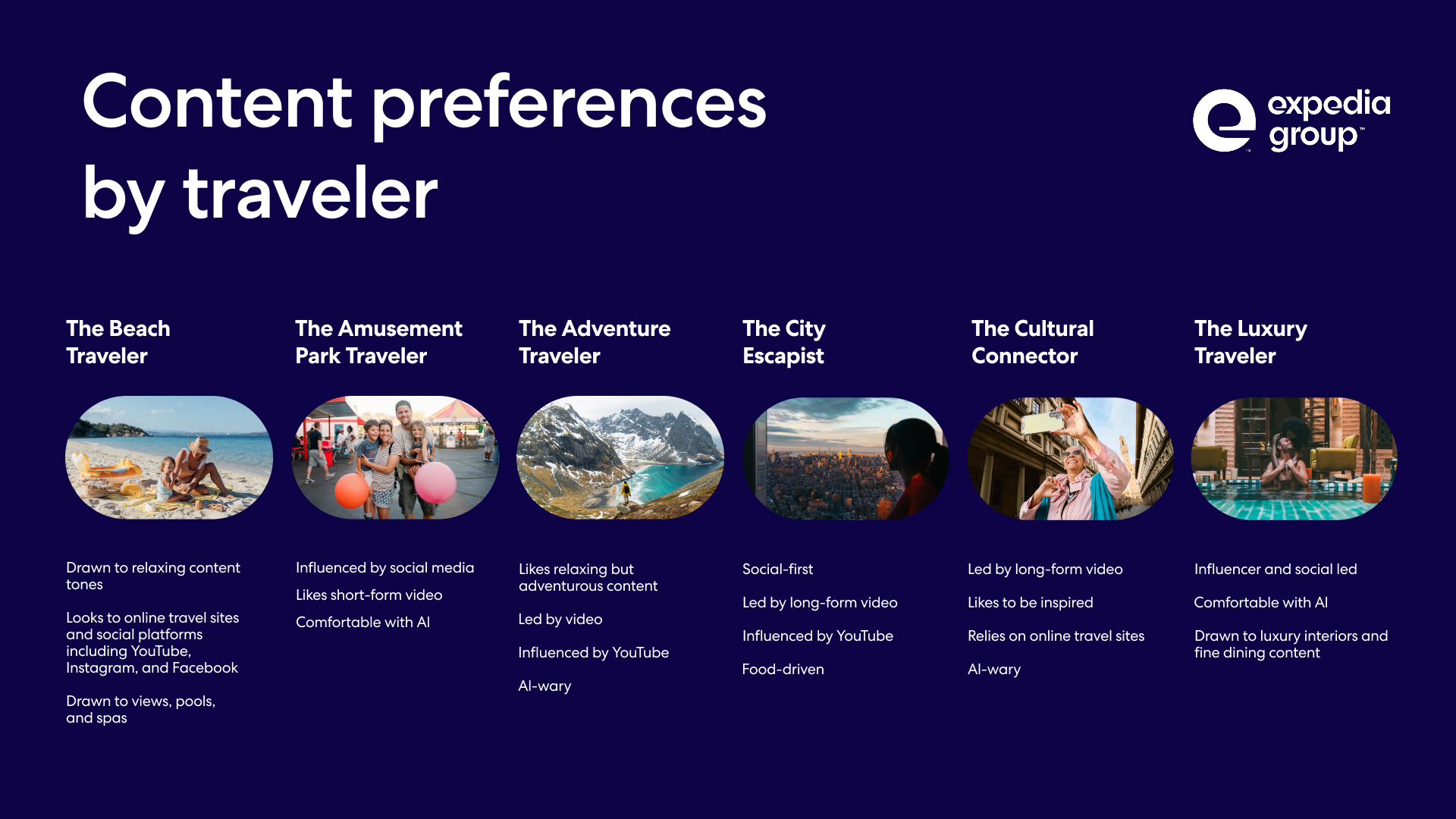
Generational and traveller type insights
The study also explored how different audiences engage with content:
-
Gen Z and Millennials: Emotional and visual, drawn to influencer content and social videos.
-
Gen X and Boomers: Calmer and analytical, preferring brand messaging, sponsored articles and detailed guides.
-
Beach Lovers: Swayed by serenity, pools, spas and relaxation visuals.
-
Adventure Seekers: Trust YouTube content and value realism over polish.
-
City Escapists: Lured by nightlife, dining and long-form storytelling.
-
Cultural Connectors: Seek amazement and authenticity, often through online travel sites.
-
Luxury Travellers: Open to AI and influencer-led inspiration but demand premium presentation.
For accommodation operators, this data reinforces the importance of tailoring content to your audience. A boutique coastal motel might highlight its sun-soaked stillness on Instagram, while an urban hotel could tell its story through cinematic long-form reels showcasing culture, cuisine and connection.
The takeaway: Emotion drives action
As Rob Torres, Senior Vice President of Expedia Group Advertising, put it: “In a world flooded with travel content, knowing what truly moves travellers from dreaming to booking is a game-changer for brands operating within the highly fragmented travel media ecosystem.”
The science of wanderlust isn’t about algorithms; it’s about emotion, trust and the timeless appeal of storytelling. AI may help polish the picture, but it’s the human touch that paints the dream.
For accommodation operators looking to boost engagement, this study is a reminder: your next booking may not come from the perfect room shot—it might come from the feeling your story creates.
10 Tips to turn traveller emotion into bookings
1. Lead with video
Video drives bookings nearly three times more than stills. Use storytelling clips that show real experiences, not just rooms.
2. Keep it authentic
Travellers trust transparency. Capture genuine interactions, laughter and unfiltered beauty.
3. Craft a clear story
Guide viewers through your narrative: intrigue, engage, and invite them to book.
4. Find the right pace
Two-nine-second scenes work best. Quick cuts confuse; slower pacing connects.
5. Blend AI with humanity
Use AI for captions, analytics or editing help, but let people shape the message.
6. Make guests feel seen
Show diversity in age, background and ability because it builds connection and loyalty.
7. Match your market
Social videos appeal to younger travellers. Boomers love detailed storytelling and trust-building copy.
8. Create emotional resonance
Focus on feelings: the calm of sunrise, the thrill of arrival, or the warmth of a welcome drink.
9. Highlight local gems
Travellers want connection to place, so feature nearby attractions, local guides or community moments.
10. Test, track, tweak
Monitor engagement and refine what works. Emotion may drive wanderlust, but data directs results.
To read Expedia Group’s full findings, click HERE.