
Making friends with power: The importance of working with government
Op-ed: Leanne Reddie, Global Asset Solutions, discusses the importance of working with government to drive demand in your hotel

Accommodation properties, by nature, can often feel a little detached from reality. Leisure guests stay there for a break from their daily lives, business guests are looking for a home-from-home while they’re on the road. They are our oasis, our safe spot away from the outside world.
And, in the luxury sector in particular, the property does its best to reinforce this view. Everything that can be done to cosset and protect the guest, to ensure that they are transcended to another plane of ease and delight, is done. This is time away from time and the world of government and politics is not welcome here. Visiting states people notwithstanding.
The latest print edition of AccomNews is out now. Read it HERE
But to not engage with government is to make yourself weaker, on both a sector and property level, as more resources flow into our sector.
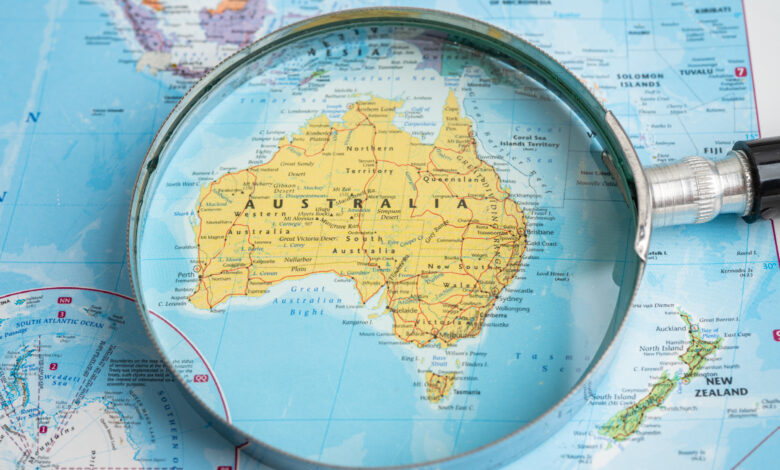
In Australia, the destination marketing organisation, Tourism Australia, was allocated a $195.9m operating budget for 2025/26 in the federal budget, to promote the country as a destination for leisure and business events travel across more than 15 international markets.
Tourism Australia has shown its effectiveness through the numbers. International visitation to Australia reached 8.3 million trips to Australia in the year ending December 2025. Holiday travel was up 11 percent on the previous year, with total spend up 18 percent to $12.9bn. Whichever way you cut it, spending $195.9m and getting $12.9bn back is a decent return.
Tourism Australia works across the sector, partnering on marketing campaigns with hotels, distributors and airlines and sharing data. As the country approaches a decade of significant major sporting events, culminating in the Brisbane 2032 Olympic and Paralympic Games, it announced a new managing director for Tourism Australia, Robin Mack, at the start of this year.
Related AccomNews story: Wage rise adds another cost challenge for accommodation operators
He said: “Australia’s tourism industry contributes significantly to the nation through the economic impact it delivers from visitor spend and the jobs it creates. Tourism supports regional communities, builds connections between countries and can be a powerful driver in positive social and environmental advances.
“The global competition to attract high yielding visitors is stronger than ever, and the contribution of Tourism Australia across our marketing, partnerships, distribution, industry engagement and strategic insights work is critical in driving visitor demand and ensuring Australia captures its share of the global traveller market.”
Having the ear of government clearly helps drive the sector on a strategic and practical level. But even in countries without such close ties or a government-funded DMO, government is a valuable source of data, much of which is freely available to any hotelier who can spare time to hop onto a website.
When you travel to another country, that travel is recorded somewhere, with sources and collection methods for arrivals differing. In some cases data are from border statistics (police, immigration, and the like) and supplemented by border surveys. In other cases data are from tourism accommodation establishments. For some countries, number of arrivals is limited to arrivals by air and for others to arrivals staying in hotels. Some countries include arrivals of nationals residing abroad while others do not. But that inbound travel data is used by the government to help analyse foreign visitor behaviours and economic impact and it can be used by you too.
Read more industry insights on AccomNews HERE
UN Tourism also collects tourism statistics from countries and territories around the world in an extensive database that provides a comprehensive repository of statistical information available on the tourism sector, including whether guests are staying overnight or just for the day, in data sets that can go back decades and be used to assess trends.
For you, the hotelier, even just knowing where travellers are visiting your country from is valuable. The view that you have from your property only tells the story of who you have attracted; there could be a whole nation you’re ignoring with advertising who are already familiar with the destination and eager to stay.
Increasingly, governments are not staying passive, but are looking to our sector to push income. The World Travel and Tourism Council reported that, in 2025, Travel & Tourism’s contribution to global GDP totalled $11.6 trillion. It grew at 4.1 percent year on year, exceeding overall global economic growth (2.8 percent) by almost 50 percent. This includes direct, indirect, and induced impacts of the sector. As a share, Travel & Tourism represented 9.8 percent of the global economy.
In the same year, the sector supported a total of 366 million jobs globally, which is approximately one in nine jobs. The sector also accounted for one in three new jobs created globally. This is the kind of good news story which is hard to come by and something that can be used to build a closer relationship with your government.
It may sometime feel like a one-way street with government, with the sector seen as source of taxation and nothing coming. But as the economic heft of our industry grows, so could that of your accommodation property.
 Leanne Reddie is Hotel Asset Manager at Global Asset Solutions. An accomplished global hotel executive and commercial leader, Leanne has more than 25 years of experience spanning luxury hotels, resorts, airlines and branded residences. She has held senior leadership roles with some of the world’s most respected aviation and hospitality groups including Emirates, Jumeirah, Rosewood Hotels & Resorts, and Chedi Hospitality (GHM).