
Commercial and industrial asset owners turn to battery storage to cut energy costs
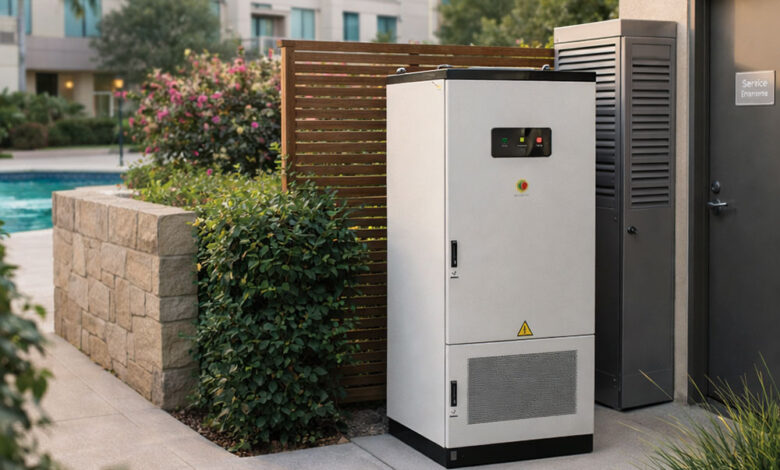
As electricity prices continue to rise across Australia, commercial and industrial asset owners and tenants are increasingly seeking ways to reduce their electricity expenditure.
For many commercial and industrial sites, behind-the-meter battery storage is emerging as a practical and immediate solution – delivering measurable savings without the complexity traditionally associated with energy infrastructure upgrades.
Recognising this shift, a growing number of asset owners and tenants have partnered with Stake Energy to deploy on-site battery systems tailored to their load profiles and network tariffs. The appeal of Stake Energy’s model is clear – no capital expenditure required by the customer, electricity bill savings of approximately 10 to 20 percent from day one and a delivery model designed to minimise disruption to building owners or tenants.
Stake Energy structures its projects so customers can benefit from battery storage without owning, financing or maintaining the battery. “Our focus is on removing barriers for asset owners,” said Michael Weiner, co-founder of Stake Energy. “We fund, install, and operate the battery system, allowing customers to realise immediate savings while we optimise the performance of the battery.”
For hotel owner group Equeva, the decision to engage Stake Energy was driven by a need to reduce energy costs across its portfolio without the need for capital expenditure or operational complexity.
“We were looking for a solution that delivered savings immediately, without capital expenditure or disruption to our hotels,” said Aviad Panta, Managing Director of Equeva. “Stake Energy stood out because they took care of everything – from system design through to installation and ongoing operation. The batteries have delivered significant savings from day one and we couldn’t be happier.”
Battery systems are typically installed alongside existing electrical infrastructure, with works typically taking a few hours and planned to avoid interruptions to tenants or core business activities. Once operational, the batteries reduce peak demand and optimise energy usage automatically, without requiring any changes to how the site operates day-to-day.
With energy volatility expected to persist, battery storage is increasingly being viewed as a commercial decision rather than a valuable sustainability initiative alone. “For commercial and industrial asset owners, this is about cost certainty and risk management,” Mr Weiner said. “Battery storage is now a straightforward way to reduce energy bills from day one, without capital outlay or operational disruption.”
For more information contact: