
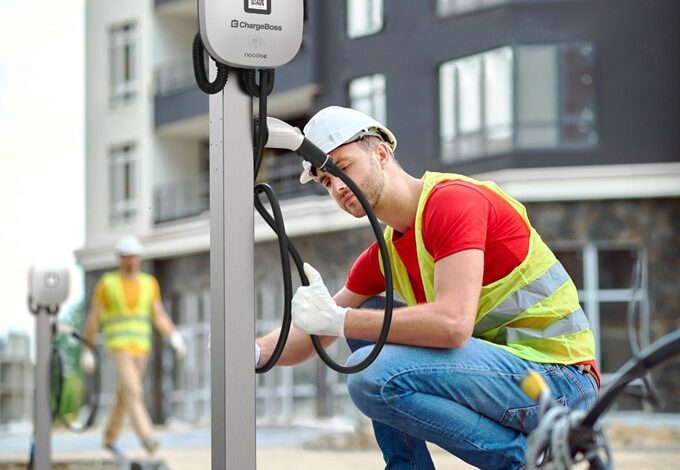
From wifi to EVs: The next essential amenity for travellers
The growing popularity of electric vehicles in Australia presents an exciting opportunity for accommodation providers.

Australia has officially passed a milestone: more than 300,000 electric vehicles (EVs) are now on the road, according to the Electric Vehicle Council.
Nearly one in ten new cars sold in Australia is now electric, and as Electric Vehicle Council CEO Julie Delvecchio noted, the trend is only accelerating.
Read the latest edition of AccomNews HERE
“Just a few years ago, electric vehicles were an emerging option in Australia, with a limited selection of models at expensive prices. But today, EVs are a serious consideration for many drivers and a familiar sight on roads nationwide,” Ms Delvecchio explained.
“Today, Australians have access to more than 120 EV car models, over 220 variants, and a wider range of affordable options starting at under $30,000, with even more choices and competitive pricing on the horizon.
“The 300,000 EVs zipping around Australia are being driven by people from all walks of life: families ferrying kids around the suburbs, tradies going about their jobs, holidaymakers taking driving holidays across the country.
“With such a wide variety of models available today, EVs are meeting the needs of people living in the inner city, the outer suburbs and regional Australia.”
For the accommodation sector, this shift towards EVs presents both an expectation and an exciting opportunity. Travellers are already factoring in charging access when booking hotels, motels, resorts and holiday parks.
As Emma Allen, Director of ChargeBoss, explained, installing EV chargers for guest and visitor use is a forward-thinking step that meets the evolving demands of travellers.
“Planning and building a reliable EV charging amenity demonstrates foresight and alignment with the evolving needs of customers, as more Australian drivers, fleets, and government vehicles transition to zero-emission transport,” she said.
“With demand rising so quickly, the need for charging infrastructure has never been greater, creating a unique opportunity for businesses to play a visible role in the shift to cleaner transport and future-ready travel.”
Ms Allen noted that accommodation providers are especially well placed to meet this demand. “Overnight stays are the perfect time for EV drivers to recharge, making on-site charging not only convenient but an essential factor in how guests search, book, and plan their trips.
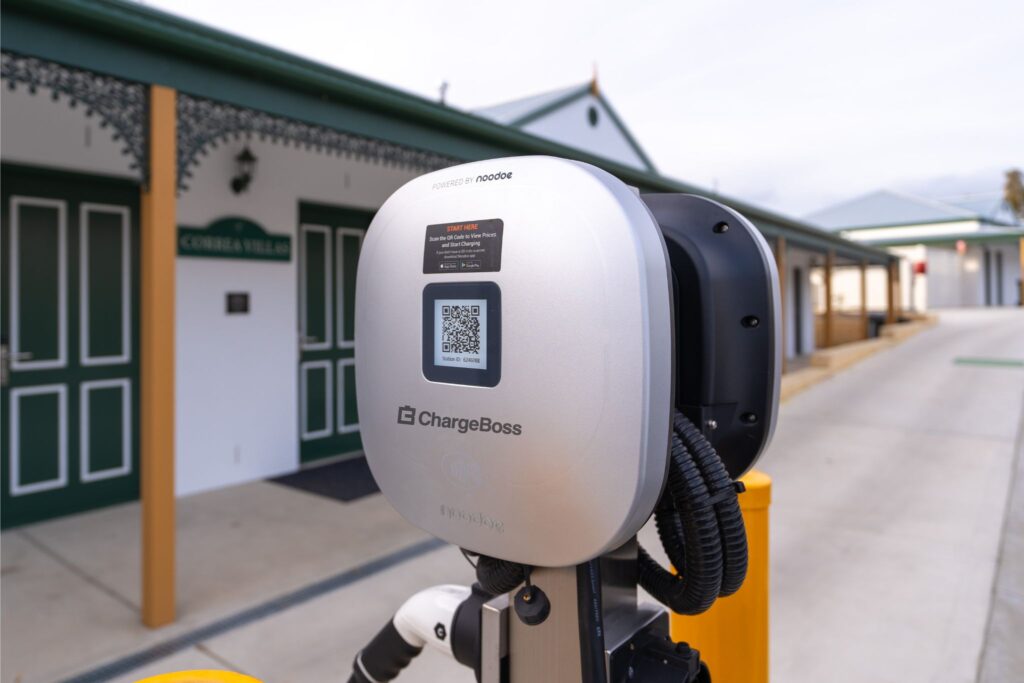
“Properties that invest early won’t just meet a growing expectation, they’ll stand out as forward-thinking destinations, while those that delay risk being passed over by travellers who now see charging as a baseline amenity.”
Beyond guest convenience, there is also a strong commercial argument for operators, with the opportunity to create an additional revenue stream year-round.
“Turning EV charging into a reliable revenue stream comes in two clear ways,” Ms Allen explained. “First, boosting the visibility of your site so EV drivers actively choose your property over others. For clubs, resorts, or day-visit destinations, charging facilities can also extend visitor stays, increasing use of other amenities.
“Second, implementing payment for charger use transforms a cost centre into a revenue-generating asset. Many venues have already upgraded from ‘free chargers’, which drained electricity budgets and offered no way to manage turnover in high-demand bays. In contrast, smart chargers provide site owners with greater control, improved utilisation, and stronger guest satisfaction—all while protecting the bottom line.”
For accommodation operators to do this effectively, Ms Allen recommends thinking in terms of a complete ecosystem rather than one-off installations. “One of the most common frustrations for drivers is encountering out-of-service chargers or worse, software that is confusing or inaccessible,” she said.
“To avoid this, ensure a strong internet connection (ideally via ethernet) so your chargers stay online and operational. Choose hardware and software that are universal and compatible with the growing variety of EV makes and models. Software can range from very basic systems bundled with some chargers to commercial-grade platforms with advanced features such as load management and online management portals.”
Related AccomNews story: Golf & green energy: Resort embraces EV charging for guests
Ms Allen stressed that planning for the future is just as important as installation today. “From the site perspective, adaptability is crucial. The charging technology you choose should suit your current customer behaviours and needs, such as deciding on charging speeds while also being scalable as guest demand grows,” she said.
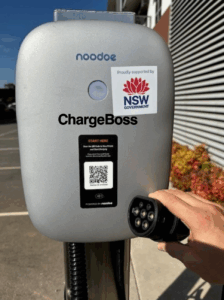
“Selecting solutions that evolve with your site ensures you won’t be left behind as EV adoption accelerates or stuck with costly retrofitting.”
Ms Allen also encouraged operators to consider the driver’s perspective from the outset to ensure a seamless guest experience. “The key is to put yourself in the shoes of the EV driver. From the moment they enter your car park, the process of finding, accessing, and using your chargers should be as frictionless as possible. This means clear signage, easy access to bays, and a straightforward first interaction with the charger itself.”
However, she cautioned that simply installing chargers is not enough—active promotion post-installation is just as important.
“Once chargers are installed, update your profiles on booking platforms and ensure your site is listed on EV maps and apps such as PlugShare, since EV drivers almost always plan trips around charging options,” Ms Allen said. “Promote the amenity to members and guests, launch it as part of your sustainability story, and make it highly visible onsite with clear signage, green-painted bays, and staff who are ready to guide guests.
“By combining smart technology, carefully chosen software, and proactive promotion, accommodation providers can ensure their charging stations are not just a convenience, but a valuable, future-proof investment.”
Finally, Ms Allen added that the technology must also evolve with guest needs. She compared the shift to another amenity that quickly went from optional to essential. “The question is: will you position your site as a leader in a technology that is inevitably part of our future—just like wifi—or wait and risk being left behind?”
This article first appeared in the Spring edition of AccomNews. Click below to explore.