
Are you prepared to save a life?
We all hope an emergency won't happen, but planning ahead with first aid training can be the difference between life and death

Accommodation providers help turn guests’ dreams into reality, from providing the perfect honeymoon destination to being the ideal base for a bucket list trip. When accidents happen, however, they also become the first line of defence in stopping a dream holiday from becoming a nightmare.
Injuries can occur at any time; when they happen in accommodation, guests are most likely to turn to staff for help. Those staff are of course also at risk of accident and injury; nearly 8000 accommodation and food service workers were hurt at work in Australia in 2024.
The latest print edition of AccomNews is out now. Read it HERE
To manage risk, all accommodation businesses must legally provide access to first aid kits for guests and staff. The contents of kits are not mandated, but Safe Work Australia (SWA) suggests that included equipment should be based on risk assessment for the type of workplace and provide ways to deal with common injuries like cuts, broken bones, bleeding, eye injuries, and shock.
SWA also recommends having an Automated External Defibrillator, known as a defib or AED. AEDs are used to deliver electric shocks to people who have had sudden cardiac arrests, which can help to normalise their heartbeat; this can be lifesaving while waiting for professional help to arrive. They are designed to be used by anyone, even people without training.
Kurtis Vuko from Pulse Defibs said there are some important considerations accommodation providers should make before purchasing an AED.
“With so many AEDs on the market, choosing the right device isn’t easy. Unfortunately, not all defibrillators are made equal, and selecting the wrong one can be costly—both financially and in terms of safety.
“Accommodation providers should prioritise some key features to ensure they select a device that operates effectively, is economical to maintain, and is future-proof, remaining rescue-ready and compliant for years to come,” Mr Vuko said.
“These include ease of use with clear CPR feedback, an adequate shock output (200 joules), and long-life pads and batteries (five years). Also consider compliance with current and future regulations, strong supplier support and a minimum seven-year manufacturer warranty.”
Related AccomNews story: Don’t slip on surface safeguards
First aid kits and AEDs should be placed in reachable, prominent positions where both staff and the public can get to them in case of emergency. Their locations should be clearly marked, for access and for the peace of mind and safety of guests and staff. Clear signage with a first aid symbol makes them easy to find and ensures that language is not a barrier to access.
“For best access, AEDs should be placed in a central, highly visible location,” Mr Vuko said, “ideally on the ground floor near reception, dining areas, gyms, lift lobbies, or other high-traffic zones. Devices should be wall-mounted in an alarmed cabinet and ideally accessible within three minutes from anywhere on the property.”
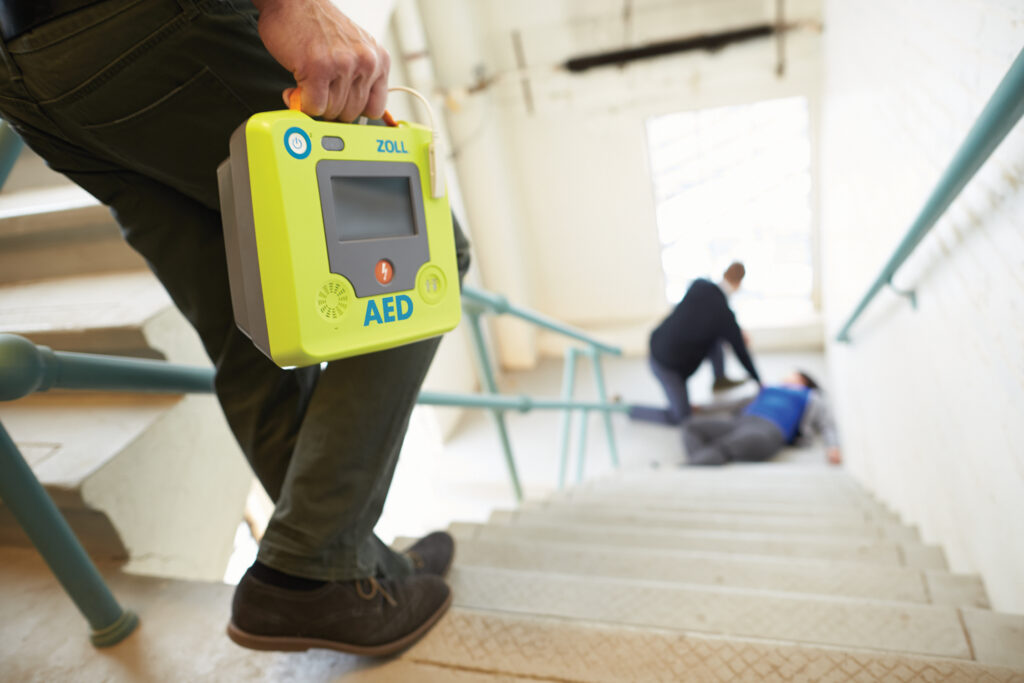
First aid equipment should also form part of routine property checks and maintenance; first aid kits should be checked for expiration dates and restocked as items are used, and AEDs need professional checks.
“It’s not enough to install an AED, tick a box, and forget about it,” Mr Vuko said. “Defibrillators must be tested and tagged every 12 months by a reputable service provider. Testing not only helps to ensure devices are kept in working order, but it also plays a crucial role in compliance and protecting businesses from potential liability that could arise if devices are needed and found to be inoperable.”
Read more Safety and Security new on AccomNews HERE
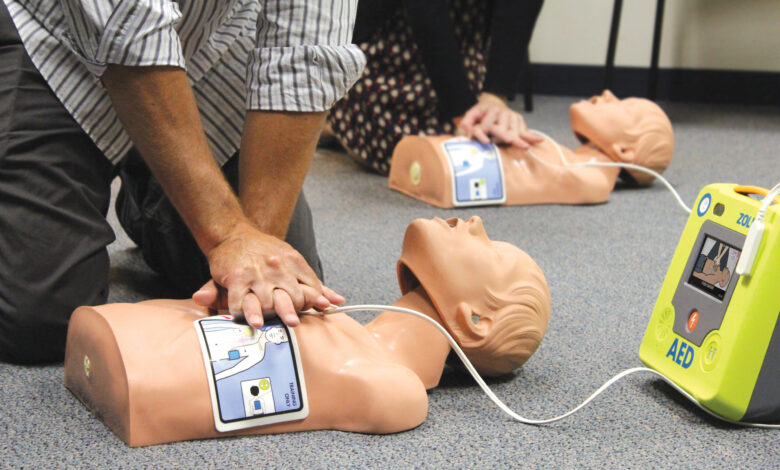
To ensure staff and guest safety in emergency situations, it’s important that staff are trained in first aid, including using equipment found onsite. A wide range of courses are available in a variety of formats, including in-person, online and hybrid. Many providers also offer first aid courses which have industry-specific elements for hospitality to ensure staff are trained for the most likely situations to arise in an industry setting.
Regular refreshers are also needed to keep skills up to date. A first aid certificate is valid for three years, though CPR training must be refreshed every 12 months. The Australian Resuscitation Council recommends more frequent, short practices and online video reviews a few times a year to keep learning fresh. This could include videos on how to use an AED, Mr Vuko said.
“AEDs are designed to be used by anyone, even without prior training. However, providing staff with basic CPR and AED familiarisation training can be highly beneficial for boosting confidence and reducing hesitation in an emergency.
“An effective way to provide training to both staff and guests is through a QR code linked to a short video tutorial of the device. This QR code can be included in guest welcome packs, staff onboarding, and displayed alongside the AED itself.”
Whilst it is not legally required for every member of staff to be first aid trained, there should be adequate numbers to ensure a good coverage; how this looks will depend partly on the size of the site and how many guests, visitors and staff are likely to be there at any given time.
For large sites, parks and situations where there are other concessions or venues on the same site, resources like first aiders and AEDs can be shared for efficiency. SWA recommends that trained first aiders should be easily identifiable, such as by providing their names and contact information publicly at first aid stations.
Planning for an emergency is done in the hopes that it will never arise. But, by investing in the right equipment and training staff to use it, if the worst happens, it can make all the difference.