
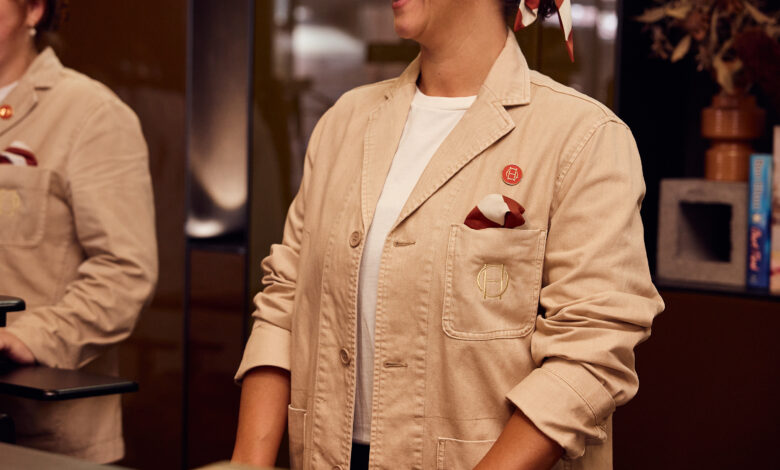
Winter uniforms for polished professionalism
Uniforms must be functional, durable, flexible and professional. We ask the experts how to keep staff looking polished in the cooler months

Cooler temperatures tend to bring a shift in what uniforms need to do day to day.
Winter uniforms must keep staff warm and comfortable, support movement during a busy shift, and still maintain a consistent and professional look across the property.
Read the latest edition of AccomNews HERE
Teams are often moving between indoor and outdoor environments, working long hours and taking on physically demanding roles. A front desk team member, a hospitality worker and housekeeping staff will all have very different needs, but they still need to feel part of the same team.
Uniforms also carry meaning beyond their practical use. They help signal roles, set expectations for guests and communicate something about the brand itself. Now, uniforms are being approached less as standard workwear and more as part of a broader design conversation, influenced not only by functionality, but also by brand positioning and, in some cases, wider fashion trends.
There is also a growing body of research pointing to the broader role uniforms play in hospitality settings. A 2017 study, The Impact of Employee Uniforms on Job Satisfaction in the Hospitality Industry, found that uniforms can influence both staff behaviour and guest perceptions, while also contributing to a sense of belonging within a team. Comfort, fit and functionality were identified as key factors shaping how staff feel in their role, with flow-on effects for confidence and performance.
In practice, this is where winter design becomes more considered. Rather than relying on heavier, bulkier garments, many operators are moving towards more flexible uniform systems that allow for layering and adjustment throughout the day. This not only improves comfort, but also helps maintain a consistent look across different roles and environments, without the need for completely separate uniform sets.
At the same time, durability and ease of care remain front of mind. Hospitality uniforms are subject to heavy wear and frequent laundering, so fabrics and construction need to hold their colour and structure over time. For operators managing multiple departments or sites, consistency and ease of replacement are also key considerations.
Related AccomNews story: Better bottoms: The foundation of modern winter uniforms
There is also a growing focus on how uniforms contribute to brand expression. Colour palettes, textures and styling details are being used more deliberately to create a cohesive look across departments, while still allowing for role-specific functionality.
In this feature, AccomNews looks at how winter uniform programs are evolving and the current industry trends, with Cargo Crew Founder and Chief Creative Officer, Felicity Rodgers.
What role do layering and fabric choice play in ensuring staff comfort?
Layering is at the core of a well-designed winter uniform. It allows teams to adjust throughout their shift without compromising presentation, whether they’re moving between indoor and outdoor environments or transitioning between tasks.
Fabric is where this really comes to life. The focus is on materials that are built for purpose, breathable, durable and able to hold their shape and colour through repeated wear and washing.
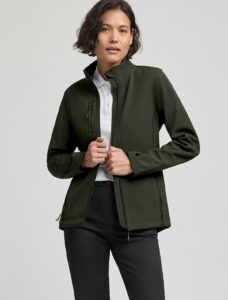
Operators are looking for garments that work harder: lightweight base layers for comfort, mid-layers for warmth, and outer layers that maintain a polished, structured look. When these elements are designed to work together, it creates a system that supports staff from the start to the end of a shift, not just in comfort, but in confidence as well.
How can uniform programs be used to reinforce brand identity while still meeting the practical demands of day-to-day operations?
Uniforms are one of the most immediate ways a hotel brings its brand to life. Your team is often the first point of contact for guests, so what they wear plays a big role in shaping that first impression.
The most effective programs start with the brand, understanding the look, feel and positioning of the hotel, then translating that into wearable, functional pieces. That might come through in colour palette, silhouette or styling details, but it needs to be consistent across every role.
At the same time, uniforms have to perform. The strongest outcomes come when design and functionality are considered together, where garments are not only aligned to the brand visually, but are also comfortable, durable and easy to wear day in, day out.
When that balance is right, uniforms do more than dress a team, they help create a cohesive guest experience.
Read more Human Resources stories on AccomNews HERE
What practical considerations should operators prioritise when selecting winter uniforms for hospitality staff?
There are a few key priorities we consistently see across the sector.
Built for purpose: Uniforms need to perform in real working environments. That means fabrics and construction that can handle long shifts, movement and the demands of different roles.
Durability and washability: Hotel uniforms go through frequent laundering, so it’s critical they maintain colour, shape and quality over time.
Comfort and wearability: If staff feel good in what they’re wearing, it shows. Comfort, fit and ease of movement all play a big role in team confidence and performance.
Consistency across the team: A well-designed program ensures every department feels connected, while still allowing for role-specific functionality.
Ease of management: Operators are increasingly looking for uniform solutions that are easy to roll out, reorder and scale as their team evolves.
Ultimately, the goal is to create uniforms that staff actually want to wear. When that happens, everything else follows.
The Autumn edition of AccomNews is out now. Click below to explore.