

Going green for a gold-star reputation
From bathroom, to bed linen, to mini bar treats, all touch points of the guest experience is going green, and guest are taking notice.

As climate change continues to make headlines, sustainability remains top of mind for both accommodation providers and guests.
In 2023,Chief Executive of Ecotourism Australia, Elissa Keenan, said “sustainability is no longer recognised as a unique selling point, but a minimum standard expected of accommodation.”
The latest print edition of AccomNews is out now. Read it HERE
In Australia, state and federal laws and regulations mean hospitality businesses must take certain measures to protect the environment. But beyond these minimum requirements, accommodation providers can also earn best practice certifications with relevant industry bodies.
Not only do these certifications ensure accommodation providers are meeting environmental and sustainability goals, but they are also a visible way to assure customers of the accommodation’s green standards.
Prioritising sustainability is important in today’s market. In 2023, a study from the World Travel & Tourism Council (WTTC), Trip.com Group, and Deloitte found that 69 percent of travellers are looking for sustainable accommodation options. This is backed up by a 2024 YouGov survey which found more than two in five Australians would spend more for an eco-friendly hotel.
As an accommodation provider, minimising environmental impact makes sense from multiple perspectives. Not only are providers doing good for the planet, sustainable solutions could also enhance guest experience and improve satisfaction, strengthen brand identity and reputation, and even reduce operational costs by implementing energy efficient systems.
If sustainability is a goal or a value that is incorporated into an accommodation provider’s brand, then providers should take meaningful action to implement sustainable practices throughout all systems and processes, including at the guest interface. This ensures that guest experience aligns with the brand identity, strengthening trust, loyalty, satisfaction and reputation.
Making sustainable goals and values visible reinforces brand identity for the guest, and helps to assure guests that sustainability is a core value that is integrated into operations.
So how should providers ensure that sustainable practices are visible to guests? One easy and high impact way is to incorporate sustainable practices into guest rooms and amenities.
Reuse, refill, recycle
The accommodation industry can produce a lot of waste, especially when guest amenities are composed of, or wrapped in, single-use plastics. Once upon a time there was little alternative for providers, but now there are a wealth of refillable, reuseable and biodegradable solutions.
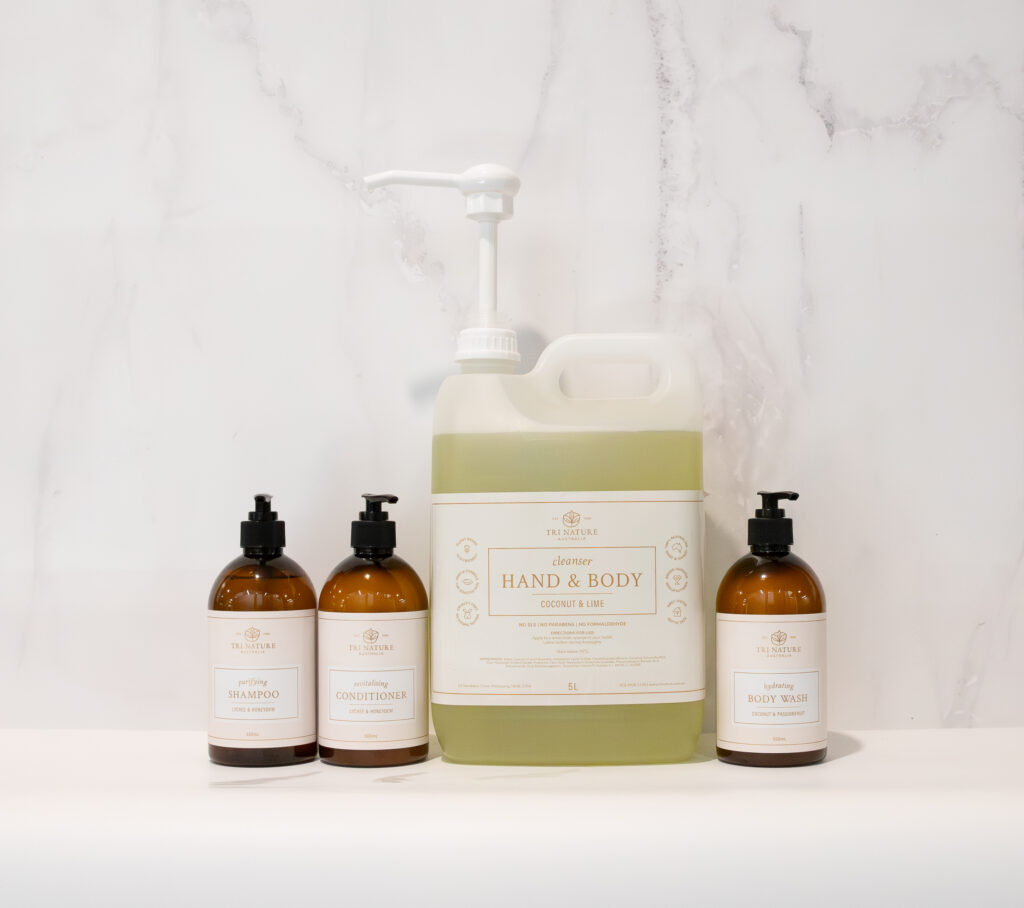
Amy Fernance from Tri Nature said: “With guests increasingly looking for sustainable and eco-friendly practices, hospitality providers can no longer rely on traditional toiletries and amenities in single use plastic packaging to meet their guests’ expectations. Instead, providers need to seek eco-alternatives while still providing high quality and maintaining brand image.
“Eco-friendly amenities that are biodegradable, grey water and septic tank safe (less pollution), with recyclable and reusable packaging (less waste), and made with sustainable materials not only improve provider sustainability but also enhance the guest experience by aligning with guests’ environmental values, helping to boost the accommodation’s appeal.”
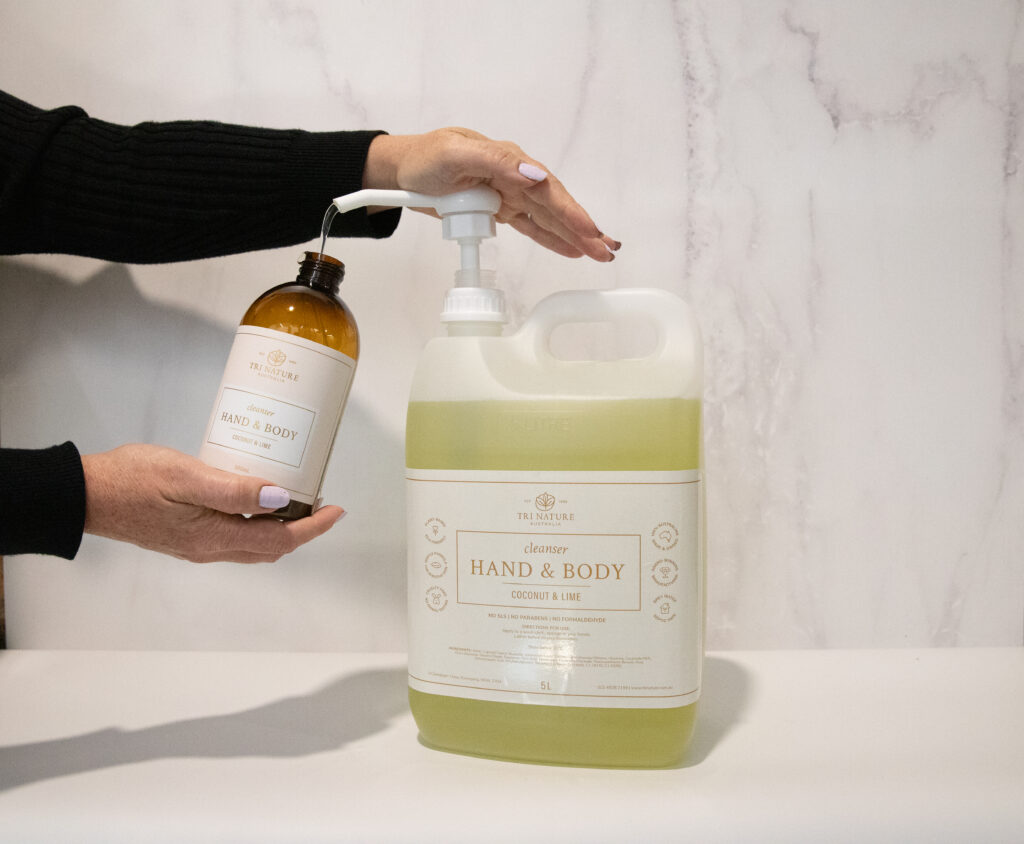
Refillable amenities are an easy, practical and convenient way to progress on sustainability goals by reducing waste. Many providers offer dispensing solutions such as bottles in lockable wall brackets, or permanent wall-mounted dispensers.
Related AccomNews story: Enhancing guest experience with thoughtful amenities
As a bonus, these bottles and dispensers can enhance the look of bathroom interiors and may represent long-term savings as refills can be bought in bulk. Additionally, larger dispensers mean fewer refills or restocks needed between guests, saving operational and personnel costs.
Providers should also consider the ingredients of bathroom supplies, as well as their origin. Locally made products may potentially have a lower carbon footprint due to lowered travel and shipping emissions. Ingredients should also be sustainably used and managed as renewable resources.
There are also sustainable options available for other amenities such as toothbrushes, combs, and shower caps. Plastic is no longer the default—packaging and products can be made from biodegradable materials like paper, bamboo and cellulose. Reusable amenities provide guests with a souvenir of their stay as well as reducing waste.
Jenna Szymanski, Head of Sales & Marketing at Swisstrade noted: “We’re now at a point where almost every guest touch point in a hotel room has a credible alternative to single-use plastics. In bathrooms, compostable accessories in FSC-certified packaging and fully recyclable dispensers are becoming standard, offering a cleaner and more responsible approach without compromising the look or feel of the space.”
Ms Fernance added there are many ways to reduce plastic waste, including refillable dispensers for liquids, using products with paper or compostable packaging and selecting sustainable materials (for example, bamboo toothbrushes).
“When selecting between these options, providers should consider factors like Australian made, quality, cost, guest satisfaction, environmental impact, and ease of implementation.
“For example, implementing a refillable dispenser system for liquid toiletries, like shampoo and body wash, will significantly reduce single use plastic waste and can be very economical. Refillable dispensers also have higher guest satisfaction compared to other options like soap bars but may require a little more effort as staff will need to refill the bottles.
“Ultimately, taking a balanced approach, combining convenience and sustainability, ensures a positive experience for both guests and the planet.”
Waste-less water
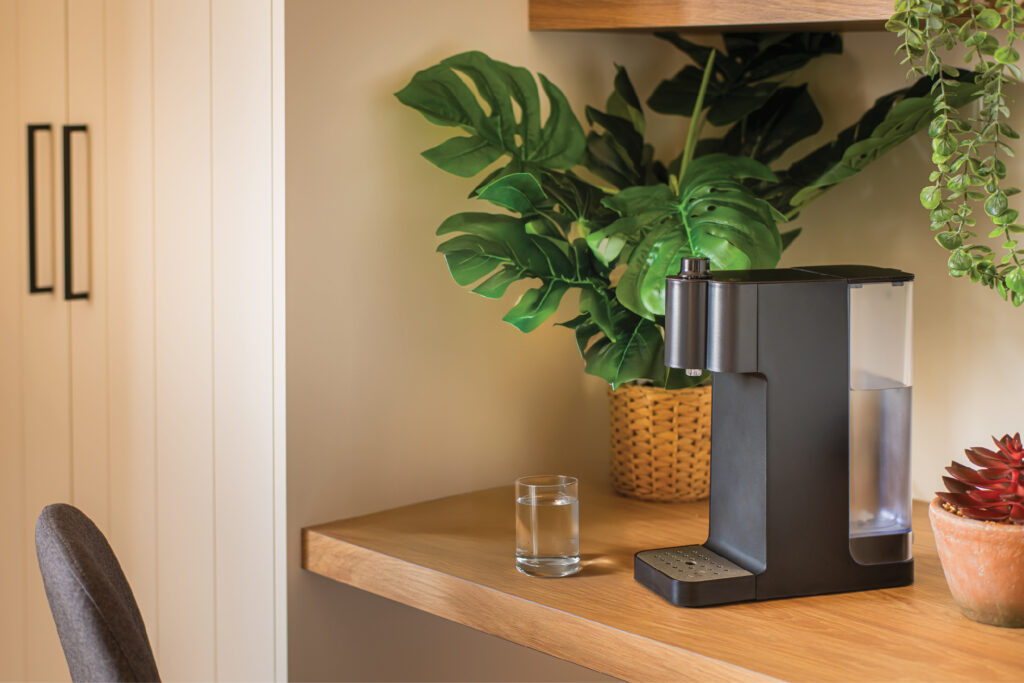
Filtered water dispensers are quickly becoming a popular feature in guest rooms, and make a great pairing with reuseable amenities like drink bottles. Including thoughtfully crafted and durable drinkware can be a nice touch, while reducing single-use plastic bottles and elevating the guest experience.
Plumbed still- and sparkling-water systems both add value to guests’ stay and help further sustainability goals by encouraging the use of refillable water bottles.
Bradly Stephenson, Business Development Director from Civiq said that plumbed-in systems can elevate the guest experience by showing care, convenience and quality.
“Guests enjoy access to fresh, filtered water, eliminating the need for single-use plastics. At the same time, providers can reduce operating costs, minimise waste, and support broader ESG commitments.”
Refillable drinking stations are also a valuable amenity to include in shared guest areas, such as lounges, waiting areas, spas, pools and gyms. Plumbed-in systems eliminate the need for clunky plastic refills, which can save costs in the long term, and reduce the use of plastic.
“As a bonus, plumbed-in systems can look infinitely sleeker, and are less obtrusive than bulky plastic refills.
“Offering refillable drinking stations with built in fountains in key areas can also cut down a surprising amount of waste, as traditional water cooler systems with disposable cups attached can encourage single-use consumption patterns. Eliminating the option completely can align with sustainability goals, improve the aesthetic of shared spaces, reduce operating costs, and the volume of rubbish going to landfill.”
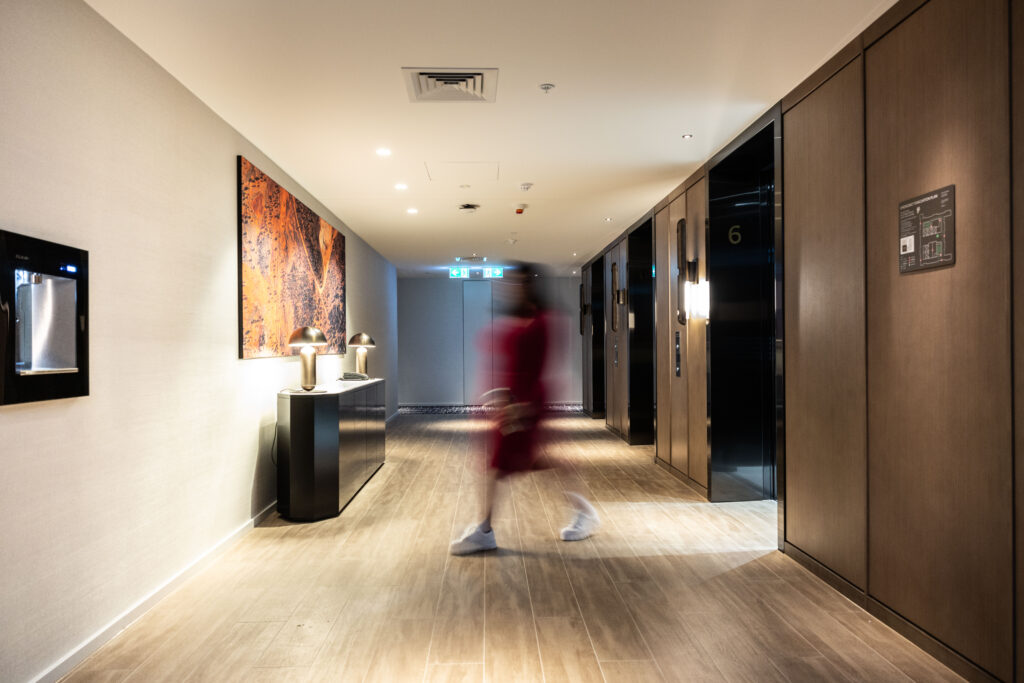
Mr Stephenson noted that refillable water stations meet a growing expectation for visible sustainability.
“According to Booking.com, 76 percent of travellers want to see sustainable practices in action. A single station can displace over 30,000 plastic bottles annually, reducing waste and labour.”
Lobbies and fitness centres see the highest usage based on installation data, as they are spaces where guests naturally pause and often need hydration, added Mr Stephenson.
“Additional high-impact placements include pool decks and conference breakouts, where usage spikes and bottled alternatives are common.
“Effective placement means meeting guests at their moment of need without disrupting their experience.”
When considering available models, Mr Stephenson recommends looking for “touch-free activation, built in filtration, and antimicrobial materials. These features improve hygiene and user experience.
“It’s also important to choose a design that complements the space and can be maintained easily by staff.
“A good hydration station doesn’t just meet functional needs, it reflects a property’s overall commitment to health, comfort and sustainability.”
Related AccomNews story: From energy drain to NABERS gain: Optimising sustainability for hotels
Sustainability at every turn
Guest rooms can have other sustainable features apart from amenities, such as environmentally friendly bedding. Mattresses made from renewable and biodegradable materials, and manufactured in sustainable ways, can bolster the guest experience and provide unparalleled comfort. There are also many sustainable options for pillows and sheets to align with brand goals and values.
Accommodation providers looking for premium options with a sustainable focus can also find luxe materials made from renewable, energy efficient materials such as linen. Technological improvements in manufacturing processes mean affordable recycled options are available too, such as recycled and reclaimed polyester.
Ms Szymanski said that certifications remain the most reliable way for accommodation providers to assess the sustainability of bedding. They offer clarity on fibre integrity, environmental impact and the manufacturing processes behind each product. But materials matter, too.
“Organic cotton, linen and bamboo viscose offer lower-impact alternatives to conventional textiles, while recycled-fibre fills help reduce reliance on virgin polyester in duvets and pillows. Production methods such as reduced water usage, low-impact dyes and closed-loop manufacturing all contribute to a more responsible final product.”

Ms Szymanski added durability should also be considered, as high-quality bedding often lasts longer and reduces waste.
“End-of-life considerations, such as recyclability or compostability, help hotels minimise their overall environmental footprint. These attributes give operators a clear framework for selecting bedding that supports both guest comfort and responsible environmental practice.”
Beyond the bed, sustainability can extend to every corner of the guestroom, says Ms Szymanski.
“Across the minibar and wardrobe, operators are turning to low-wattage appliances, filtered water dispensers instead of plastic bottles, responsibly sourced tea and coffee formats, compostable slippers and robes made from recycled fibres. Many properties are also paying closer attention to the smaller details; switching to wooden key cards and wooden coat hangers, and replacing traditional plastic-based items with more sustainable alternatives wherever possible.
“These small but considered choices help create guest environments that feel modern, intentional and environmentally conscious.”
This article first appeared in the Summer edition of AccomNews. Click here to explore