
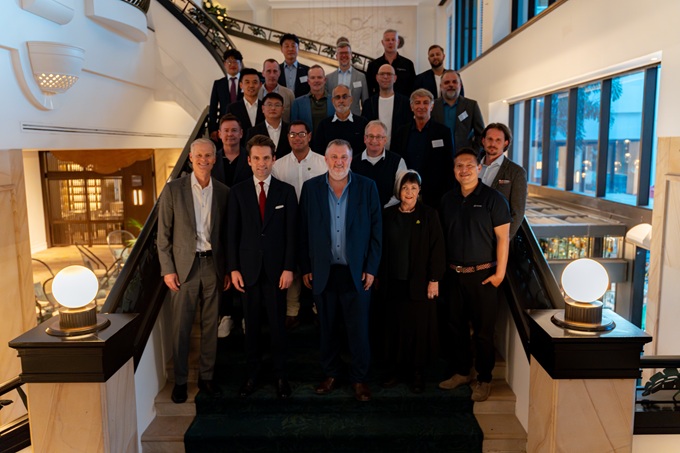
Stuart Lamont: Opportunity still exists for operators prepared to think differently
Speaking with AccomNews, Stuart reflected on the industry's resilience, the challenges ahead and the reasons he remains optimistic

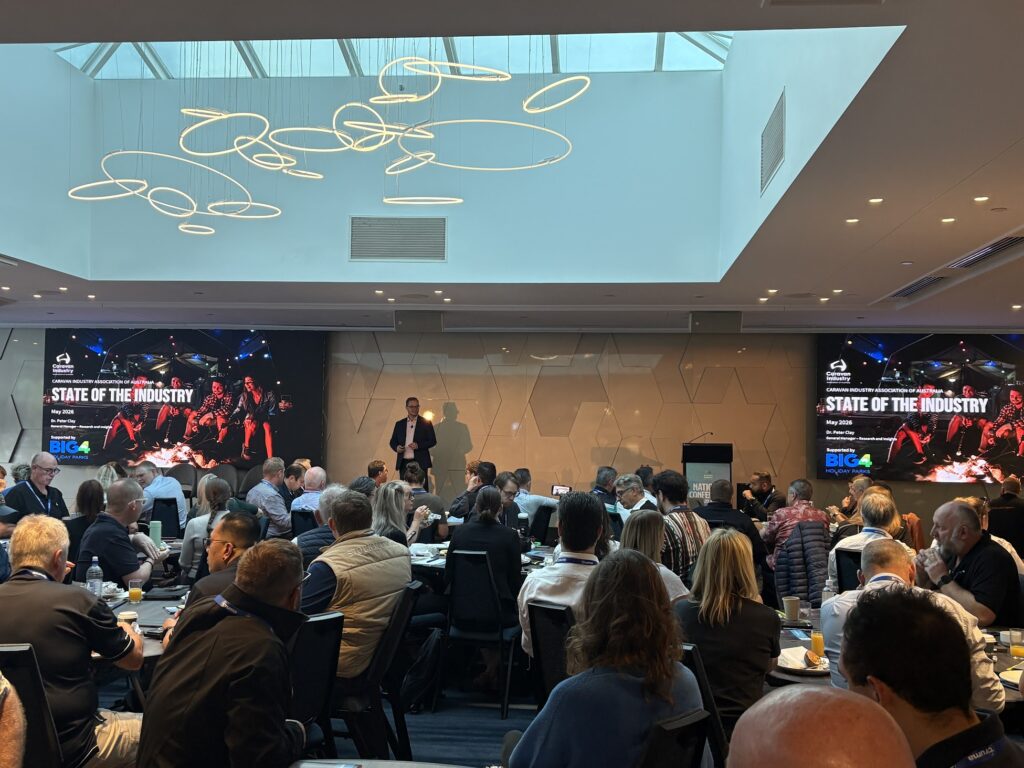
With the 2026 Caravan Industry Conference now wrapped up, the conversations are continuing well beyond the Gold Coast.
The industry is still navigating rising costs, changing traveller behaviour and global uncertainty, but if there was one message Stuart Lamont, CEO of Caravan Industry Association of Australia (CIAA) wanted delegates to leave with, it was that uncertainty shouldn’t stop operators looking for opportunities.
The latest print edition of AccomNews is out now. Read it HERE
Speaking with AccomNews following the conference and the release of the State of the Industry Report 2026, Stuart reflected on the industry’s resilience, the challenges ahead and the reasons he remains optimistic about the future.
“The conference focused on the significant market opportunities still available within the sector despite broader market uncertainty,” he said.
“This event was about showcasing the very best talent in the industry while challenging attendees to think differently about the future. Those who attended should expect to have a competitive advantage over those who stayed behind working in their businesses.
“This was the strongest program we’ve put together, with discussions spanning expanding horizons, mental agility, business systems, cybersecurity, current market conditions and content creativity, along with constructive conversations about the future of the industry through the eyes of both market leaders and emerging thought innovators.
“The idea was to encourage people to open their thinking to new revenue opportunities and target demographics, while leaving excited and enthusiastic about future possibilities.”
For Stuart, the conference reflects what has always been one of the industry’s greatest strengths: its willingness to share knowledge and support one another.
“As an industry we have always been a large family looking out for one another, sharing information and feeding off the energy of others.”
He believes the conference plays an important role in creating that environment.
“Creating a strong buzz throughout the event means new ideas are better absorbed, new connections are embraced, and delegates return to their businesses with the enthusiasm to drive positive change.”
That optimism is reflected in the latest State of the Industry Report, which Stuart says paints a picture of an industry continuing to adapt despite difficult economic conditions.
“What stood out most for us from the report was the overall resilience and adaptability of the sector to economic pressures. We’ve seen strong performance of the domestic visitor economy, RV registrations and industry revenue, which highlights the enduring appeal of caravanning and camping. At the same time, shifting consumer behaviour shows how the industry is evolving in response to changing economic conditions while maintaining solid interest.”
That changing behaviour is something every operator needs to understand.
“The key takeaway from the report is that while demand for caravanning and camping remains solid, it is increasingly value-driven and more localised.”
Travellers are taking shorter trips, staying closer to home and becoming increasingly price conscious.
“For park operators, this means adapting to changing travel patterns remains crucial.”
While demand has remained solid, Stuart says the conversations he’s having with operators today are increasingly centred around profitability.
“Profitability and uncertainty are the two words coming up most often when we talk to park operators right now, and they are feeding each other in ways that make this a difficult period to navigate.”
Costs have risen across almost every part of the business, from insurance and energy through to wages and maintenance. Many parks have little capacity to pass those increases on without affecting occupancy.
“The margin squeeze is becoming more real.”
The operators performing best, he says, all have a few things in common.
“What we see in parks that are holding up well is a sharp understanding of their cost base, a clear product position, and a willingness to make decisions rather than wait for conditions to shift. The challenge is that the broader environment is not making that easier.
“The current uncertainty surrounding oil availability and price compounds the challenges. Consumer spending on discretionary travel has softened as households work through current and expected cost-of-living pressure.”
Despite the uncertainty, Stuart remains optimistic, although he acknowledges much depends on factors beyond the industry’s control.
“At the time of writing, significant uncertainty remains in the Middle East and over access to global oil supplies. If that situation improves and confidence in fuel supply returns, I see an industry that will rebound strongly, even against a backdrop of ongoing cost-of-living pressure.”
Stuart’s optimism stems from his belief that caravan and camping occupies a unique place within Australia’s tourism sector because of its ability to adapt to a changing market.
“Caravan and camping plays across multiple value propositions and can adapt to fit market conditions in ways that many other tourism sectors cannot. When uncertainty rises and cost pressures build, as we have seen over recent years, demand for caravan and camping has held up. That resilience is the foundation the industry builds from.”
He is equally realistic about the risks if fuel supplies become constrained.
“The risk runs the other way, though. If oil supplies remain constrained and we start hitting tank bottoms, long road-based travel will contract. Parks beyond three hours of major population centres will feel that most acutely, and the effect on Northern Australia would be severe. A region that already operates within a limited seasonal window has little buffer to absorb a sustained drop in drive tourism.
“That is the scenario the industry is watching most closely right now.”
Read the 2026 Caravan and Holiday Park Industry Spotlight HERE
Even with those challenges, Stuart believes the fundamentals remain strong.
“We are optimistic about the industry’s ability to sustain growth on the back of continued strong domestic demand and increased park performance. Strong occupancy rates, increased revenues and a growing RV fleet represent a solid foundation, while the continued appeal of experience-driven and regional travel positions park operators well for stable growth despite external pressures.”
Looking ahead, Stuart says the association will focus on three key priorities over the next 12 months: improving internal systems to become more efficient and effective, responding to softening market conditions while promoting consumer confidence in the industry, and commercialising more of its services to create more diverse and independent income streams.
“Each of these priorities is ultimately about delivering better outcomes for our members and the broader industry.”
Planning is already underway for next year’s conference, with Stuart and the team already thinking ahead.
“All I can say is that each year we try and lift the bar, and we are already thinking ahead to how we have an even more awesome event in 2027.”