

News In BriefTechnologyNewsOp-Ed
Op-ed: From digital expectations to revenue: What generational travel trends mean for hotels
Agilysys' Tony Marshall on creating experiences that resonate across generations, and leveraging technology to drive profitability

Digital transformation has become an industry priority across hospitality in Asia Pacific. Yet for many hotel operators, the conversation is no longer about adopting technology for its own sake, it’s about ensuring digital investment delivers measurable commercial outcomes.
New research from HSMAI Asia Pacific and Agilysys highlights a pivotal shift shaping the future of hospitality: generational technology adoption. The findings reveal a growing digital divide between guest expectations and hotel capabilities, with implications for revenue growth, loyalty, and long-term competitiveness.
For hotels across Australia and New Zealand, this divide presents both a challenge and opportunity. The question is not whether to invest in digital transformation, but how to ensure those investments translate into stronger guest relationships and higher per-guest spend.
A generational shift reshaping guest expectations
By 2030, Millennials and Gen Z travellers will account for 83 percent of hotel guests across APAC, bringing digital-first behaviours that are reshaping hospitality expectations.
These travellers research online, book on mobile and increasingly expect seamless digital journeys throughout their stay. The research shows 86 percent of Millennials and 83 percent of Gen Z consider the ability to book entirely online important, while 55 percent of Gen Z travellers used smartphones for their most recent travel booking.
For this generation, technology is a baseline expectation. Many are also 75 percent more likely to choose hotels offering self-service technology compared with older travellers.
Yet the generational divide works both ways. While younger guests prioritise mobile-first convenience, the research identifies another segment – travellers aged 55 and over – who represent a smaller but high-value demographic with strong spending power and loyalty potential.
For these guests, technology should enhance rather than replace human service. Mobile tools and automation are valuable when they simplify the stay, but personal interaction remains essential.
For hotels, the goal is not a single “digital” experience, but a flexible hospitality model that adapts to different guest expectations.

Personalisation as a commercial driver
Personalisation is becoming a significant revenue driver. The research shows 68 percent of travellers are willing to spend more for personalised experiences, yet many hotels still lack the infrastructure to deliver this consistently.
When hotels understand guest preferences – from dining habits to activity interests – they can anticipate needs, deliver targeted offers, and create experiences that encourage repeat visits.
Instead of viewing room stays, restaurant visits, and spa bookings as separate transactions, hotels increasingly need to see each guest as a connected journey across multiple touchpoints.
Beyond the room: Why total guest value matters
Historically, hotel performance has been measured through room-centric metrics such as RevPAR. However, the research highlights the growing importance of measuring total guest value.
Revenue Per Available Guest (RevPAG) reflects how guests interact with the entire property; linking accommodation with dining, wellness and activities.
The research highlights the role of intelligent guest profiles, which unify data from reservations, dining, spa visits and other interactions to create a single view of the guest.
By capturing total spend across the guest journey, hotels can identify new revenue opportunities that extend beyond the room.
Bridging the data gap
Despite recognising the importance of personalisation and loyalty, many hotels remain constrained by fragmented systems.
The research shows 56 percent of hospitality executives say their properties lack the integrated infrastructure needed to leverage guest data. Without unified data, hotels struggle to deliver seamless experiences.
Integrated guest profiles provide the foundation for more predictive hospitality. For example, a returning guest who often orders room service could receive proactive menu recommendations before ordering. A business traveller who often visits the spa after meetings could receive tailored availability alerts.
These interactions improve the guest experience while creating opportunities for incremental revenue.
Automation that enhances service
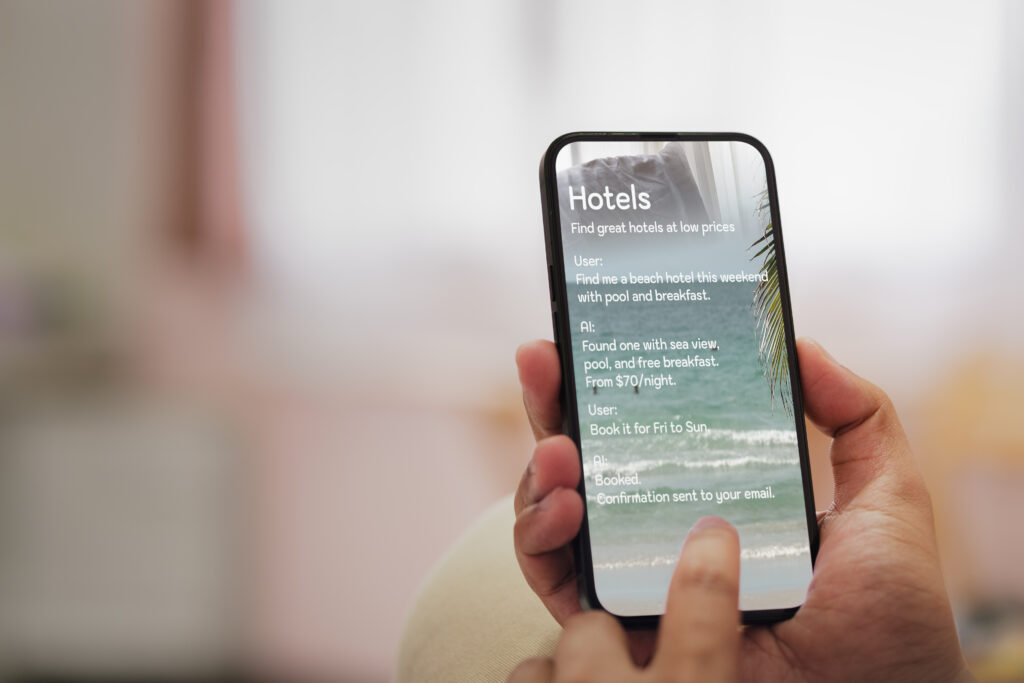
Technology is also enhancing operational efficiency. AI-powered chatbots can now handle up to 80 percent of guest enquiries, while 73 percent of hoteliers expect AI to have a substantial impact within the next year.
Rather than replacing hospitality, automation enables staff to focus on higher-value guest interactions. Research shows 46 percent of guests value staff who go the extra mile, while 41 percent appreciate personalised activity recommendations.
Technology supports these moments by providing staff with real-time guest insights.
What the data means for Australia and New Zealand
While these trends are shaping hospitality across APAC, the research highlights distinct characteristics within the Australian and New Zealand markets.
Australia: Measured adoption
Australian hotels are likely to take a gradual approach to digital transformation, prioritising technologies that demonstrate clear return on investment.
The research shows 26 percent of Australians travelled more this year, while 29 percent increased hotel expenditure compared with 25 percent who decreased spending, indicating cautious optimism.
Australia also demonstrates the second-lowest boutique hotel interest at 15 percent, suggesting travellers prefer proven value over premium experimentation.
For operators, this supports a phased approach to technology investment focused on tools that deliver measurable improvements in guest experience and efficiency.
New Zealand: Technology supporting authentic hospitality
New Zealand’s market profile points toward a slightly different strategy.
The research shows 31 percent of travellers reported travelling more this year, while 37 percent increased hotel spending compared with 23 percent who decreased it.
The market also shows the lowest luxury preference at 20 percent and boutique interest of 18 percent.
These trends suggest travellers value authentic experiences over overtly technology-driven interactions. Technology therefore works best as a behind-the-scenes enabler that supports personalised service.
Turning digital transformation into revenue
Ultimately, the generational technology divide is not a problem to solve but an opportunity to capture.
Younger travellers are already driving travel frequency and spending growth across APAC, particularly among under-35 demographics who travel more frequently and are highly receptive to personalised digital experiences.
Hotels that close the gap between guest expectations and operational capability will be best positioned to convert satisfaction into loyalty and repeat bookings.
For AU/NZ operators entering 2026, the message is clear – digital transformation must deliver measurable commercial impact.
By unifying guest data, embracing predictive personalisation, and empowering staff through intelligent automation, hotels can create experiences that resonate with every generation and turn the evolving digital landscape into a powerful driver of profitability.
 This article was written by Tony Marshall, VP & Managing Director APAC at Agilysys, for AccomNews

“For this generation, technology is a baseline expectation. Many are also 75 percent more likely to choose hotels offering self-service technology compared with older travellers. ”
This is going to have a fairly negative impact on the bottom line for regional accommodation providers that have a fair percentage of phone bookings. This highly profitable segment of booking can only reduce as the younger groups come through.
How do you see the ecosystem between PMS, Channel Manager, OTA, Search and Property playing out Tony?
Thanks for your question, Ben!
You’ve hit on a critical point: while digital-first trends are accelerating, the direct phone reservation remains one of the most profitable and high-touch channels for a hotelier—especially in regional markets where personal rapport is a key differentiator.
However, we are seeing a widening ‘digital divide.’ Travelers today expect an immediate, seamless interaction on their own terms. The challenge for hoteliers isn’t that phone reservations are disappearing; it’s that the expectation of how that phone call should go is evolving.
This is where the ‘onset of AI’ becomes a partner rather than a replacement. We view the future of voice as Conversational AI. Unlike a traditional IVR (press 1 for reservations), tools like “Agilysys Conversational AI” use AI Agents that interact naturally, just like a person who can take bookings or answer general inquiries.
For a regional hotelier, this provides three distinct strategic advantages:
24/7 Profitability: It ensures you never miss a high-value direct booking due to a busy front desk or after-hours call.
Operational Alignment: It ensures that the voice channel is perfectly synced with your live inventory and revenue strategy, providing a full end-to-end booking experience without manual entry.
Elevated ‘True’ Hospitality: By automating the transactional nature of a booking, you free up your on-property staff to focus on the ‘high-touch’ moments—welcoming guests and creating the personalized experiences that drive repeat visits and higher Total Guest Value.
Ultimately, the goal is to capture value regardless of where the booking originates. By using Conversational AI to handle the ‘digital’ expectation of a phone call, hoteliers can maintain their most profitable channel while ensuring their team is present for the moments that matter most.
If you have any other questions, please feel free to reach out to [email protected]