
Op-Ed: Hotel investors head for the burbs in search of better ROI
Hotel investment is shifting towards suburban locations, says JLL’s Ross Beardsell

Prior to 2000, the prospect of developing upscale hotels in suburban locations such as Doncaster and Box Hill in Victoria or Blacktown and Campbelltown in Sydney would have been far off the radar for most hotel investors.
These were locations where motels and pubs supplied accommodation for travellers not prepared to commute from the city. However, in the past few decades, the hotel investment landscape has changed dramatically as demand for quality branded accommodation has grown around the establishment of large-scale business parks, universities, hospitals and entertainment, leisure and sporting precincts.
Internationally branded suburban hotels first came on the scene in the 1980s and 1990s, but were restricted to airports, secondary CBDs such as Parramatta and North Sydney, and popular city beach locations including St Kilda, Bondi, Glenelg, and Fremantle.
The latest print edition of AccomNews is out now. Read it HERE
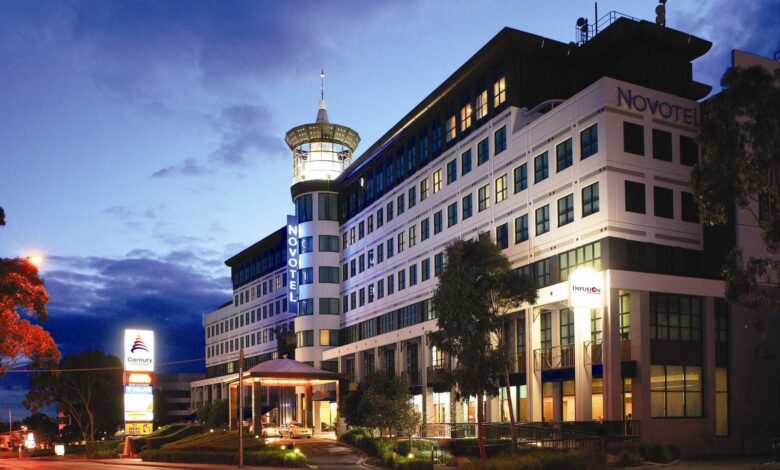
Melbourne had an early taste of international branded hotels in the suburbs when in 1998 a pioneering Novotel opened as part of the Century Walk development at Glen Waverley. With Springvale Road boasting a bountiful collection of international and national businesses, the development was a shrewd one and endorsed even further when one of the wealthiest people in the world, Kuwait’s Sheikh Mubarak A.M. Al-Sabah, followed up by investing in an Ibis Hotel next door.
While city hotel development boomed between 2013 and 2020, Covid and the decline of working from CBD offices slowed the momentum, making suburban hotel development an increasingly attractive option, especially given the escalating costs of many city centre hotel developments.
It’s not just the competitive advantage of building outside the CBD that has attracted interest in suburban hotels. The trend is being fuelled by demand for accommodation near suburban business parks, hospitals, and infrastructure projects, as well as a post-Covid demand for higher-quality, design-led, and community-focused hotel experiences.
While the Novotel and Ibis hotels at Glen Waverley happened to be located next to a shopping centre, that wasn’t the key driving force for their development. On the other hand, the Accor MGallery branded Hotel Chadstone was an integral component of the Chadstone Shopping Centre masterplan to make the precinct a world-class luxury ‘destination in its own right’.
More AccomNews: Game, set and match – sports tourism aces Australian hotel occupancies
The 5-star hotel, opened in 2019, has the benefit of tapping into 24 million annual visitors to Chadstone Shopping Centre, including an estimated 450,000 international tourists. In addition, with two Monash University campuses nearby, the hotel targets relatives and friends visiting academics and students at the university.
‘Activity centres’ combining upscale retail with commercial offices have become a key driver for hotel development in Melbourne, reflected in the construction of Sage Hotel Melbourne above the revamped Eastland shopping centre in Ringwood, and Mercure Doncaster located next to the Westfield centre.
In Sydney, Accor has combined with a variety of large suburban clubs to add large-scale branded accommodation to their well-established entertainment, gaming, sports, dining and functions venues. These include hotels at the Liverpool Catholic Club, Rooty Hill RSL, Bankstown Sports Club and Penrith Panthers.
Demand for quality suburban hotels is only going to increase with greater emphasis on decentralisation. The opening of the Sydney Metro has made staying in Chatswood, North Sydney or Green Square almost as convenient as staying in the heart of the CBD.
The massive suburban corridor leading to the new Western Sydney Airport is also meant to be serviced by a metro, but while the rail rollout is stalled, a new highway leading to the planned ‘aerotropolis’ opened earlier this month.
According to STR’s hotel analytics division, CoStar, the Western Sydney catchment has a population of around 2.7 million, but currently only one hotel, a Marriott by Courtyard, has been confirmed for the airport, highlighting that uncertainty still remains about the potential impact and performance of the 24/7 airport.
The power of large events to attract hotel development saw Homebush Bay transformed into a multi-hotel sports, events and commercial precinct courtesy of the Sydney 2000 Olympics. The potential of the market saw Accor launch four hotels in Sydney Olympic Park and – for good measure – they gained naming rights for the Olympic Stadium.
Adina Apartment Hotel Chermside in Brisbane is also well located to capture Olympic related demand, both prior to, and during, the 2032 Olympics. However, it isn’t putting all its batons in the one relay race, as its positioning gives it access to people coming to The Prince Charles Hospital and it is within walking distance of Westfield Chermside, one of Brisbane’s largest shopping centres.
These new ‘activity centre zones’ that comprise high-density, mixed-use developments blending commercial offices, retail, and accommodation have transformed suburban areas of cities throughout Australia.
The strength of the suburban hotel market has seen developers move into regional metropolitan areas adjacent to State capital cities. New internationally branded hotels opened in the past year in Geelong and Gosford, and a pioneering agreement has been signed between Ipswich Hotel Group and Hilton to construct a Hilton Garden Inn on vacant council-owned land next to the Nicholas Street Precinct, Ipswich’s new lifestyle, cultural and entertainment hub.
Hotel investors may need to recalibrate their plans because the days when upscale hotels were exclusive to CBDs are well and truly over. Instead, many travellers are forsaking the hour-long traffic jam into the city and instead booking a branded hotel a few suburbs away for an indulgent staycation with a rooftop bar, swimming pool, spa, cinemas, live entertainment and signature restaurants.
Even better for hotel operators, there’s a large workforce who similarly want to forego the commute and work locally.