
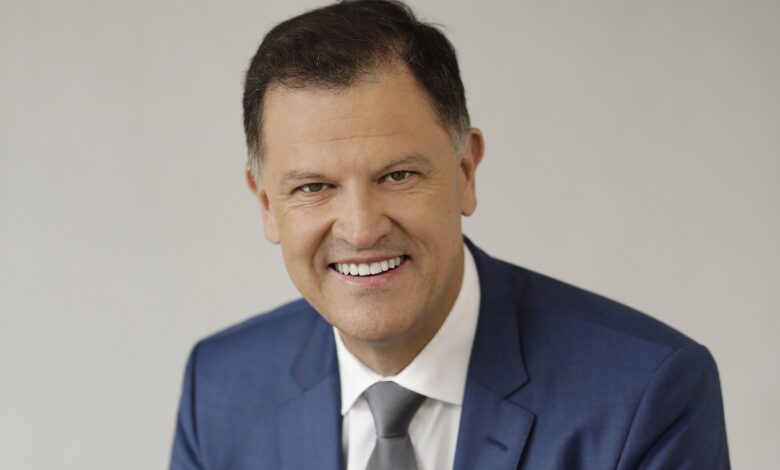
Craig Hooley on management rights and industry advocacy
In this exclusive interview, Minor Hotels COO and ARAMA board member shares his thoughts on leadership, industry advocacy, management rights, and the opportunities shaping the sector's future.

When Craig Hooley last spoke with us in 2019, the headline told the story neatly: “From dishie to director.” Before senior leadership, portfolios, brands and boardroom strategy, Craig had done the work. He had washed dishes, worked in housekeeping, moved through hotel operations and built a career on understanding accommodation from the ground up.
Today, Craig remains Chief Operating Officer of Minor Hotels, overseeing a significant Australasian portfolio that includes hotels, serviced apartments and management rights businesses. Through brands such as Oaks, Minor Hotels has long been closely connected to the management and letting rights (MLR) sector, with a model that brings together letting pool management, caretaking, accommodation operations and brand-backed distribution.
First published in the June edition of Resort News. Read it HERE
That connection has only strengthened in recent years, with Minor Hotels continuing to grow its MLR footprint in Australia, including its more recent acquisition of the high-profile residential and serviced apartment assets at Queen’s Wharf Residences in Brisbane.

Craig’s industry contribution has recently taken on another dimension. He is now on the Australian Resident Accommodation Managers Association (ARAMA) board, where he brings his hotel, serviced apartment and MLR experience to the table, as the sector faces rising pressure, closer scrutiny but also very real opportunities.
Across his career, Craig has done the groundwork, and that matters because management rights rewards the same practical abilities and understanding. It is not a lifestyle hobby or a passive investment. It is a real, hands-on accommodation business.
For Craig, joining the ARAMA board was not simply about adding another line to an already substantial CV. It came from recognising the importance of MLR within Australia’s accommodation industry and the need for strong representation.
“ARAMA plays a critical role in advocacy, education and representation,” Craig said. “As the sector evolves, that role becomes even more important. I wanted to contribute a broader operational perspective and help support its long-term sustainability.”
The timing, he said, felt right.
Management rights has always had its own rhythm, but the pressures facing operators today are different. Rising costs, workforce challenges, changing guest expectations, greater compliance demands, regulatory changes and more sophisticated owner and committee relationships have all raised the bar.
“There is increasing complexity and change across the sector,” Craig said. “That creates a growing need for strong, aligned industry representation. Management rights has enormous future potential, but it needs the right support, standards and advocacy around it.”
Craig’s perspective is shaped by a career spent working through different accommodation models. When he spoke with our sister publication AccomNews in 2019, he reflected on the importance of brand strength, systems and people.
Since then, there have been a few plot twists. The largest, of course, was COVID.
For Craig, leading Minor Hotels through the pandemic remains one of the major turning points of his career.
“COVID was the most disruptive period our industry has faced so far, and it forced every operator to look very closely at how they led, communicated and made decisions,” he said.
The challenge was not only operational survival; it also meant resetting commercial strategy, strengthening communication frameworks and making sure the business was positioned for the recovery that followed.
For Minor Hotels, that recovery included the integration of new brands, expansion of the Australasian footprint and ongoing refinement of the operating model to better support both hotels and management rights.
“The COVID period also reinforced the importance of relationships,” Craig said. “When you are working through uncertainty, trust with owners, teams and partners becomes absolutely critical.”
That lesson sits neatly within management rights, where relationships and trust are central to the operating model. Resident managers work in close quarters with owners, bodies corporate, committees, guests, tenants, staff, suppliers and agents, often creating close-knit communities in the process.
Craig said that is one of the reasons management rights stands apart from other accommodation models. “It is a uniquely Australian model,” he said.
“It blends real estate, operations, entrepreneurship and community connection in a way you do not really see in other markets. What stands out to me is the direct accountability. Operators are closely connected to the asset, the guests, the owners and the local market. Their effort has a direct impact on performance.”
That directness is one of the things that first drew him to the sector. So too was the diversity of the model, from different asset types and markets to the very different business styles operators bring to their properties.
“There is a real entrepreneurial spirit in management rights,” Craig said.
“The strongest operators understand their numbers, know their guests, communicate well with owners and take genuine pride in the asset.”
In management rights, asset presentation, guest experience and financial performance are closely connected. The best operators understand that one rarely improves without the others.
It is often admired from the outside as a lifestyle business, but those inside the sector know better. “People sometimes think management rights is a passive investment, but it is not,” Craig said. “It is an active business. It requires strong commercial judgement, operational discipline and the ability to manage multiple stakeholders.”
That comment will land with many Resort News readers, particularly those who have watched newcomers underestimate the work involved. A good MLR business can offer freedom, flexibility and strong returns, but only when the operator recognises all sides of the equation.
“You need to understand both the operational and financial drivers of the business. You need to be hands-on, and you need to think long term,” Craig said.
That long-term view is where industry representation becomes so important. ARAMA’s role, as Craig sees it, is not only to advocate when challenges arise, but to lift understanding, support education and help the sector mature.
“Strong industry representation is critical in a changing regulatory environment,” he said. “ARAMA provides a unified voice for the sector, supports education and professional standards, and helps elevate industry perception.”
However, Craig points out that many MLR operators are far more sophisticated than they are sometimes given credit for. “Many are highly skilled business owners,” he said, “looking for stronger systems, brand awareness and support to remain competitive.”
READ more about Minor Hotels HERE
Craig suggests the opportunity lies in understanding where the broader accommodation world can offer useful lessons. In a large hotel group, there are brand frameworks, centralised support and consistency at scale. In management rights, there is often more agility at property level and a more direct, owner-led style of decision-making.
The two models offer different strengths. The opportunity, Craig said, is understanding where systems, data and brand support can enhance management rights without losing its hands-on nature.
That is a key distinction. MLR works because operators are close to the property. They see the leaking tap, the difficult guest, the owner concern, the committee mood and the small service detail before it becomes a larger issue. The best operators know the building in a way no centralised system ever could.
But Craig believes the next stage of the sector’s evolution will require operators to pair that local knowledge with stronger commercial tools. “There is real upside through operational optimisation,” he said. “Those who use data well, understand distribution, manage costs carefully and maintain strong service standards will be well placed.”
He also sees opportunity in brand and distribution partnerships, especially for operators seeking broader market reach without losing the personal style that makes their business distinctive.
“The sector has strong fundamentals,” Craig said. “There is continued demand for well-managed accommodation, particularly in leisure and regional markets. It’s also a very adaptable model, and that’s one of its real strengths.”
Still, adaptability is sure to be tested.
“Costs are not going away, and workforce pressure remains a real issue,” Craig said. “At the same time, guests expect more, owners expect strong returns, and compliance obligations continue to grow. That is why strong systems, good advice and industry alignment are so important.”
It is also why Craig believes ARAMA’s education role will remain essential. Advocacy may be the most visible work, but education is where much of the long-term value is built. Better-informed operators make better decisions, reduce avoidable conflict and strengthen the reputation of the sector.
For new entrants, Craig’s advice is direct. “Treat it as a business, not just an investment,” he said. “Understand the numbers, understand the operation, get the right advice and be prepared to be hands-on. If you focus on long-term performance rather than short-term gain, you will give yourself the best chance of success.”
For established operators, the message is not wildly different. The strongest businesses are usually those that keep improving, even when things are going well. “The best operators are commercially sharp, but they are also very consistent,” Craig said.
“They pay attention to detail, do the basics well every day, and they do not lose sight of service.”
Looking back on his career, Craig said he is proud not only of growing and strengthening Minor Hotels’ portfolio at scale, but of doing so while maintaining owner value, trust and consistency across different operating models.
He is also proud of building strong, high-performing teams and developing future leaders within the business. His career has moved through large hotels, serviced apartments, management rights and now industry advocacy, but the thread running through it is people.
“You want to see people grow, take on responsibility and build successful careers,” he said.
Craig remains optimistic about what comes next for a model that has served Australian accommodation well.
“What still excites me is the adaptability of management rights,” he said. “The model has strong fundamentals, and there is still enormous opportunity for operators who are professional, disciplined and willing to evolve.”
Read the latest edition of AccomNews HERE