
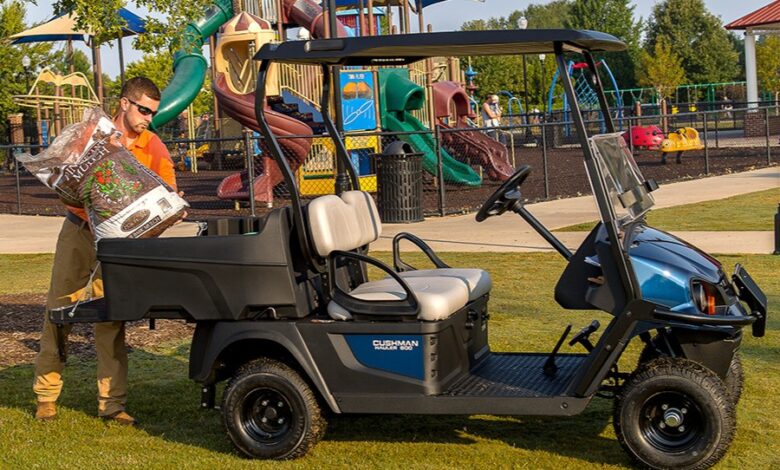
Driving positive change: The next generation of utility vehicles
Having the right utility vehicles can turn a difficult job into an easy one - here's how to make the right choice for every setting

With more choice than ever, selecting new utility vehicles can seem like a daunting task. There are many factors to weigh, from intended use to power type, and of course, cost is always a consideration.
It’s easy to assume that these concepts would all be competing with one another, and that a positive choice in one area would have drawbacks in others.
Read the latest edition of AccomNews HERE
However, with some research and planning, it’s possible to find an option that ticks all the right boxes.
Planning energy needs
If you’re thinking of changing your fleet’s energy system or increasing the use of electric vehicles, infrastructure should be at the forefront of planning. Consider where vehicles will be charged and ensure that sheds and garages have sufficient power outlets and capacity.
Many homeowners, business managers and accommodation operators are increasingly thinking about where their power comes from, too.
With under half of Australia’s electricity coming from renewable sources, operators looking to reduce their carbon footprint could make huge impacts by changing how they get their power—utility vehicles can be a great entry point for this.
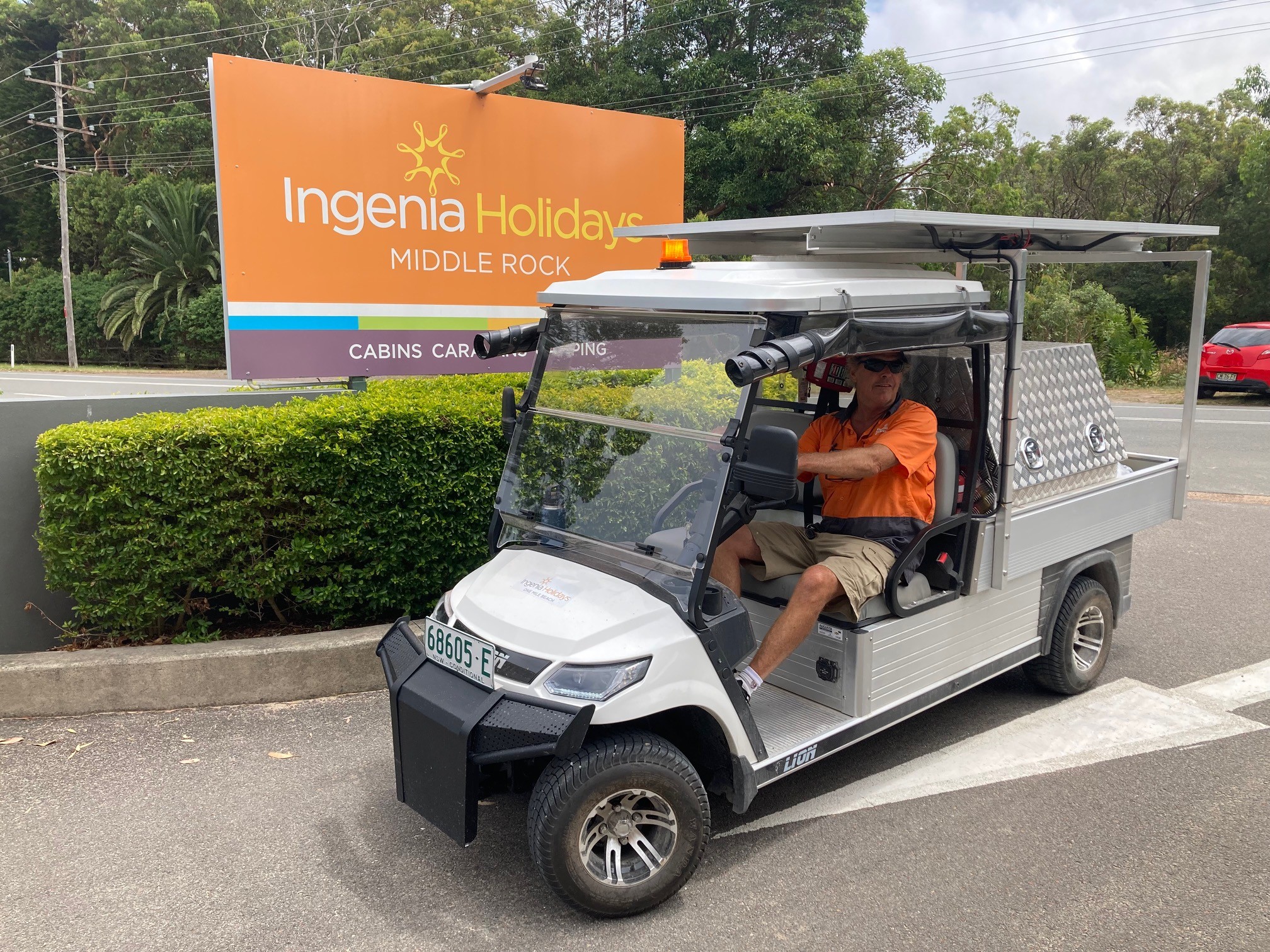
Coupling electric vehicles with a solar array and battery on a vehicle shed roof, for example, could provide a manageable but significant renewable energy contribution, with the backup of mains electricity for cloudy days.
Purpose-built design
Whether you’re thinking of expanding, replacing or buying utility vehicles for the first time, choosing the right type is important.
If you have several in your fleet, look at which are used the most frequently and consider why. Speak to staff about the disadvantages and advantages of each, as well as any frequent issues that come up.
Related AccomNews article: The power play: Cutting energy costs through smarter purchasing and solar solutions
Of course, each class of utility vehicle comes with special features, and within them there are different options.
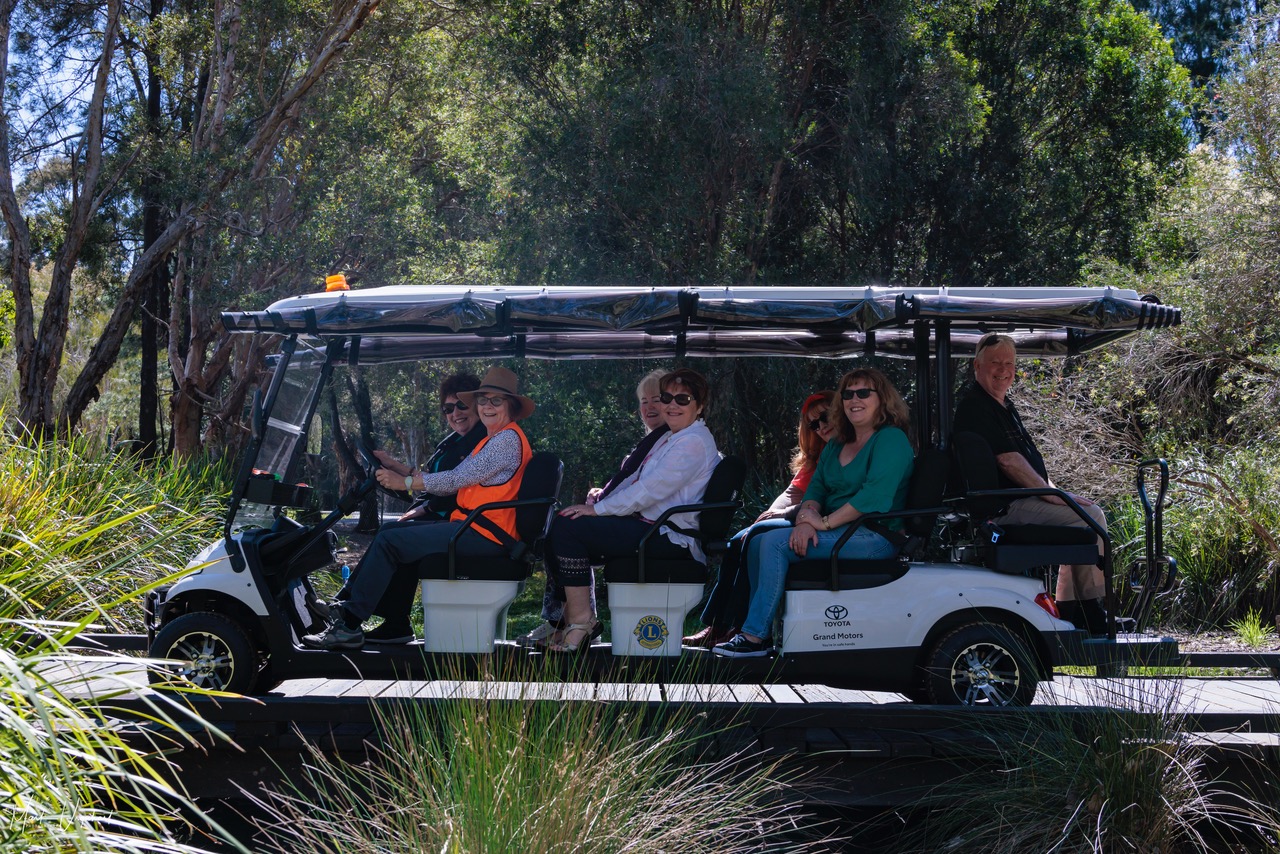
For moving people, for example, think about your average group sizes and luggage needs when choosing a six-seater over a four-seater with a rear tray.
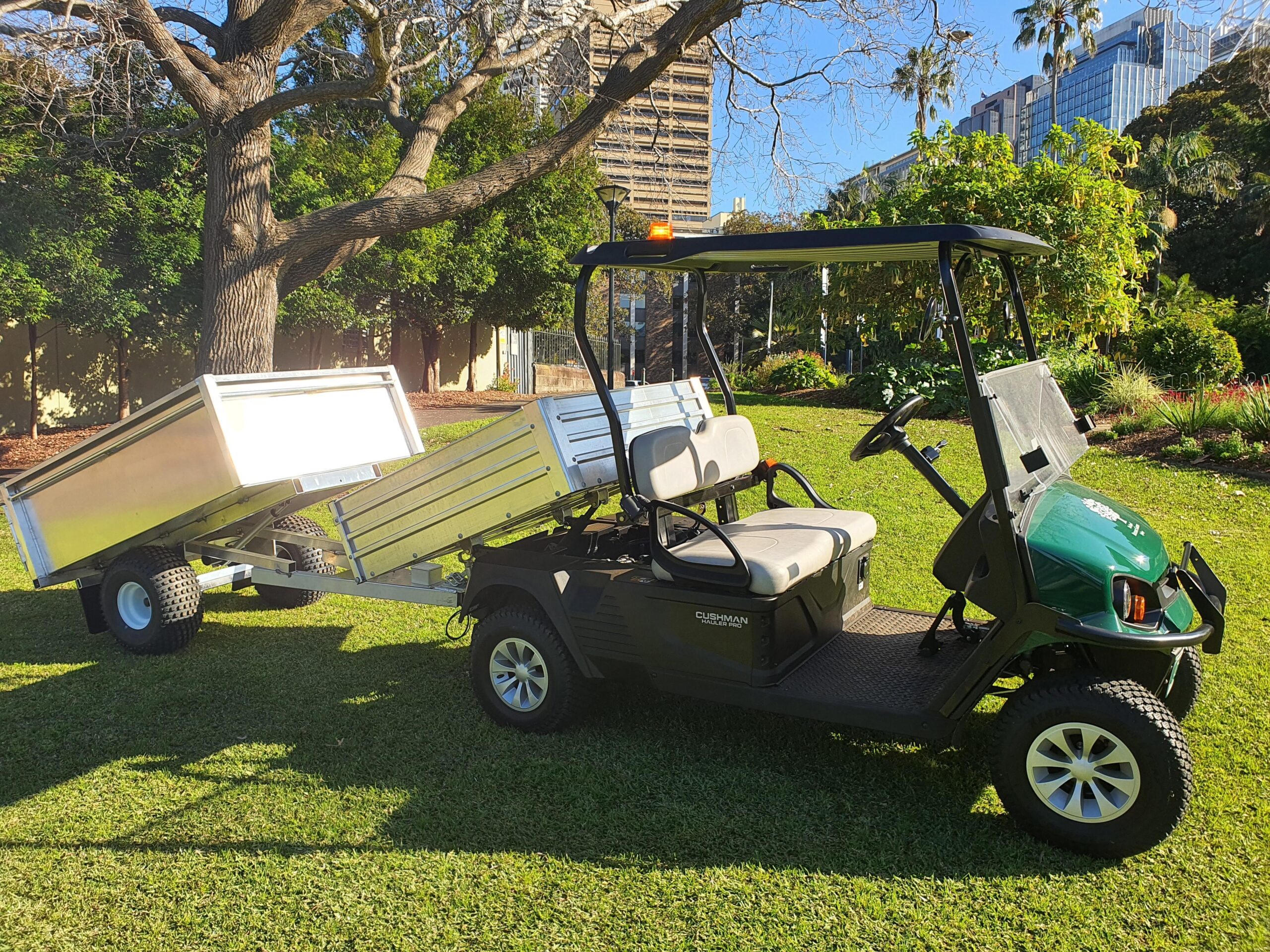
Housekeeping vehicles are essential over bigger sites, with a large capacity for laundry and anything else that needs to be moved, but typically this space comes at the cost of seating.
Specialist food and beverage carts may not be the right fit for every setting, but they can be invaluable for moving consumables in a clean, safe and efficient manner.
Maximising productivity
It can be tempting to choose one vehicle for multiple purposes, but this can be a false economy both for convenience and productivity, Graham Janson from Augusta Golf Cars Pty Ltd said.
“Purpose-built vehicles also drive productivity in day-to-day operations. Anyone who works with tools knows the right tool turns a difficult job into a quick one; the same applies to transport across a property.”
“Vehicles designed for housekeeping, maintenance, grounds or luggage transfers—with appropriate trays, towing capacity, turning circles and safety features—reduce repeat trips, simplify loading and unloading, and cut delays.
“That translates directly into labour efficiency, better service levels and less energy consumed per task.”
Considering the total cost
Purchasing new vehicles is always a significant financial outlay, making it even more important to carefully consider what you’re buying.
It can be tempting to save some money by choosing a more entry-level model, picking petrol over electric, or shopping around for less well-known brands. However, the upfront price isn’t the only factor in total cost of ownership (TCO), Mr Janson said.
“When evaluating total cost of ownership, accommodation providers should look beyond purchase price to energy costs, battery chemistry and warranty, service intervals, tyre and brake wear, downtime risk, parts availability, residual value, and the operational fit of the vehicle.”
While electric carts can be more expensive initially, their fuel and maintenance costs are generally much lower, making them a worthwhile consideration.
“Lithium vehicles offer a strong TCO case,” Mr Janson said. “A slightly higher upfront investment in the correct, efficient product can deliver a stronger return over time through lower running costs and longer usable life.”
Safety at the forefront
Many utility vehicles now have automatic parking brakes, and some have hill hold, which makes working across large resort sites with varying terrain easier.
Other features including split windshields, horns and reversing beepers make operation simpler and safer for teams; noise-making features are especially important on quiet, electric vehicles.
Keep staff training up to date, record all services and maintenance on your vehicles and check local regulations around on- and off-road use to ensure compliance, and utility vehicles should be an investment that keeps paying off.
Sustainability in action
There are more options than ever for those looking to boost their eco-credentials when it comes to utility vehicles.
Mr Janson said utility vehicles were a great way to contribute to sustainability goals.
“For accommodation providers, the next generation of utility vehicles can be a practical lever for meeting sustainability goals—provided fleet decisions are made with whole-of-life performance in mind.”
“Lithium batteries have proven to be an obvious starting point, having been engineered for efficiency. Lithium offers faster charge acceptance, longer service life and fewer maintenance touchpoints,” he said.
“Couple this with other innovations like solar, and it is easy to see how accommodation provider sustainability goals are being achieved.”
For sustainability and efficiency, Mr Janson said choosing who to buy from can be as important as picking the vehicles.
“Buying through a reputable distributorship ensures the fleet is supported with the right parts, diagnostic tools and technical know-how, which is critical for uptime and for keeping vehicles operating at peak efficiency over years, not months.
“Long established and reputable service providers offer a full range of fit-for-purpose options and the backing to execute and maintain the most sustainable configurations available across varied site conditions.”
Whatever your needs or goals, it’s worth discussing options with specialists to ensure that for the utility vehicles you choose, the short-term time investment translates into sustained, long-term benefits.