

Smart rooms, smart savings: Energy management for enhanced profits
Meeting energy management goals has never been easier, thanks to the range of technology available to accommodation operators

Energy management is now a significant consideration for accommodation providers—it’s no longer enough just to switch off lights and air conditioning when a room is not in use.
Environmental, social and governance (ESG) reporting is now part of the regular cycle of accommodation management, with providers looking for ways to integrate energy savings into daily operations.
Read the latest edition of AccomNews HERE
The range of available options for access control, room automation and building systems offer substantial opportunities, but deciding where to start or continue on an energy management pathway can be difficult. Starting with a focus on the guestroom can help to narrow the scope while delivering significant impacts.
Removing the guesswork
Previously, one of the most potentially frustrating aspects of energy savings was the lack of insight the accommodation provider had over not-in-use but occupied rooms.
Now, occupancy-based control takes the guesswork out of the equation. This can work in several ways, from simpler motion sensors to detect movement to more complex room status setups that combine motion and other data to provide a property management system (PMS) with real-time information on room occupancy.
The potential savings of an intelligent system are substantial, said Assa Abloy Managing Director Michael Benikos.
“Heating and cooling are among the largest expenses in hospitality and in many hotels HVAC systems account for around 40 percent of the total hotel energy use.”
“For hotels, the challenge is how the rooms are used, as each room behaves differently depending on occupancy, guest habits, the season and outdoor temperatures.
“So, when HVAC systems are not aware of these factors, they often run longer and harder than necessary. Over
time, this brings higher costs and inefficient energy use.
“Energy management systems (EMS) solve these issues by giving hotels better control at guestroom level. The system will adjust HVAC settings based on room occupancy and predefined comfort ranges.”
“When a room is unoccupied, heating and cooling are reduced within controlled limits and when the guest returns the system brings the room back to comfort smoothly and efficiently.”
Related AccomNews article: Nesuto Docklands Apartment Hotel: Intelligent design in action
All-round wins
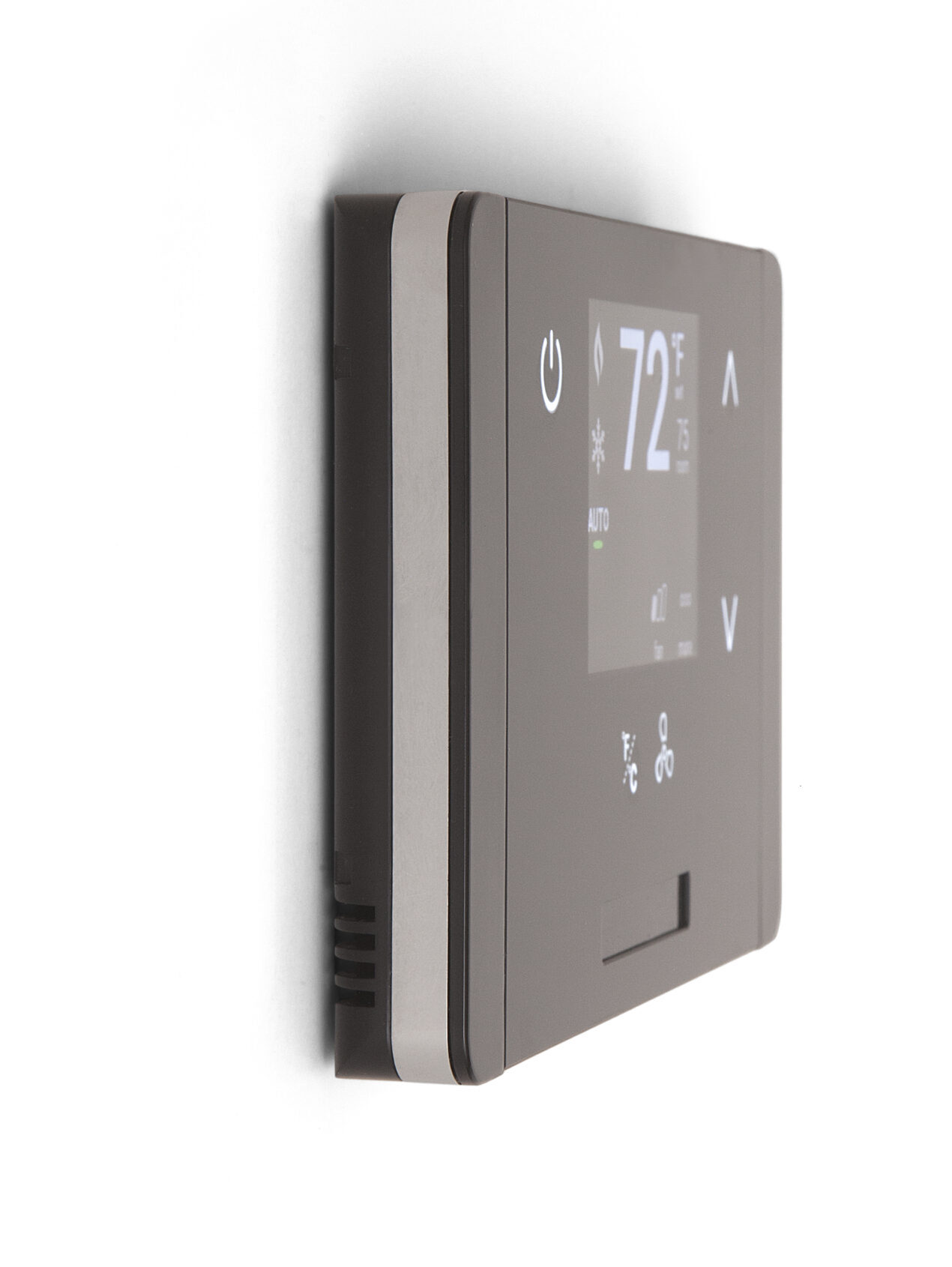
Technology developments mean that many energy-saving measures now offer double the benefit; as well as helping to meet sustainability goals and offering operational cost savings, guests have positive perceptions of modern, easy-to-use systems that offer them convenience and control.
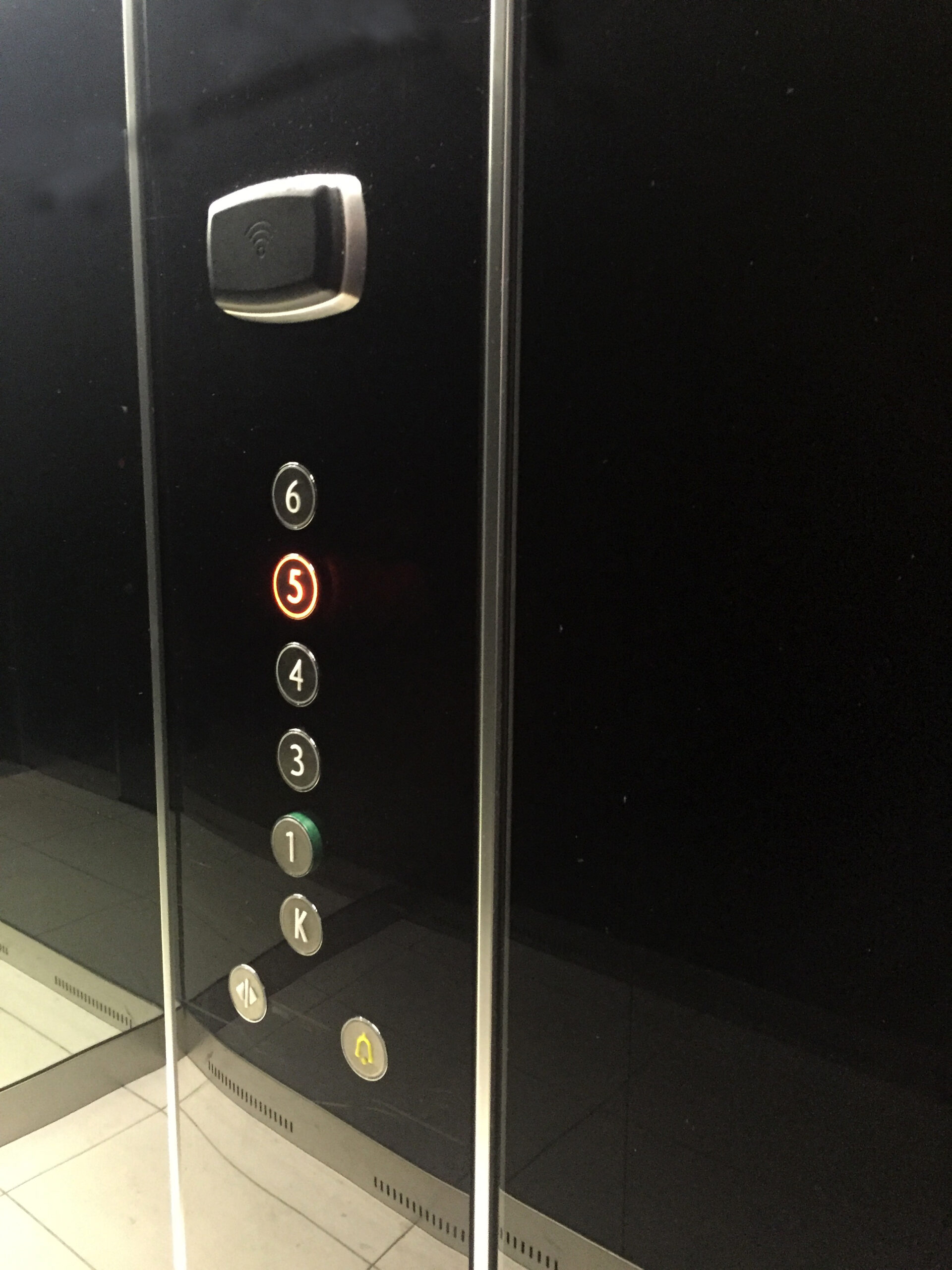
Digital room locks can operate on key cards or via mobile apps, and door sensors can be paired with a range of in-room systems from HVAC to lighting and even curtains or blinds to respond to guests entering or leaving a room.
These intelligent energy responses give guestrooms an instantly tech-forward, premium feel that guests are sure to notice. While overall guest impressions are not necessarily the main priority for these additions, they are a welcome benefit.
New or retrofitted?
Sometimes, full-scale renovation will naturally be the best option. However, there are usually ways to retrofit and renovate to incorporate intelligent features without breaking the bank.
Guestroom doors and locks can be easily fitted in place of manual or older handles, and movement sensors are an add-on that can be fitted into inconspicuous places.
Before making any decisions about upgrading versus replacing, it’s best to speak to a specialist who can tailor options to suit your setting and needs; there may be options you hadn’t considered, or technical reasons one approach would work better than the other.
Gathering data
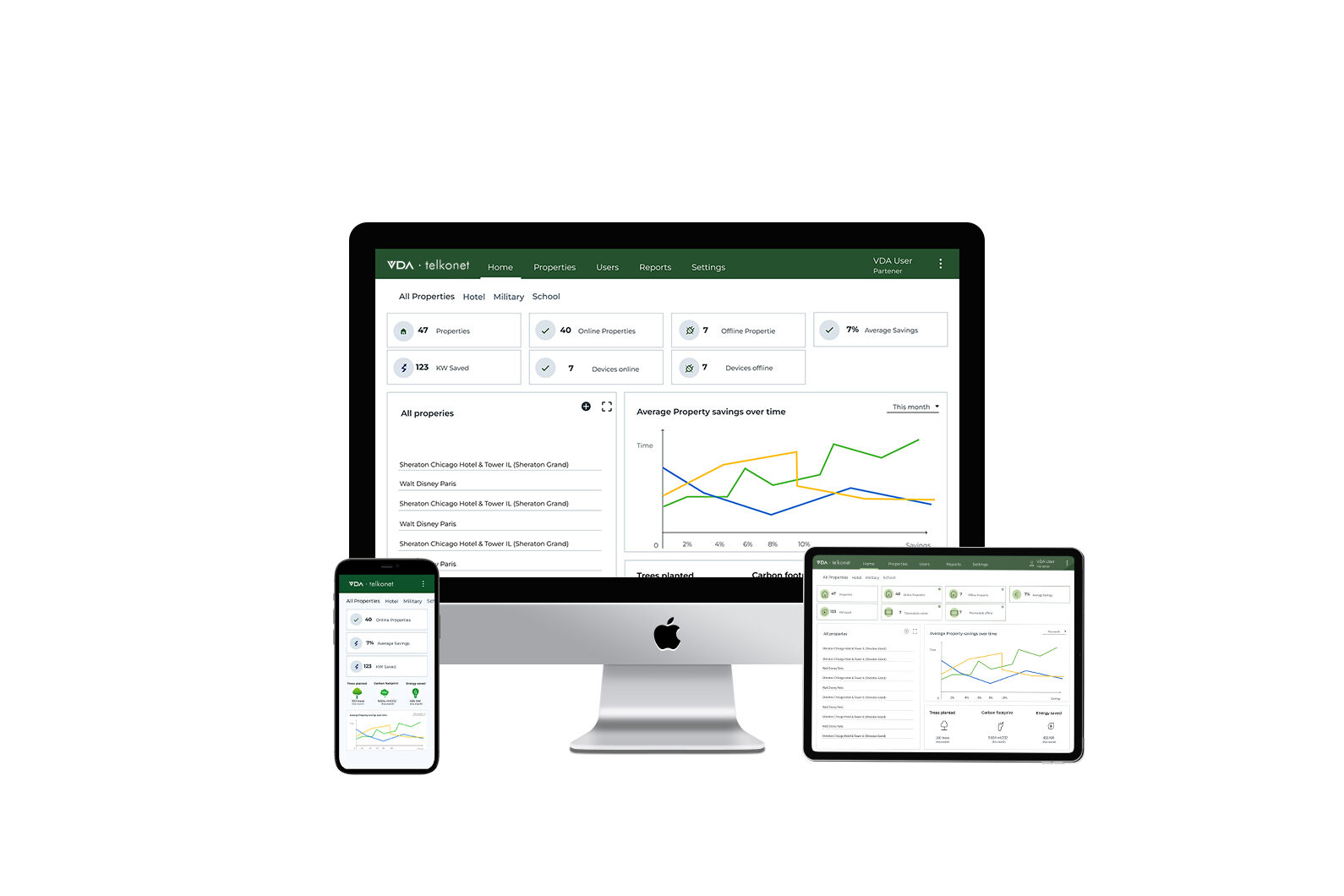
Another benefit of intelligent systems is the data that they provide. Granular information from EMS can highlight maintenance or refurbishment needs and help accommodation providers to plan accordingly for the busiest times.
Mr Benikos said EMS data can be invaluable.
“With this real time and historical data, hoteliers can easily spot rooms that are not performing efficiently and rectify the issue by either adjusting settings or addressing maintenance issues.”
“With the increased visibility, HVAC performance is more consistent across the property and guest complaints less likely.”
Detailed data about the relationships between occupancy and energy usage also helps with improved stakeholder and investor transparency; having comprehensive information at managers’ fingertips saves time and helps ensure reporting obligations aren’t too burdensome.
For accommodations seeking an energy efficiency or carbon neutral National Australian Built Environment Rating System (NABERS) rating, this data can provide invaluable insights into energy usage and provide indications about where to go next.
The power of communication
Rooms are one component of the whole accommodation ecosystem, so it’s important that their systems can communicate with wider operations.
Building management systems (BMS) and GRMS can be integrated to work together, with multiple benefits.
First, there is the obvious advantage of at-a-glance control, rather than having to toggle between multiple systems. Then, there is the potential for enhanced efficiency and energy saving from having them communicate, said Mr Benikos.
“Most EMS systems can also integrate with hotel door locking systems, building management systems, property management systems and housekeeping systems.
“Integration provides additional benefits for the hotel such as: online locks; preconditioning rooms with lighting welcome scenes; increased savings by providing the BMS with in room HVAC data; and the housekeeping systems with occupancy data for more efficient room cleaning, as they know which rooms are vacant and which rooms are Do Not Disturb.”
Power at your fingertips
Utilising technology for energy savings can seem like a tall order, with multiple moving parts and options to consider.
However, the initial time, effort and financial investment can pay off in an impressively short time, helping to future-proof accommodation businesses against a backdrop of uncertainty.