
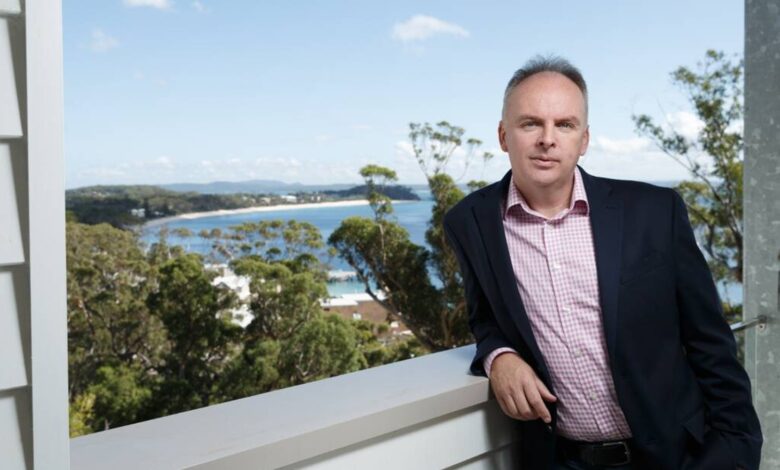
Will Creedon: The Irish explorer
In this exclusive interview, Mandy Clarke speaks with Alloggio founder and CEO Will Creedon about his journey from an Irish dairy farm to becoming a leading figure in the Australasian short-term rental accommodation industry

From growing up on a dairy farm in County Cork, Ireland, to building one of Australia and New Zealand’s largest holiday property management companies, Alloggio founder and CEO Will Creedon has spent a lifetime walking through unexpected doors. Along the way, he’s discovered that every opportunity seems to lead to another adventure.
Spend an hour with Will and you’ll quickly discover that every question has a story.
Ask where his hospitality career began and, before you know it, you’re standing on a dairy farm outside Cork holding the calf he received for his First Holy Communion. Somewhere between the paddocks and his local pub, you’ll detour through Hunter Valley Gardens, hear how he nearly went broke during COVID, share a Guinness with Ernest Shackleton, Walt Disney and Marcus Aurelius before somehow ending up discussing artificial intelligence… and space.
At first, it feels like the conversation has wandered off course. Then you realise it hasn’t. Will has an infectious way of joining the dots, taking the scenic route before gently bringing you back to where you started. He’s part Irish storyteller and part curious explorer.
“It’s a collection of sliding door moments,” he says. “You go through them and see what happens.”
This interview was first published in the September edition of Resort News. OUT NOW. Read it HERE
Looking back over his decades in hospitality and tourism, it’s hard to argue. A holiday to Australia became nine years helping build Hunter Valley Gardens. A conversation with his future wife led to a rundown motel in Newcastle and, eventually, Alloggio. COVID almost brought the business undone before opening another unexpected door.
Despite building Alloggio—Italian for “accommodation”—into a business managing thousands of short-term rental properties across Australia and New Zealand, Will spends remarkably little time talking about success. Instead, he talks about people, history and ideas.
His first door opened on a dairy farm just outside Cork.
He grew up in a family where hard work was simply how life worked. His parents were dairy farmers, as had been the generations before them, and from an early age they taught him that if something was worth having, it was worth working for.
When Will made his First Holy Communion at the age of seven, he wasn’t given a watch or an envelope with a few pounds tucked inside. He was given a calf.
“You have to care for a calf, you have to feed it, and you can sell it and make a few bob.”
His father also ran a small contracting business with neighbouring farmers and, before long, Will was helping out wherever he could. “Dad never paid me,” he laughs. “But the farmers did.”
It’s a wonderfully Irish story, and one that quietly shaped the way he still thinks about opportunity today.
The next door opened when he was eleven, behind the bar of Welch’s pub. His job was to collect empty glasses, clear tables and lend a hand wherever he was needed, but it wasn’t the work that captivated him. It was the people.
“I loved it in that pub,” he says. “I loved being surrounded by amazing people talking about everyday things and I was getting paid for it.”
He laughs. “It didn’t feel like work at all.”
You can almost picture the scene: a young boy weaving between the tables with an armful of empty glasses, quietly listening to the conversations unfolding around him.
“There were the regulars who always occupied the same stool, the whispered gossip, the loud debates and, inevitably, the storyteller who never let the truth get in the way of a good yarn.
“That began my career in hospitality,” he says. “The work ethic my parents gave me, and the social fabric of that local pub, fostered this insatiable desire around hospitality and tourism.
“But more importantly, about trying to bring people together.”
Somewhere between the conversations and the characters, the storyteller in Will began to emerge.
If there was ever a carefully mapped career plan, Australia wasn’t part of it. His sister Hilary had been posted here by the Irish government to promote tourism, and, in 2000, she persuaded him to come over for a holiday.
A few days after arriving, he found himself at a Guinness barbecue chatting with a family who were planning an ambitious new visitor attraction in the Hunter Valley.
“I didn’t know much about flowers,” he says with a smile. “But I knew about bringing people together.”
That chance conversation led him to Hunter Valley Gardens, where the holiday stretched into nine years and reshaped the course of his life.
To Will, the late entrepreneur Bill Roche, the visionary behind Hunter Valley Gardens, wasn’t simply building a tourist attraction.
“He wanted to give a gift to Australia and the world.”
Will recalls Bill describing wide pathways where grandparents could stroll hand in hand with their children and grandchildren, creating memories simply by spending time together. People rarely remember a place for its buildings alone. They remember how it made them feel.
Although he could not have known it at the time, another conversation was already waiting just around the corner. Like many of the most important moments in Will’s life, this one began with his future wife, Karen. Tired of watching him spend more time travelling than staying in one place, she finally drew a line in the sand.
“If you don’t find yourself staying in Newcastle,” she told him, “we’re not going to have a relationship.”
He smiles. “The reason Alloggio exists is because of my wife.”
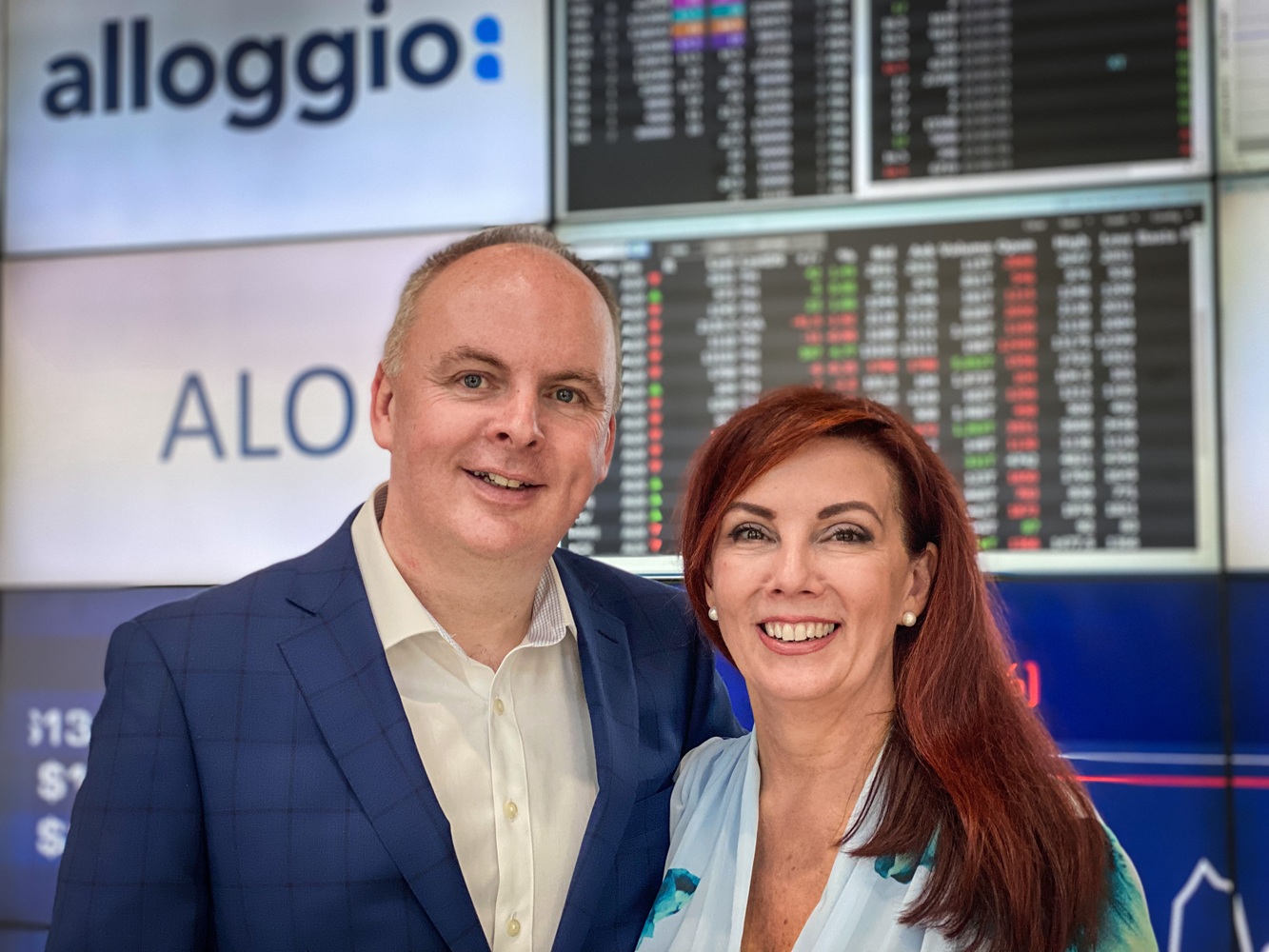
It took him almost a year to work out what that future might look like. Eventually, he leased an ageing 47-room motel in Newcastle that, by his own admission, wasn’t exactly overflowing with potential.
“It was lucky to be a two-star property,” he admits. “Only 17 rooms had working locks and just eight had air conditioning.”
Most people would probably have walked away. Will saw something worth building.
By Christmas Eve the motel was full, but what excited him wasn’t the occupancy rate. Running the motel gave him a front-row seat to an industry in transition.
Online bookings were reshaping the way people travelled, guest expectations were expanding and the more time he spent in accommodation, the more convinced he became that Australia wasn’t going to build hotels quickly enough to meet future demand.
Planning constraints, rising construction costs and limited development opportunities all pointed in the same direction, while thousands of holiday homes remained scattered across the country, often managed independently and without the systems or marketing support larger operators enjoyed. To Will, it felt like an opportunity hiding in plain sight.
What if those properties could be brought together under one trusted brand? What if technology could give independent operators the same reach and sophistication as much larger accommodation businesses?
That idea would eventually become Alloggio, which today partners with short-term rental property owners and management businesses across Australia and New Zealand.
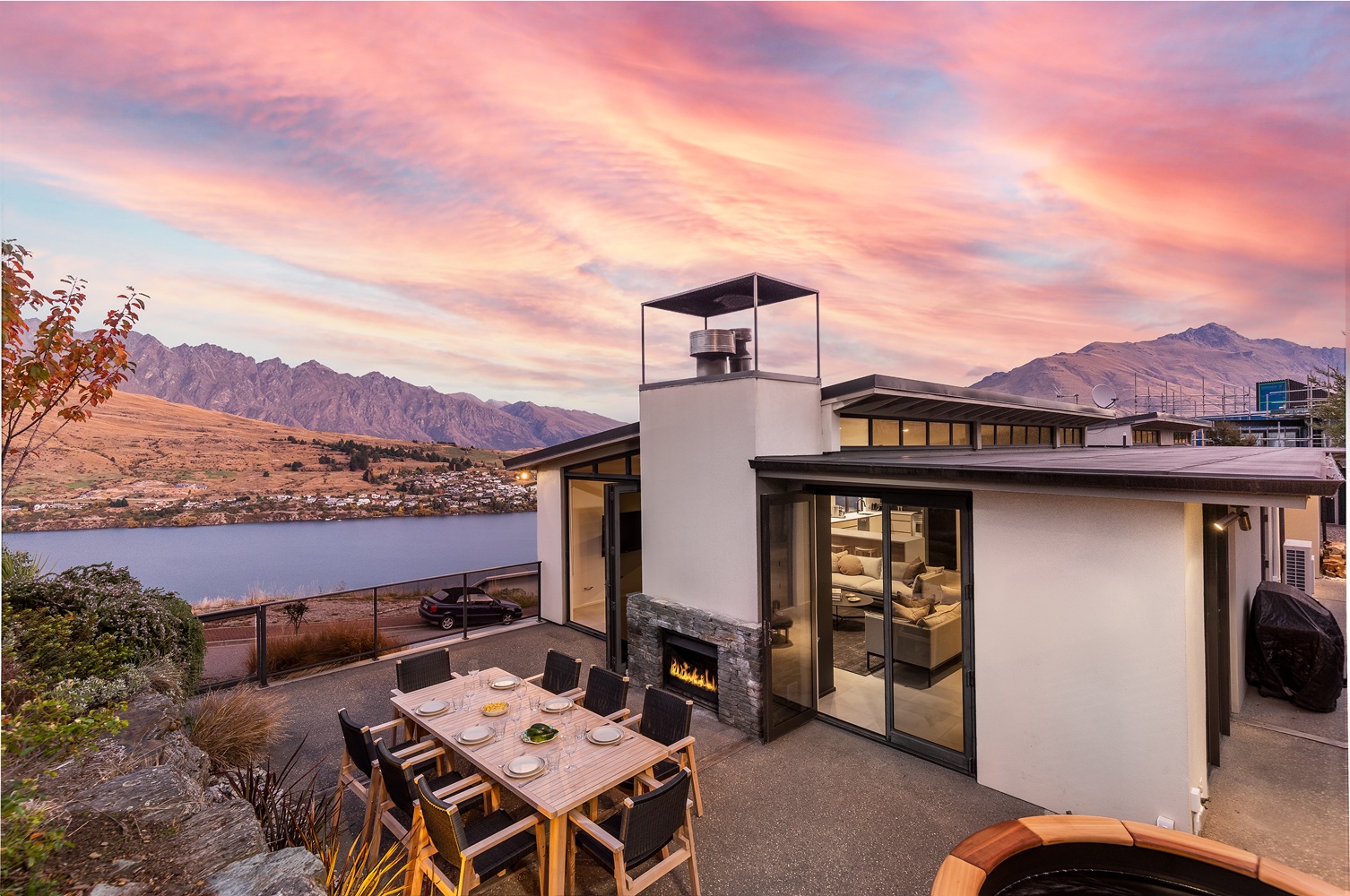
More recently, Will has been joining the dots in management rights. He has great respect for the industry and the work ARAMA does. He also believes the sector is evolving and has identified an interesting gap. Some long-term resident managers are deeply connected to their buildings and communities and simply aren’t ready to leave, yet they may no longer want the responsibility of running every part of the business themselves.
Read: Management rights explained: A practical guide for first-time buyers
Alloggio can step in under a management or transition agreement and take care of all or just part of the operation, including pricing, distribution, guest management and day-to-day services. Importantly, the resident manager retains their management rights and can sell when the time is right for them.
It’s a practical solution to a very human situation, and another example of Will spotting where an industry is changing and asking what might be needed next.
The weight of opportunity
Every entrepreneur has a story about the deal that worked. Ask Will about the moments that shaped him, however, and the conversation quickly turns to the times things almost fell apart.
“Every business journey is a collection of thousands of mini journeys. Some are good, some are bad, but every one of them teaches you something,” he says.
One of the most significant came after his time at Hunter Valley Gardens, when he found himself working with banks, receivers and administrators during the Global Financial Crisis. Day after day he watched businesses unravel, often long before anyone on the outside realised they were in trouble.
“I learned about the invisible line of insolvency,” he explains. “The line where businesses actually go broke isn’t the day they close their doors. It happens months, sometimes years beforehand.
“We should never take for granted that something will always be there, because it won’t.”
That philosophy would be tested more than once.
As Alloggio grew, the business weathered floods, bushfires and, ultimately, COVID-19. Will doesn’t pretend those years were easy.
“I nearly went broke a few times,” he says matter-of-factly.
“But once you pick your sorry arse off the ground after the shock,” he says with a grin, “you allow your mind to start joining the dots.”
During COVID, Will found himself doing things he’d never imagined. He donned protective equipment, helped transport infected people and worked alongside police and emergency services to keep essential services moving. It wasn’t part of the business plan, it was simply what needed doing.
“It’s about remaining calm when everybody else is losing their head around you.”
Will describes his younger self as “high octane”, determined to solve every problem and drive every decision himself.
But as Alloggio has grown, so too has his understanding of leadership. Rather than trying to have every answer, he’s learned to build a team capable of making good decisions without him standing beside them.
Growth, he says, is often misunderstood. Increasing a business by five or 10 percent is one challenge. Doubling it is another challenge altogether, requiring not only better systems and stronger finances but also an enormous personal commitment.
“You give up a lot of your life,” he reflects. “It’s not a week or a month. It’s decades.”
Perhaps the biggest change has been learning to let go. For someone who once struggled to delegate, trusting others to solve problems differently, and sometimes better than he would himself didn’t come easily.
“You need to pass the intellectual property. You need to bring in talent that’s smarter than you,” he says before breaking into a grin.
“Thankfully, we’ve got lots of people smarter than me.”
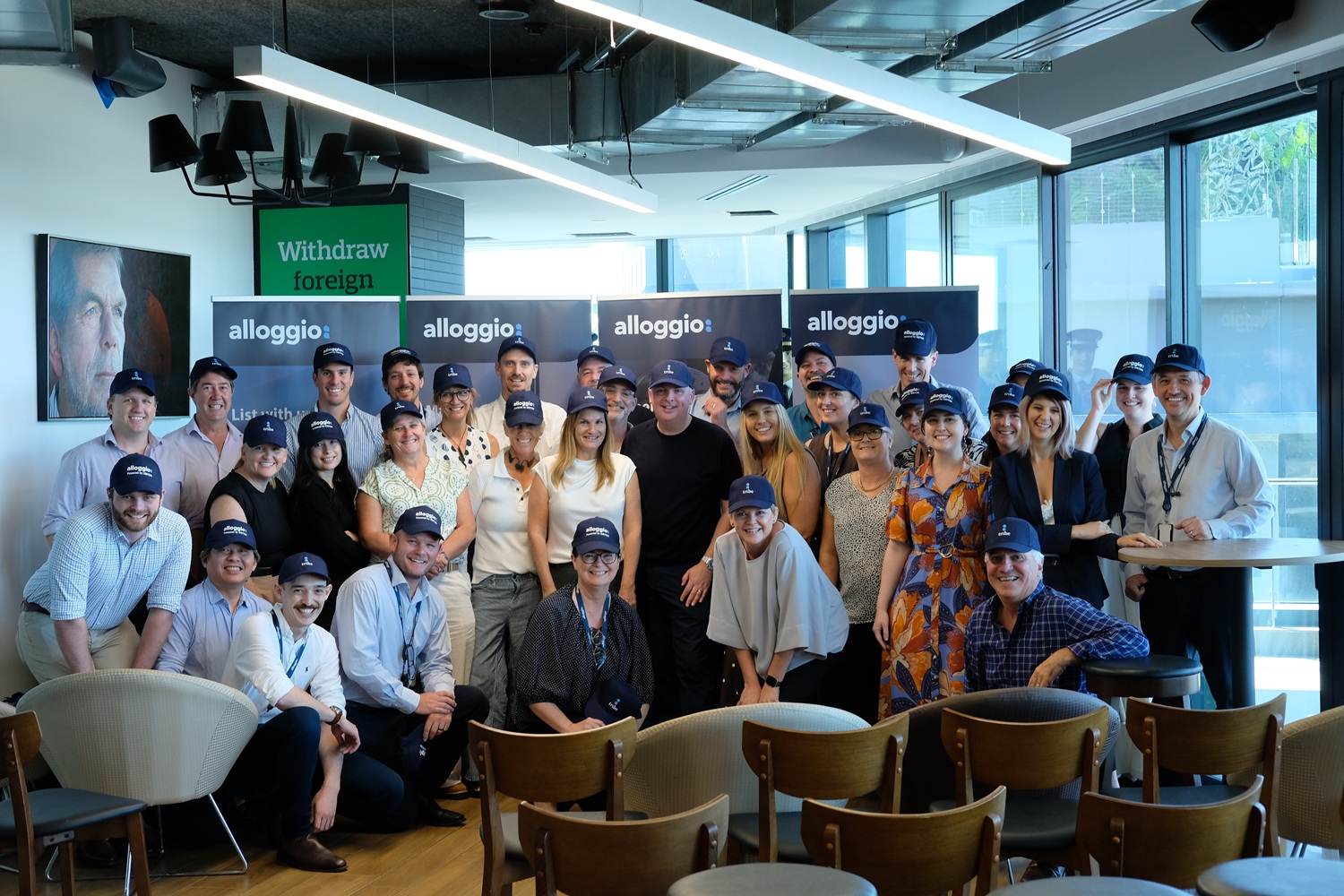
That self-deprecating humour explains why he so often talks about the “tribe” that makes up Alloggio. Rather than referring to them simply as employees or staff, he speaks of the people who have helped shape the business.
Over the years, Alloggio has brought together dozens of independently owned holiday letting businesses.
“We’ve purchased family businesses,” he says thoughtfully. “They’re deeply connected to local communities.”
Those businesses represent far more than contracts or property portfolios. Families have built their livelihoods around them and communities have grown alongside them. Buying a business, in Will’s mind, also means accepting responsibility for the people and history that come with it.
Still exploring
As our conversation draws to a close, I find myself thinking back to Will’s sliding door moments. The doors themselves aren’t really the point. It’s the curiosity that keeps him opening the next one.
Whether running pubs, helping build tourism attractions or growing Alloggio, he’s always been more interested in where the industry is heading than where it has been.
That curiosity is just as strong today. When the conversation turns to artificial intelligence, he speaks less like a CEO and more like someone fascinated by what comes next.
“We’ve just entered a new industrial age,” he says. “It’s like the discovery of steam.”
He doesn’t believe technology will ever replace hospitality. Instead, he believes it will free people to spend less time on repetitive tasks and more time creating memorable guest experiences.
“When you’re a hundred, you’re still a pupil.”
Then I ask what keeps him awake at night.
He pauses before answering.
“The telephone ringing.”
Thousands of guests stay in Alloggio-managed properties every night, and every one of them is somebody’s parent, partner, son or daughter. Emergencies happen, but what weighs on him is the thought that somewhere, somehow, there might have been something the business could have done sooner.
“I never want our business to take away someone’s opportunity to hear a loved one’s voice one last time.”
It’s certainly not the answer I was expecting. After an afternoon spent talking about growth, technology and opportunity, Will’s greatest concern isn’t commercial at all. It’s deeply human.
That becomes even more apparent when I ask him what he hopes people will say about him when his career is over.
“I hope I’ve left the industry in better shape than I found it.”
Then he adds, “I hope they don’t say I destroyed an industry.”
Every acquisition comes with a history, a reputation and relationships built over generations. Success, in Will’s mind, isn’t measured simply by growth. It’s about being a good custodian of something that mattered long before he arrived.
Before we finish, I ask one final question. If someone handed him a ticket to anywhere in the world tomorrow, where would he go?
He doesn’t say Ireland.
Or Italy. Or Japan.
He smiles.
“Space.”
I laugh, but by then I’m not really surprised. Spend enough time with Will Creedon and you begin to realise curiosity may have opened the doors, but it’s people who have given the journey meaning. Even now, he still seems happiest exploring whatever lies on the other side of the next one.
Want to know more about the accommodation industry?
Resort News Editor Mandy Clarke will be at NoVacancy on September 23 and 24 at ICC Sydney. She will be available for a chat at the AccomNews stand, booth 708.
Get your free pass to NoVacancy HERE