
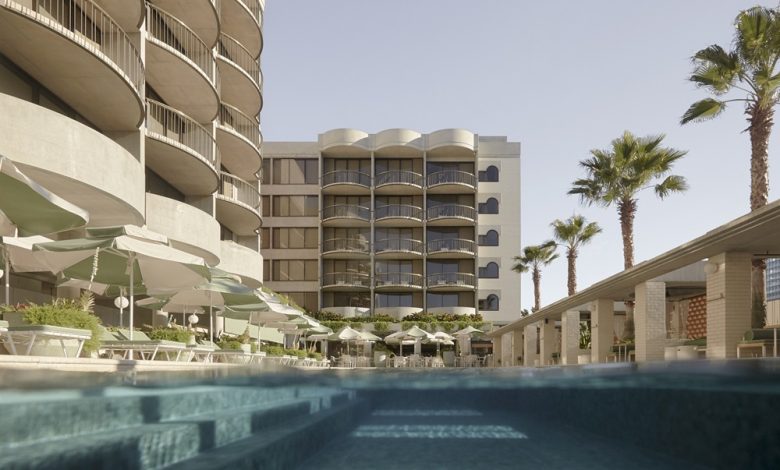
What’s in a name? Has global branding lost its significance for Australian hoteliers?
New brands have entered the market to cater for changing travel trends, but international brands remain an important part of the accommodation mix.

By Ross Beardsell and Wes Milsom, JLL
In the past decade there has been an explosion of new ‘soft’ and lifestyle hotel brands in the Australian market. JLL’s Ross Beardsell and Wes Milsom say that while the new breed of brands has evolved to cater for changing travel trends, they also argue that there is still a firm place for established global brands.
In 2027, one of the world’s most famous brands will make its debut in Australia—the Waldorf Astoria Sydney.
Founded by the Astor family on Fifth Avenue in the 1890s, the Waldorf Astoria brand name set the benchmark for luxury when it vacated its original site and moved to Park Avenue in 1931.
The latest print edition of AccomNews is out now. Read it HERE
Tattarang will be hoping that the Waldorf Astoria branding will have similar cachet when their $520 million Sydney hotel investment opens its doors next year.
Those who were involved in the Australian—and New Zealand—hotel industry in the 1980s and early-1990s will recall the headlong rush from local to global, with cashed-up Japanese investors desperate for a ‘power logo’ to adorn their porte-cochères.
Sydney transformed with Regent, Hilton, Sheraton, InterContinental and Hyatt establishing a global footprint on what was once a very ‘home grown’ landscape.
The thirst for international acceptance tipped so far in the hotel operators’ favour that when Daikyo built a golf resort in the sleepy hills behind Coolum beach on the Sunshine Coast, they signed an agreement with Hyatt that is still considered the benchmark in largesse.
Under the contract, Hyatt agreed to an unparalleled 60+ year management contract where they took full operational control and a guaranteed three percent fee of the resort’s gross revenue, regardless of whether the resort itself made a net profit—a deal that Hyatt could hardly refuse!
Unsurprisingly, when Clive Palmer bought the property in 2011, his first priority was to terminate the long-term agreement in the courts, which he finally achieved in 2012, but only after paying millions in compensation.
It could be argued that ‘Palmer Resort’ didn’t exactly have the pulling power of the Hyatt name, but the lure of international branding had dissipated significantly by then.
The past twenty years has seen the emergence of homegrown brands and non-branded hotels that have mirrored the growing traveller preference for individualism over formula. The trend has grown with the dramatic rise in the internet and review sites, which have given travellers unparalleled access to information.
Prior to 2000, the strength of global brands was the certainty and consistency they provided for travellers.
A Holiday Inn, Novotel and Marriott were much the same in China, America, the UK or Australia, and for corporate travellers, that certainty was critical to decision making.
The high-profile brands, backed up by global management companies, also made it easier for travel wholesalers, agents, airlines, conference and event organisers, and other industry operators to manage their accommodation requirements.
Fast forward to 2011, and a new generation of modern travellers were increasingly demanding localised, authentic, and emotionally resonant experiences, and EVT met the new trends with the launch of their pioneering QT brand.
Deliberately irreverent, QT Hotels threw out the conventional playbook, rejecting cookie-cutter corporate aesthetics, and instead collaborated with designers to weave the unique cultural fabric, history, and vibe of the local neighbourhood into the interior design, with front of house ‘Directors of Chaos’ highlighting the changed direction.
EVT have gone on to add the Atura and progressive LyLo brands to further diversify their market reach.
Arguably the most successful and recognised Australian hotel over the past five years has been The Calile Hotel in Brisbane’s Fortitude Valley. It was the only hotel in the Oceania region to be recognised in every edition of The World’s 50 Best Hotels from 2023 to 2025, though in the most recent iteration it slipped to 83, while Capella Sydney was the only Oceania hotel to make the Top 50.
A second Calile Hotel is scheduled to open in Noosa on the Sunshine Coast in 2028, bringing ‘subtropical modernism’ to the relaxed coastal bushland setting.
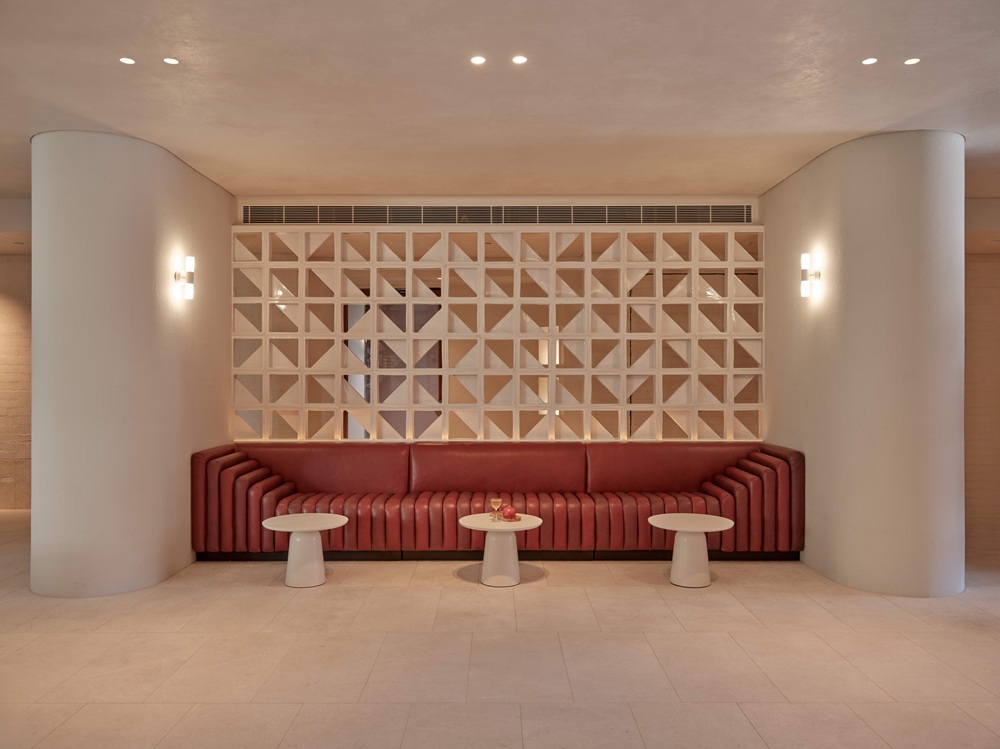
TFE has been a leader in developing upscale, individually marketed hotels such as The EVE Hotel in Sydney, Hannah St Hotel in Melbourne and The Hotel Britomart in Auckland, all very distinctively curated to reflect the local environment.
Of course, the major hotel groups recognised the trend away from corporate brands some time ago, developing their own ‘soft branding’ collections that were designed, with varying degrees of success, to allow hotels in the collection to express their own individuality, while still plugging into the parent company’s reservations, marketing and loyalty muscle.
‘Brands’ such as the Marriott Autograph Collection, Accor’s MGallery Hotel Collection, Hilton’s Curio Collection, Hyatt’s Unbound Collection and IHG’s Vignette Collection have insulated the global giants in recent decades, and with the power of loyalty programs growing exponentially, it provides the greatest opportunity to prevent further dilution.
However, savvy travellers will quickly discern if an ‘individual’ hotel is becoming a victim of the ‘sameness’ epidemic that was once the strength of global branding.
The arrival of the Waldorf Astoria Sydney proves that high-profile global branding remains a lure for many owners, as these brands bring with them a sense of security, reliability and dependability.
In contrast, introducing an unknown brand into the country can be challenging, even if it is supported by a well-established management company, and with international travel returning strongly to Australia, the benefit of a powerful global footprint is likely to become even more attractive for prospective owners.

Ross Beardsell has over three decades of experience in the hotel industry in senior management roles in operations and development. Working initially with Southern Pacific Hotels, then IHG and the Carlson Group, Ross worked in GM positions across the Asia Pacific. In 2008, he joined JLL’s Hotels & Hospitality Group, providing asset management services on behalf of hotel owners to maximise profitability and to provide strategic guidance. He has provided hotel advisory services to the owners of luxury, upscale, mid-market, new hotels, limited-service accommodation, resorts, convention hotels, and pubs – both nationally and internationally.
 Wesley Milsom is Executive Vice President, Head of Asset Management & Strategic Advisory ANZ for JLL Hotels & Hospitality Group. Wesley has over twenty years expertise across a wide range of hotel assets throughout Australia and the Pacific, with a refined vision for identifying and capitalising on investment and value-add opportunities. Prior to joining JLL in 2026, Wesley spent six years representing various institutional owners in asset management and transactional services and 14 years leading the CBRE Hotels Valuation and Advisory team.