
Hajj 2025: A spiritual journey driving global travel trends
Religious travel trends in Saudi Arabia: Pilgrimage to Mecca 2025

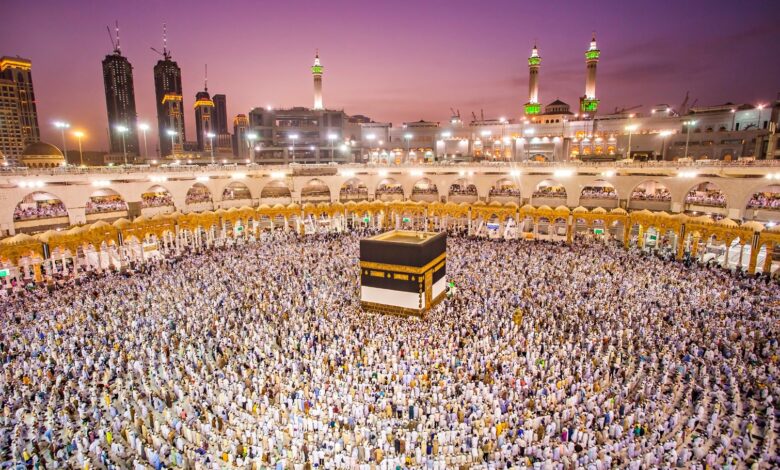
Millions of Muslim pilgrims are expected to travel to Mecca this June for Hajj 2025, and new data from travel intelligence firm Mabrian reveals the remarkable scale of this religious movement and its far-reaching impact on global tourism.
More than 151.6 million airline seats have been scheduled to Saudi Arabia during the pilgrimage period, an increase of 1.2 million compared to 2024. Scheduled between June 1 and 9, this marks a 3.2 percent year-on-year rise in air capacity, underscoring the growing logistical demands of one of the world’s largest annual gatherings.
The data shows that Mecca-bound flights are growing across nearly all top source markets. Brazil leads with an 8.2 percent increase in connectivity, followed by Germany (3.4 percent), Türkiye (4 percent), and Japan (3.2 percent). Only China recorded a decline, with a 3 percent drop in available seats. Among countries with large Muslim populations, Malaysia (+12.6 percent) and Egypt (+8.5 percent) posted the highest growth in flight capacity.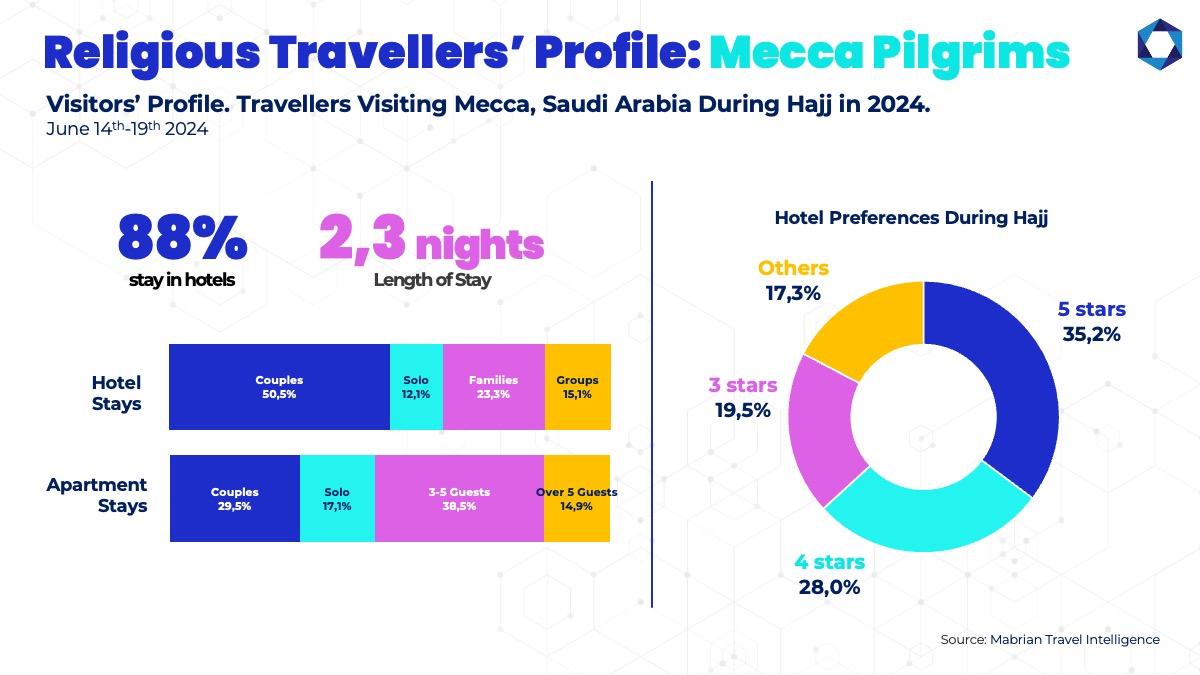
“Hajj is not only a profound spiritual journey, but also a major global travel event,” said Carlos Cendra, Partner and Director of Marketing and Communications at Mabrian. “Our data highlights how destinations, airlines and accommodation providers may adapt to the evolving needs of religious travellers—a key and growing segment globally.”
Accommodation trends in Mecca
Hotels remain the dominant choice for pilgrims, accounting for 88 percent of stays. Of those, more than a third (35.2 percent) check in to five-star hotels, followed by four-star (28 percent) and three-star (19.5 percent) properties. Only 17.3 percent opt for alternative lodging, such as serviced apartments or holiday rentals.
Apartment-style accommodation, however, is gaining traction among larger travelling parties. More than half of those who choose apartments (52.1 percent) book for groups of three to five guests, with another 20.6 percent reserving properties for six or more. By contrast, hotel guests are mostly couples (50.5 percent), followed by families (22.3 percent) and solo travellers (12.1 percent).
Short stays with deep significance
The average stay during Hajj 2025 is relatively brief. International visitors tend to stay longer—Egyptians and Indonesians average 3.1 nights, Malaysians 2.8, and British travellers 2.5—while domestic pilgrims typically stay just 1.8 nights.
Despite the short duration, the impact of this sacred journey extends far beyond tourism metrics. Hajj continues to shape not only the spiritual lives of pilgrims, but also the strategies of global travel and accommodation providers preparing to meet their needs.