
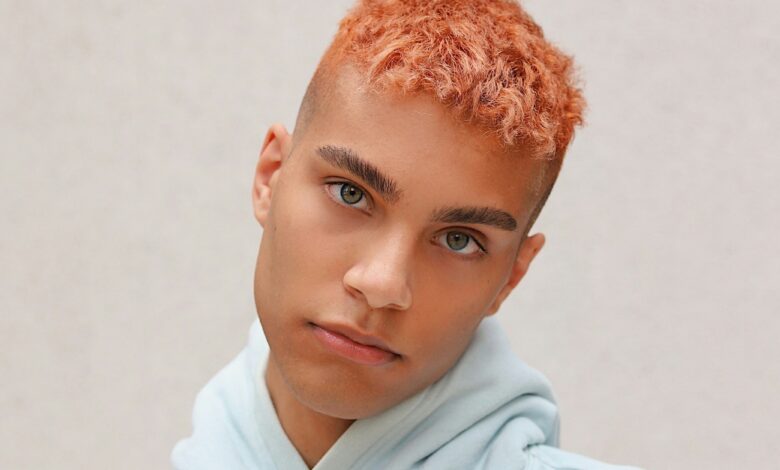
The Gen Z stare: why this summer’s blank look might not mean what you think
Here is why young staff are not being rude, what is really going on behind that blank look, and how operators can respond.

If you run a hospitality or tourism business, you’ve most likely seen it already. A young staff member pauses mid-interaction with a guest, their face goes blank and their eyes glaze over just slightly. Congratulations—you’ve just witnessed the viral phenomenon known as the Gen Z stare. It’s the look that has launched a thousand TikToks, and it’s set to feature heavily in this summer’s Christmas casual season.
But according to new insights from the University of South Australia, this expression is far less about attitude and far more about how young people are navigating today’s social expectations, especially in customer-facing roles.

Gen Z, born between 1997 and 2012, have lived their entire lives on camera. They are the most observed, recorded and critiqued generation in modern history. And for the younger group aged 13 to 18, COVID lockdowns hit right when they should have been practising face to face communication. Instead, they were masked, isolated and absorbing huge amounts of passive screen time.
UniSA educator Alexandra Gavrilidis says employers sometimes interpret the stare as disengagement or lack of professionalism, but the truth is far more nuanced.
“For younger Gen Zs, the Gen Z stare is an identifiable behaviour that some older customers, teachers or colleagues can find offensive,” she explains. “But for Gen Z themselves, it is usually about zoning out, processing, feeling awkward, or simply not seeing the point in forced small talk.”
Here is the part every operator should know… The stare is often a safety strategy, not defiance.
When a young worker is confronted by an unreasonable or frustrated guest, a neutral, silent expression can feel like the safest option. It is a way of preventing an escalation. In other words, if they cannot think of something helpful or kind to say, they would rather say nothing.
Technology has also shaped their communication style. Gen Z grew up in digital spaces where:
-
Replies are optional
-
Delays are normal
-
Tone is conveyed through emojis rather than facial cues
The result is a generation whose resting expression can appear flat or disinterested, even when they are trying their best in a high pressure, guest facing environment.
Gavrilidis says that as occupancy levels rise and seasonal stress peaks, it is worth remembering that challenging behaviour can come from guests of any age.
“People judge other people’s mistakes differently to how they judge their own,” she says. “That bias can cause us to misjudge and misunderstand others.”
For operators, the key is empathy, curiosity and clear communication. Older generations can take a moment to recognise that the stare is usually unintentional. And Gen Z staff can benefit from gentle coaching on how their non verbal cues might be interpreted in a hospitality setting.
Remember Gen Z are not avoiding the guest. They are often just trying to navigate the moment.
While the Gen Z stare may be unavoidable this festive season, conflict does not have to be. A little patience from managers, a little guidance for young staff and a willingness to assume good intent can turn a blank look into a better experience for everyone.
Tips for managers: How to support Gen Z staff during the Christmas rush
1. Normalise the nerves
Explain that feeling overwhelmed in guest interactions is common.
2. Coach non verbal cues
Short reminders about standing posture, eye contact and tone to help them feel more confident without forcing fake cheerfulness.
3. Role play real situations
Run quick practice scenarios involving complaints, confusion or pressure. Rehearsal helps them avoid freezing up under stress.
4. Encourage micro breaks
A sixty second reset between guest interactions can prevent overwhelm and improve service consistency.
5. Check in gently
Ask “How are you finding the interactions today” rather than “Why did you look bored”. One uplifts, the other pressures.
6. Model the behaviour you want
Show them what calm, respectful, guest facing communication looks like in real situations.
7. Do not jump to assumptions
The blank stare is usually processing, not attitude. Slow interpretation leads to better coaching and fewer conflicts.
The University of South Australia and the University of Adelaide are joining forces to form Adelaide University in January 2026. Building on the strengths, legacies and resources of two leading universities, Adelaide University will deliver globally relevant research at scale, innovative, industry-informed teaching and an outstanding student experience. Adelaide University will open its doors in January 2026. Find out more on the Adelaide University website.