
When two hotels (or even more) are better than one
Exclusive Op-Ed: Multi‑hotel developments are gaining momentum in Australia, with lower operating costs and stronger market cut‑through making them increasingly attractive to developers. Ross Beardsell explores how the model is evolving

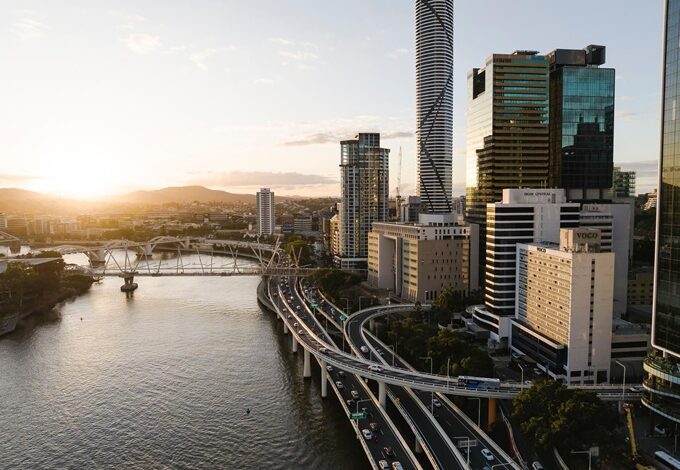
The long-term leasehold for two hotels in Brisbane – the IHG-managed Voco and Hotel Indigo Brisbane – is currently attracting considerable interest as Brisbane gears up for the 2032 Olympic Games.
The dual-branded asset comprises 406 rooms across two separate buildings, which have had a long association with tourism dating back over 50 years.
Read more by JLL’s Ross Beardsell: How will Australian and New Zealand hotels perform in 2026?
Those with a long memory will recall that the Voco site on North Quay began life as the Gateway Hotel in the 1970s, with a prominent Ansett sign on the rooftop and an Ansett Pioneer bus terminal at ground level. The Gateway became the Mercure Brisbane in the 1990s, and a decade later the adjacent Turbot Street building was converted into an Ibis.
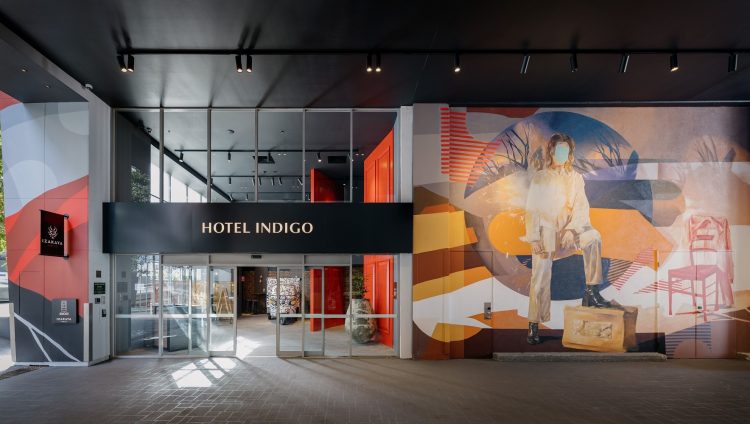
German asset manager Commerz Real acquired both hotels from CDL in 2018 and, following a $62 million refurbishment, relaunched them in 2022 under IHG’s Voco and Hotel Indigo brands.
Accor were early pioneers of multi‑branded hotel complexes in Europe, where Novotel and Ibis—sometimes joined by Mercure or the long‑stay Aparthotel Adagio—were co‑located to appeal to different market segments while sharing back‑of‑house infrastructure.
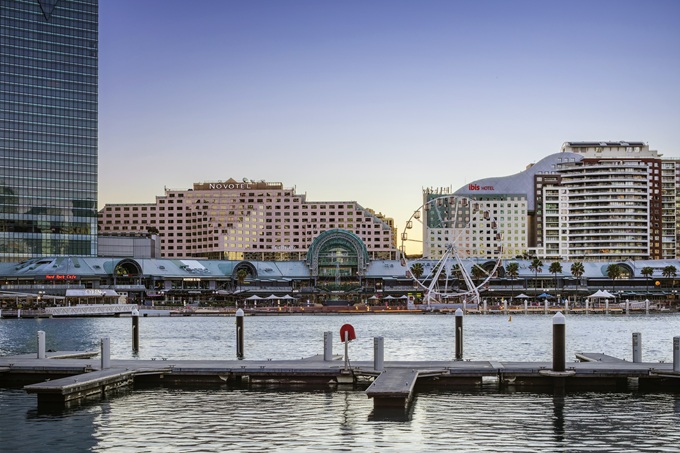
The concept arrived in Australia after the opening of Novotel Sydney Darling Harbour, which was soon joined by Ibis Darling Harbour and, for a time, Grand Mercure Apartments. The cluster earned the nickname “Accor Alley” for its prominent position overlooking the CBD skyline.
Accor then replicated the model at Sydney Olympic Park, launching dual Novotel/Ibis hotels ahead of the 2000 Olympic Games. Pullman and Ibis Budget were later added, and Accor further boosted its presence by securing naming rights for the Sydney Olympic Stadium.
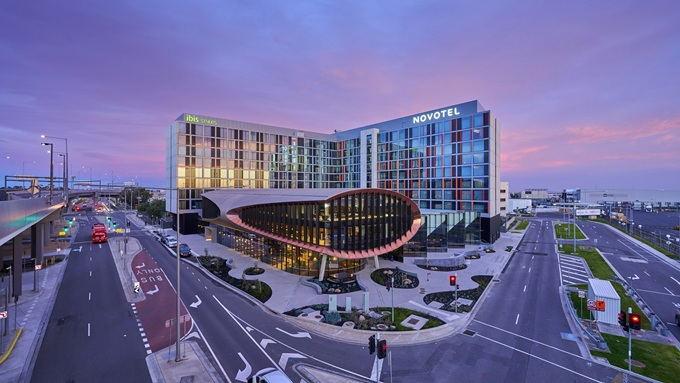
Melbourne has also embraced the trend, with two recent dual‑hotel openings: IHG’s Hotel Indigo and Holiday Inn in the Melbourne Walk precinct, and the Novotel and Ibis Melbourne Central on Little Lonsdale Street.
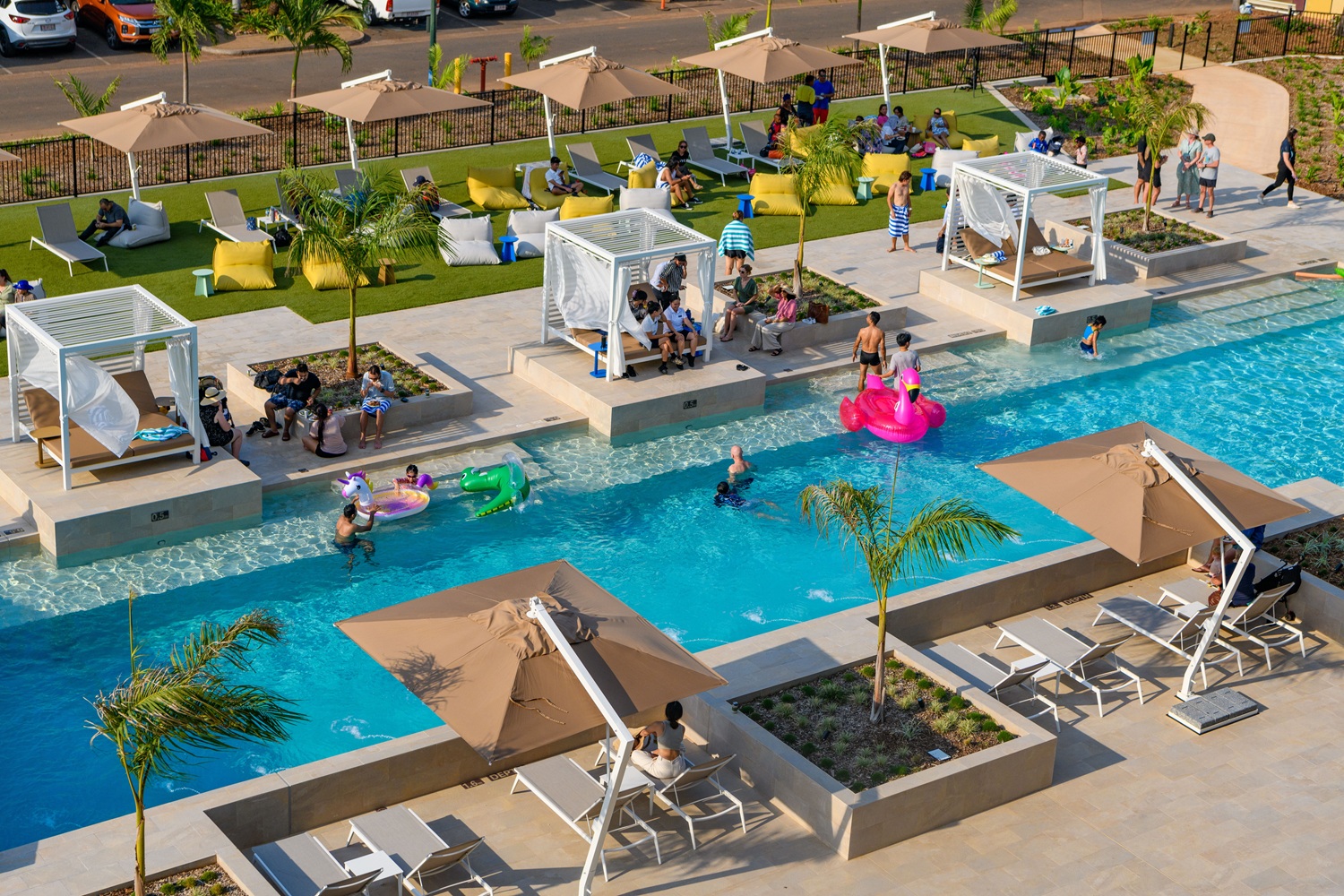
Airports are natural locations for co‑sited hotels, and Darwin Airport has been a standout. Airport Development Group purchased the individually developed Novotel and Mercure Resort hotels, integrated them, and added a third brand— Ibis—under the Darwin Airport Resorts umbrella. Luxe pool villas, apartments, new restaurants and one of Australia’s largest resort pools have broadened the hotel’s market mix, attracting leisure and long‑stay guests alongside traditional business travellers.
Benefits of dual and multi‑hotel developments
The strongest advantages emerge when properties are designed from the outset as multi‑branded hotels, as seen in Melbourne’s recent openings and the pioneering Novotel/Ibis at Sydney Olympic Park. Key benefits include:
- Construction and land cost savings — A single structure for two brands reduces land cost per room, architectural fees and construction expenses, especially for foundations and site works.
- Operating synergies — Guests rarely notice shared infrastructure such as sewerage (grey water harvesting), electricity, shared air conditioning and heating, telecommunications or parking. For owners, cluster finance operations, shared laundry, housekeeping, maintenance and staff facilities reduce payroll, management fees and staffing requirements.
- Talent sharing — Staff can move between properties, labour gaps can be filled quickly, and training and career pathways can be integrated across brands.
- Reduced revenue volatility — Serving multiple market segments—such as pairing an upscale corporate hotel with a midscale leisure brand—helps maintain occupancy across varying market conditions.
- Premium pricing uplift — Lower‑scale hotels often achieve higher rates when paired with an upscale neighbour, without cannibalising the premium brand.
- Combined sales and marketing — A single sales and marketing team can drive efficiencies and reduce overall spend.
- Conference and event appeal — Dual‑branded hotels offer organisers multiple price points and room types. For instance, at Sydney Olympic Park, Accor can accommodate everyone from headline performers staying in suites to amateur squads staying in twin-bedded budget rooms.
Potential challenges
Despite the benefits, dual and multi‑hotel developments can come with potential pitfalls:
- Brand‑standard compliance — Shared systems and staffing has the potential to dilute the service expectations of the higher‑rated brand.
- Potential for issues with shared guest amenities — While back‑of‑house sharing can be seamless, shared gyms, pools or restaurants may require careful stakeholder management if upscale guests expect differentiated services.
- Decoupling risks — If one property later separates, the process can be costly and complex. This occurred when Grand Mercure Apartments split from Ibis Sydney Darling Harbour, requiring expensive separation of power and infrastructure when the former converted to sole residential use.
The success of dual branded hotels relies on achieving the right balance between brand distinction and operational integration to ensure the strengths of each hotel enhance – rather than compete with – each other.